
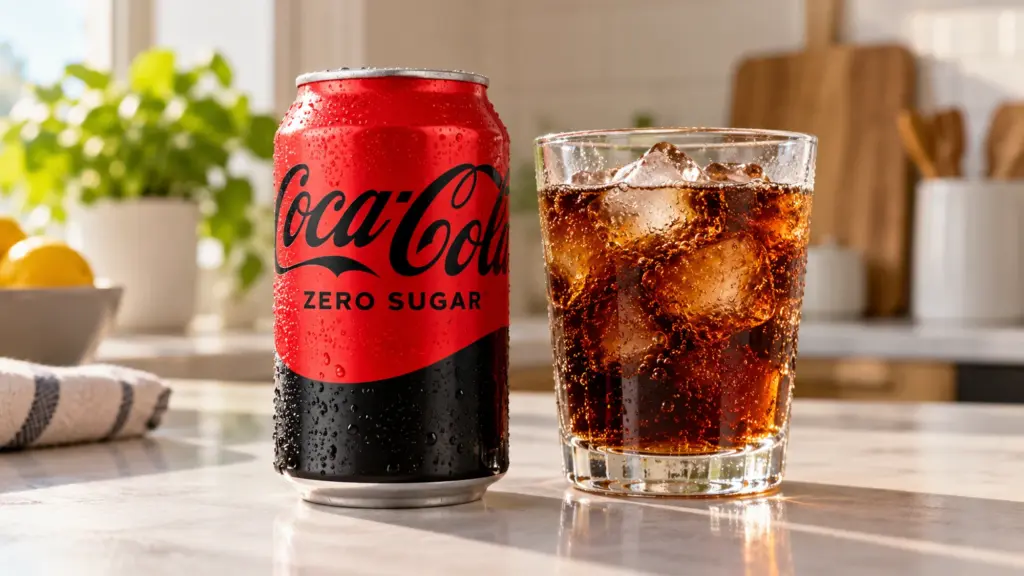
You reach for a cold can after dinner, notice the word “zero,” and wonder whether it means you can forget about caffeine too. It is an easy mix-up when several versions of the same cola share a shelf.
Yes. Regular Coca-Cola Zero Sugar sold in the United States contains about 34 milligrams of caffeine per 12 fluid ounces. Zero sugar does not mean zero caffeine. Coca-Cola also sells a separate caffeine-free version, so read the full product name.
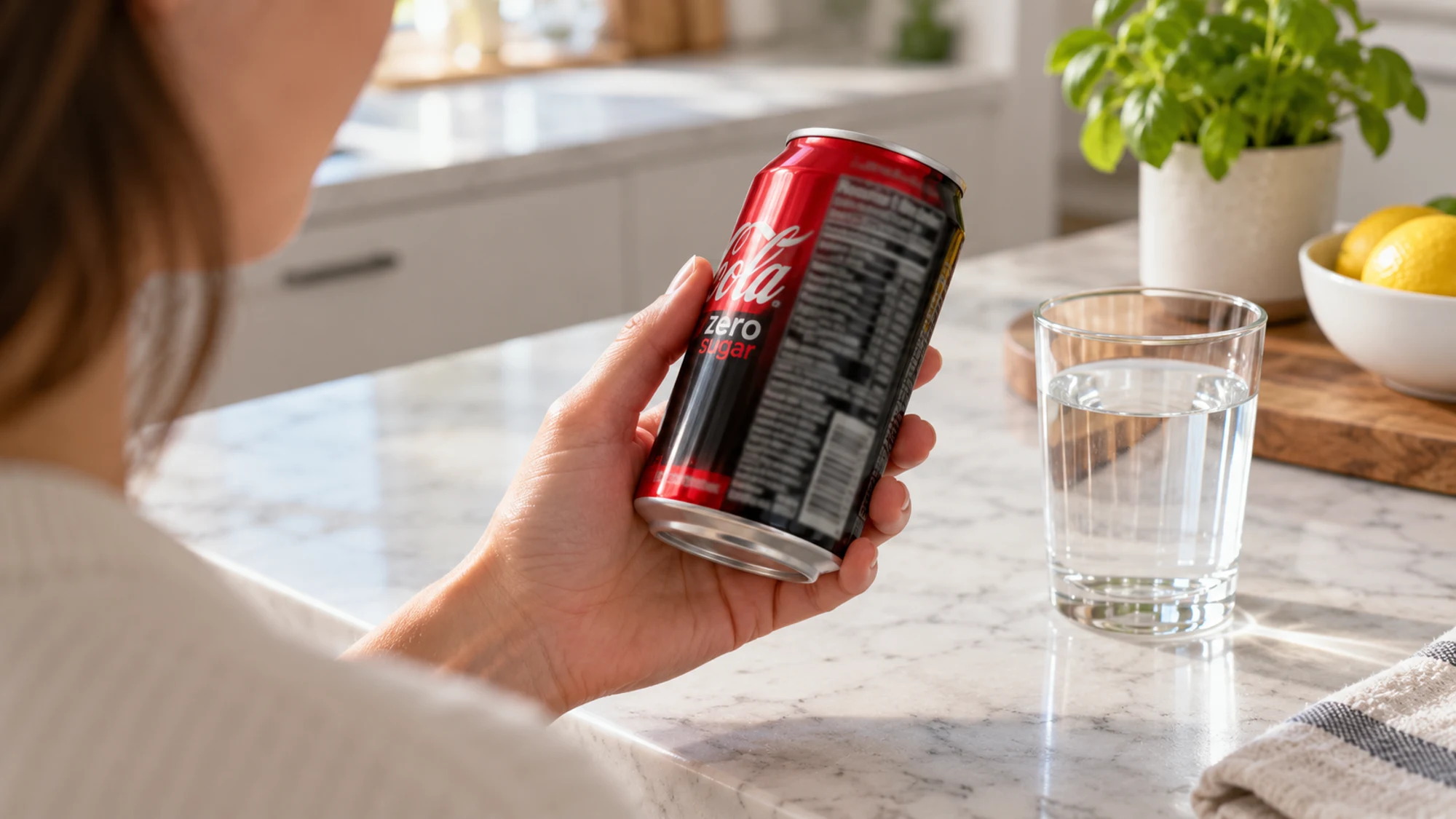
I’d check the words on the can rather than relying on its color. Packaging changes, and a familiar-looking drink can still be the wrong choice when you are specifically trying to avoid caffeine.
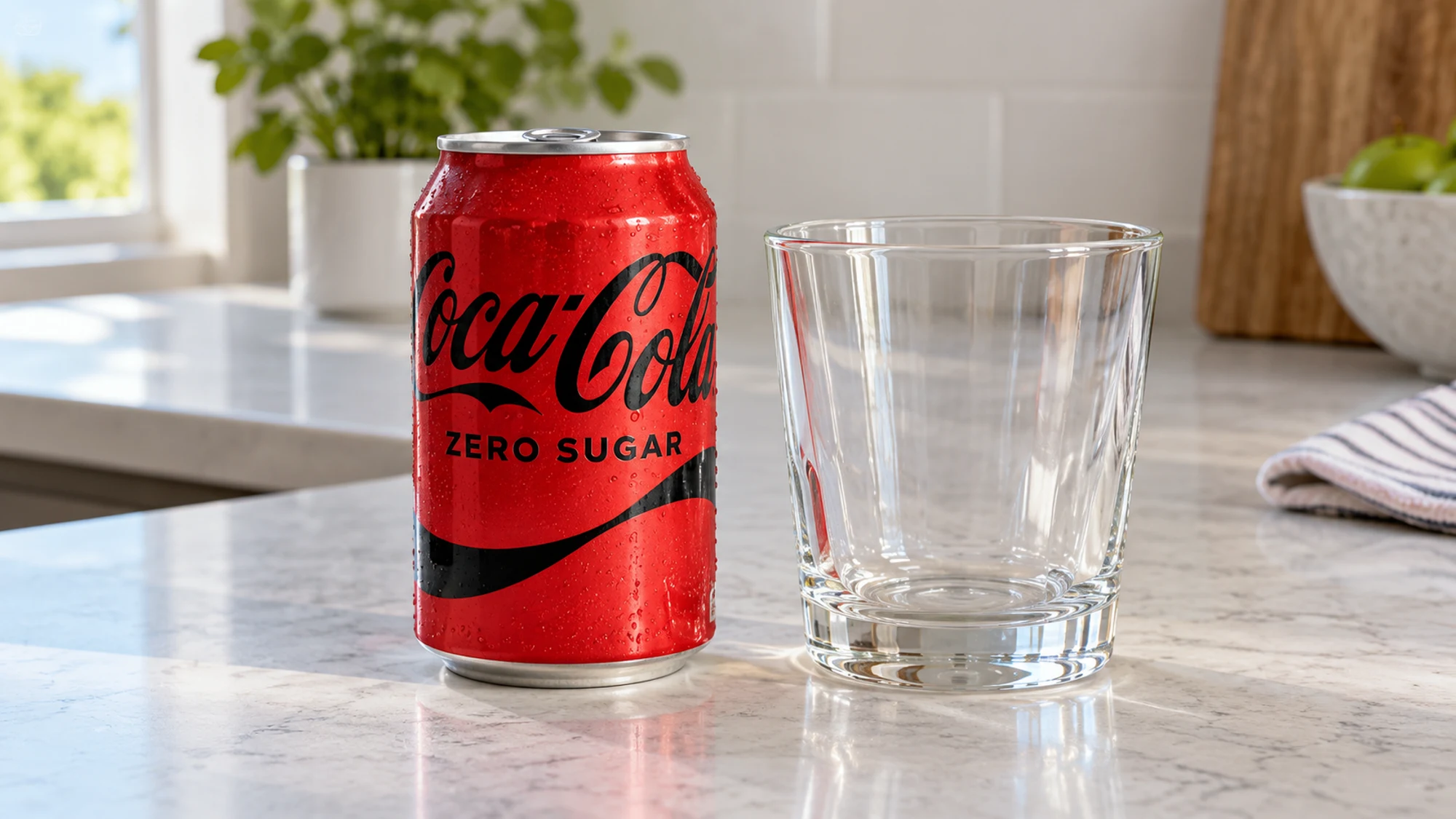
Does Coke Zero have caffeine in every version?
The official U.S. product page lists caffeine in regular Coca-Cola Zero Sugar and separately identifies its caffeine-free counterpart. Those are different products. Look for an explicit caffeine-free statement instead of assuming that a sugar or calorie claim answers the question.
This guide uses the U.S. product information, not a worldwide promise about every flavor or formulation. Check the package in your country and the specific variety in your hand. If a store listing and the can disagree, the actual product label and manufacturer’s current information deserve another look.
| U.S. product or serving | Caffeine |
|---|---|
| Regular Coca-Cola Zero Sugar, 12 fl oz | About 34 mg |
| Two 12-fl-oz servings of regular Coke Zero | About 68 mg, calculated |
| Regular Coke Zero, 20 fl oz | About 57 mg, calculated from 34 mg per 12 fl oz |
| Coca-Cola Zero Sugar Caffeine Free | No caffeine |
Count the drink, not just the container
Serving size is where a useful number can become a misleading one. A 20-ounce bottle contains more cola than a 12-ounce can. The table’s larger amounts are proportional calculations, not separate laboratory measurements; check the package if you need the product’s declared amount.
I prefer a quick running total to memorizing one can’s number. Write down the amount and size of your coffee, tea, soda and other caffeinated products. A modest-looking drink can still add to a day that already includes several sources.
- Use the amount you actually drank, including refills.
- Do not count a large restaurant cup as a 12-ounce serving without knowing its contents.
- Ice can change how much liquid fits in a cup, so a fountain serving is harder to estimate precisely.
- Do not assume a different cola or an energy drink has the same concentration.
How it compares with coffee and tea
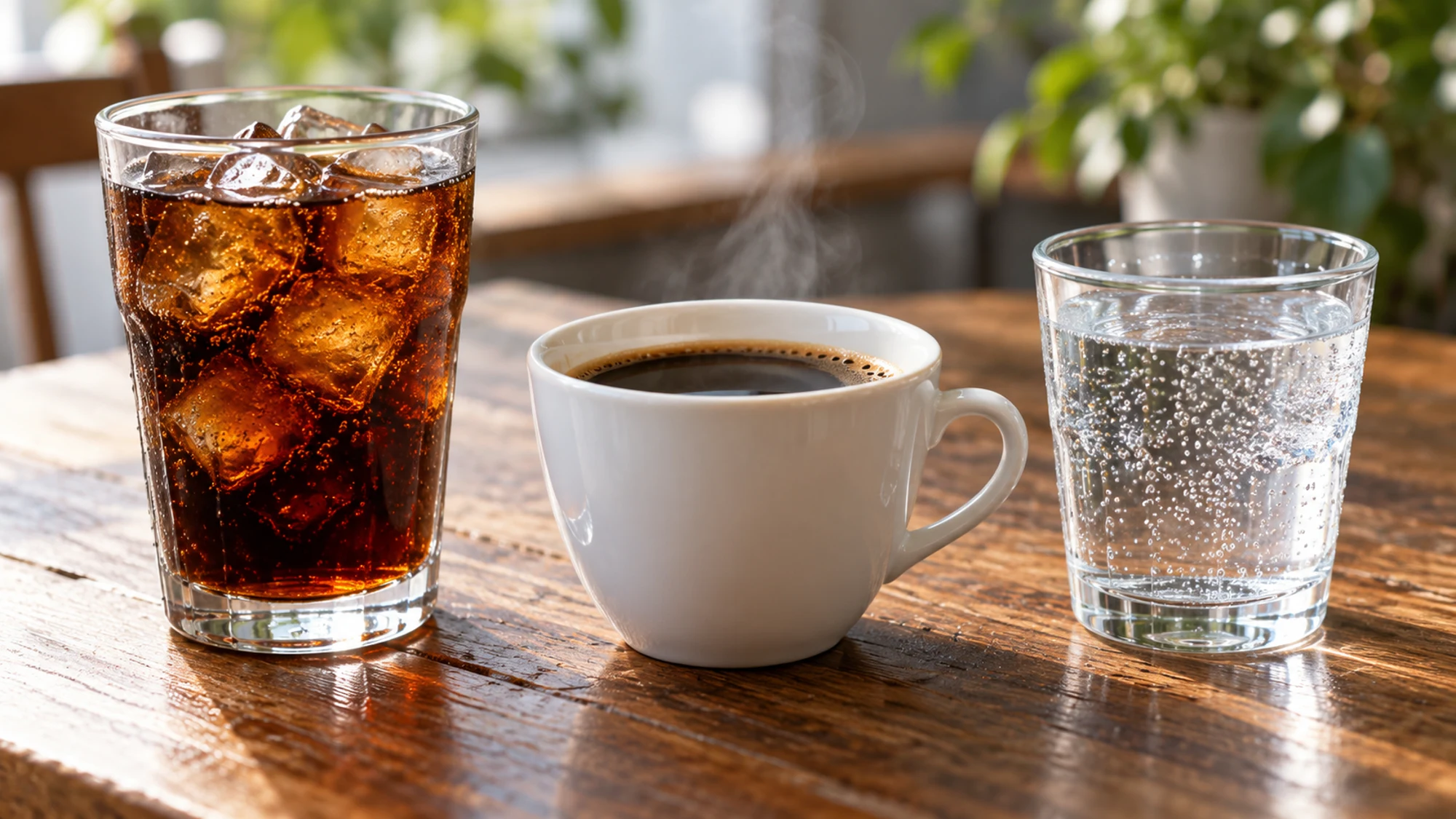
For equal 12-fluid-ounce portions, the FDA’s caffeine guide lists roughly 113–247 milligrams for regular brewed, non-specialty coffee. That is more than the approximately 34 milligrams in this cola serving. Coffee varies widely, however, and a small espresso is not the same serving as a large brewed coffee.
Tea is not automatically caffeine-free either. Black tea, green tea and matcha contain caffeine, while a plain herbal infusion may not. Our matcha caffeine guide explains why the amount of powder matters. Comparisons work best when both the beverage and its portion are clear.
- Compare milligrams per actual serving, not only the beverage’s reputation.
- Check flavored waters and other drinks too; added caffeine is not limited to coffee and cola.
- Separate sugar, calories and caffeine into three questions rather than treating one label claim as an answer to all three.
Choosing a drink when caffeine matters
The FDA cites 400 milligrams a day as an amount not generally associated with negative effects for most adults. It is not a recommended target or a guarantee for everyone. Sensitivity, medicines and health circumstances differ, and caffeine can contribute to sleep problems, jitters or a racing heartbeat.
If you are pregnant, breastfeeding, taking medicines or managing a condition affected by caffeine, ask your healthcare professional about an appropriate amount. Children and teens need separate guidance rather than an adult benchmark. If evening caffeine seems to disturb your sleep, I’d choose a clearly caffeine-free drink instead of trying to bargain with a smaller number.
- For cola flavor without caffeine, check the explicitly caffeine-free version.
- For a simpler alternative, choose plain or unsweetened sparkling water without added caffeine.
- Check the entire label when another ingredient matters to you; removing caffeine does not remove every other ingredient.
- Consider timing as well as the daily total. Being below a general adult benchmark does not guarantee a restful night.
Bottom Line
Regular Coke Zero contains caffeine: about 34 milligrams in a U.S. 12-ounce serving. Read the full product name, account for your actual portion and include other sources in your total. If avoiding caffeine is the goal, select an explicitly caffeine-free version rather than relying on the word “zero.”
TED-Ed’s Hanan Qasim explains how caffeine affects wakefulness. The lesson provides background on caffeine, not a product-specific recommendation.
Sources
- Coca-Cola U.S.: Zero Sugar and caffeine-free products
- FDA: caffeine amounts and individual sensitivity
- TED-Ed: how caffeine keeps us awake

Emily is Spoonvale’s recipe-writing persona, bringing a warm, practical voice to everyday cooking. Her focus is simple: approachable meals, comforting flavors, and clear instructions that help make time in the kitchen more enjoyable.