
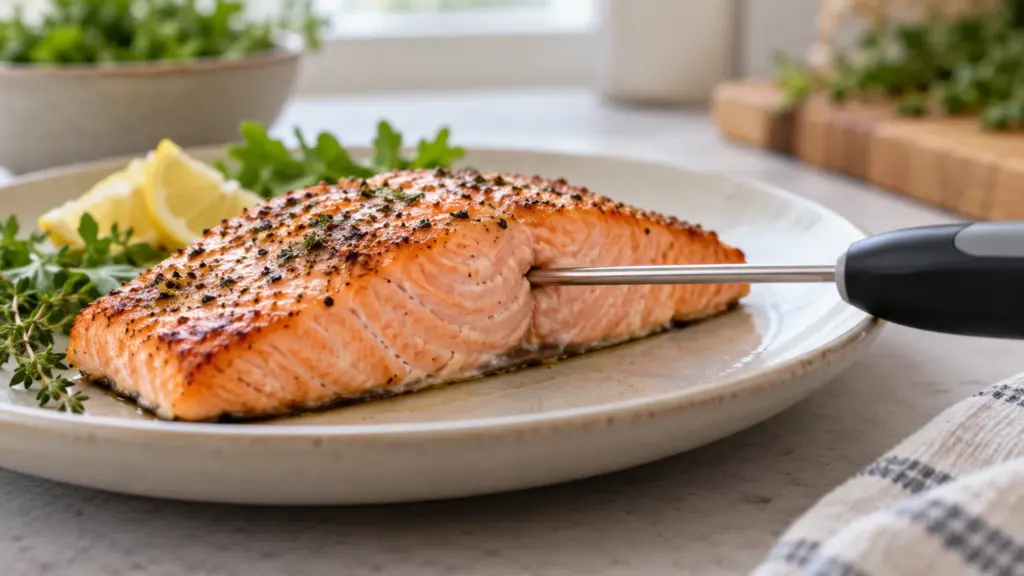
The thin end of a salmon fillet can look ready while the middle is still catching up. A browned surface and a timer are useful clues, but neither tells you the temperature where it matters most.
The recommended salmon internal temp is 145°F (63°C), measured in the thickest part. For previously cooked salmon that you are reheating, the recommended temperature is 165°F (74°C). Use a thermometer rather than an assumed cooking time.
I’d rather make one careful temperature check than keep cutting into a fillet to guess. It is a small habit that makes advice from different recipes much easier to sort out.
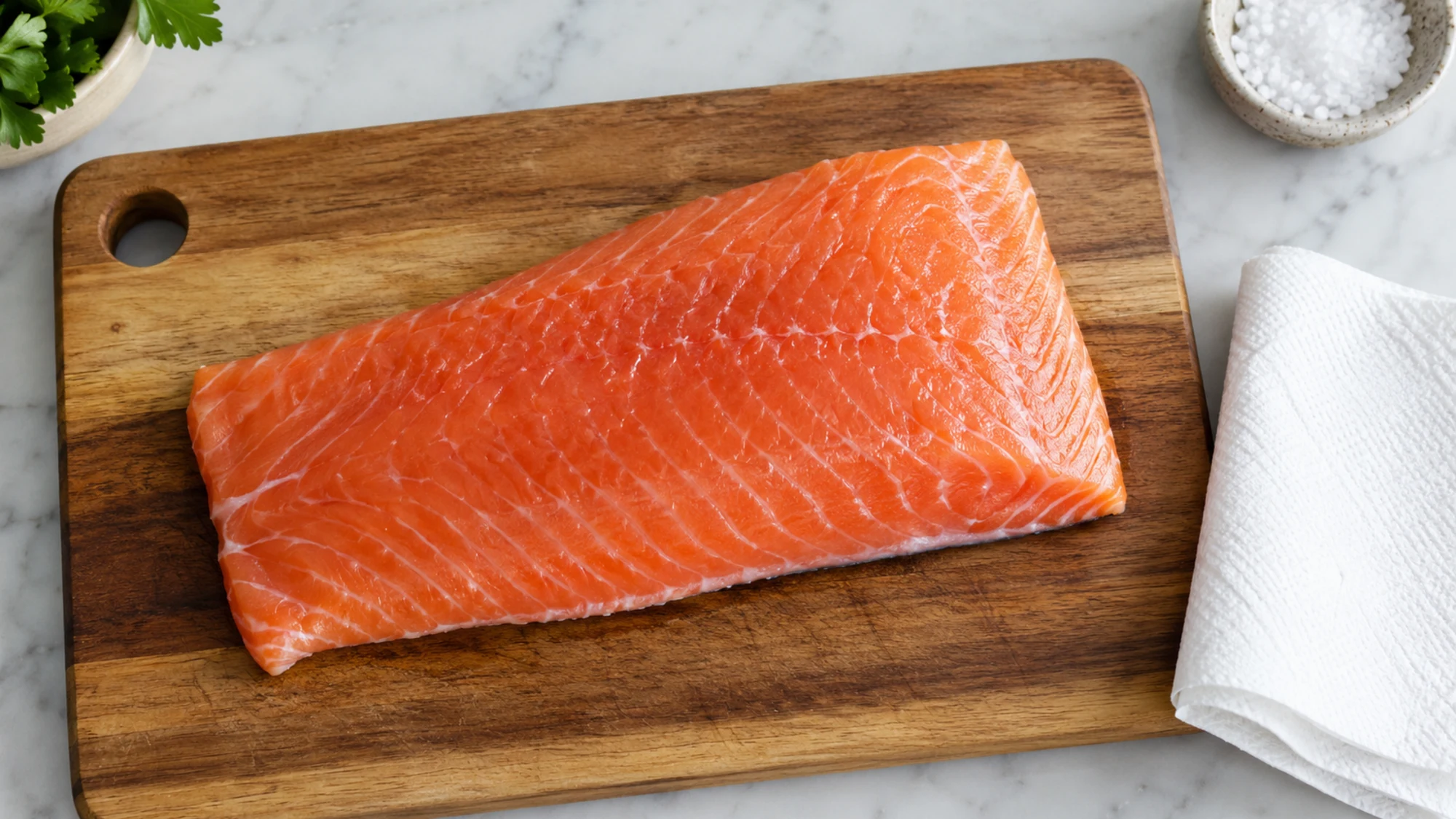
The salmon internal temp recommended for home cooking
FoodSafety.gov lists salmon with other fish at 145°F. That is the safe minimum cooking endpoint used here, whether you bake, grill, pan-cook or air-fry it. The cooking method changes how heat reaches the fish, not the temperature you need to verify.
Do not borrow the three-minute rest instruction from the chart’s rows for certain meats. The fish row does not list that same rest requirement. A brief rest may fit your recipe, but it is not a substitute for checking the fish’s actual temperature.
| Situation | Temperature | What the number means |
|---|---|---|
| Cooking fresh salmon | 145°F / 63°C | Recommended minimum internal cooking temperature |
| Reheating cooked salmon | 165°F / 74°C | Recommended internal temperature for leftovers |
| Refrigerating raw or cooked fish | 40°F / 4°C or below | Cold-storage guidance, not a cooking endpoint |
Put the probe in the part that cooks last
The USDA thermometer guide says to check the thickest portion or center of fish. With a thin fillet, a thin probe inserted from the side can help place the sensing area in the middle instead of against the hot pan.
Follow your thermometer’s insertion-depth and reading-time instructions. I prefer a deliberate check in the thick center over a quick touch at the surface. If several pieces vary in thickness, check the thicker pieces individually rather than assuming the smallest one represents them all.
- Locate the thickest part before inserting the thermometer.
- Keep the sensing area in the flesh, away from the pan or grill.
- Wait for the reading to settle as the device instructions require.
- Check another thick area if the shape is uneven.
- Clean the probe as directed after use, especially between raw and ready-to-eat food.
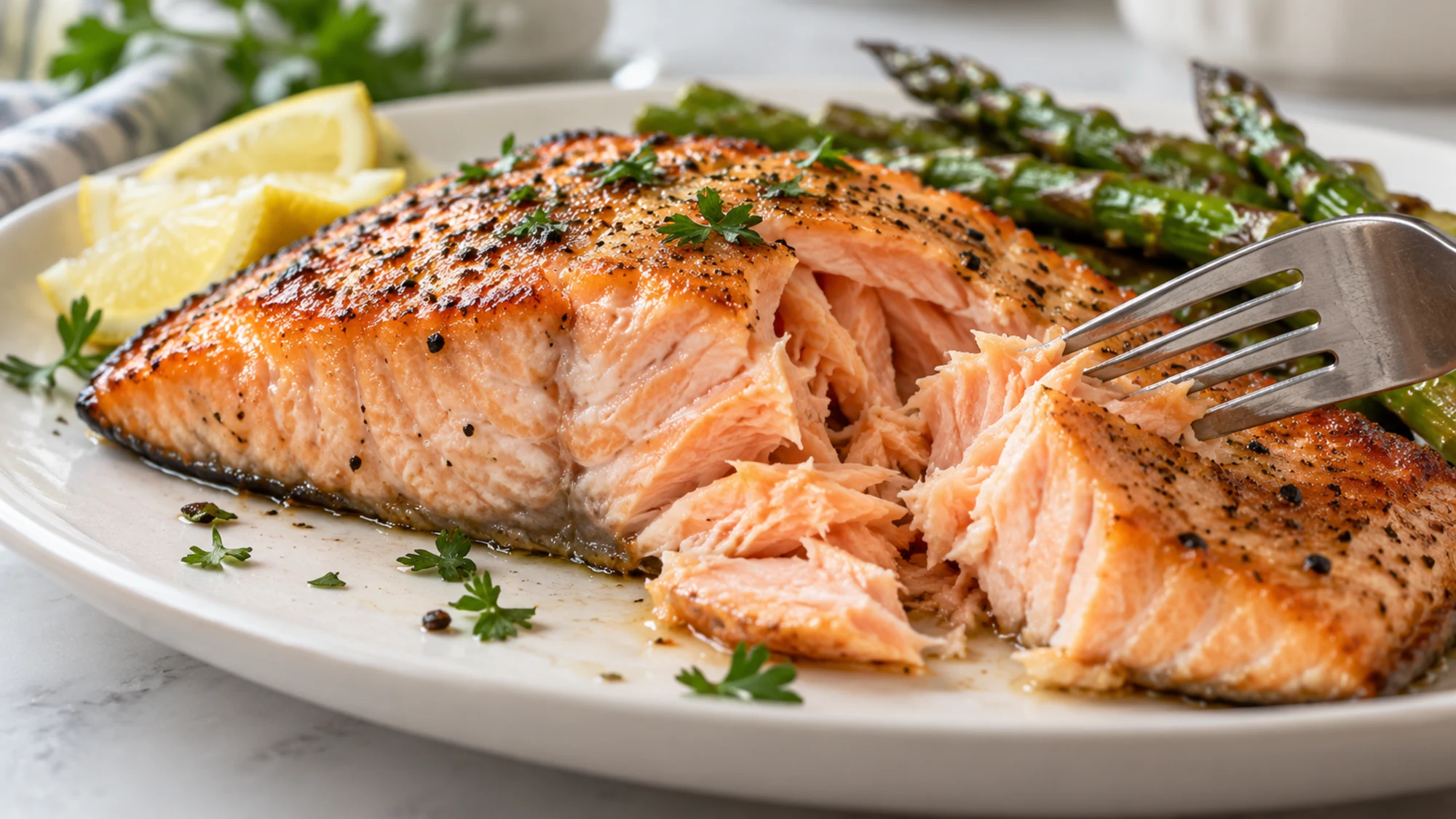
Why some recipes recommend a lower number
You may see lower targets described as medium or medium-rare salmon, usually reflecting a preferred texture rather than the same official safety endpoint. For example, ThermoWorks discusses a chef-preference target while also acknowledging the FDA’s 145°F recommendation. Those two statements should not be blended into a claim that any lower number is equally safe.
Carryover cooking can also cause confusion. Heat may continue moving through food after it leaves the heat source, but the increase depends on the portion and cooking conditions. I would not assume a fixed rise will rescue an under-temperature center; verify the recommended endpoint rather than guessing how far it will climb.
- Treat a texture preference as a preference, not a universal safety guarantee.
- Do not assume freezing makes raw or undercooked fish risk-free.
- Keep official guidance separate from a restaurant’s doneness terminology.
- Use a recipe’s timing to plan, then use the thermometer to check.
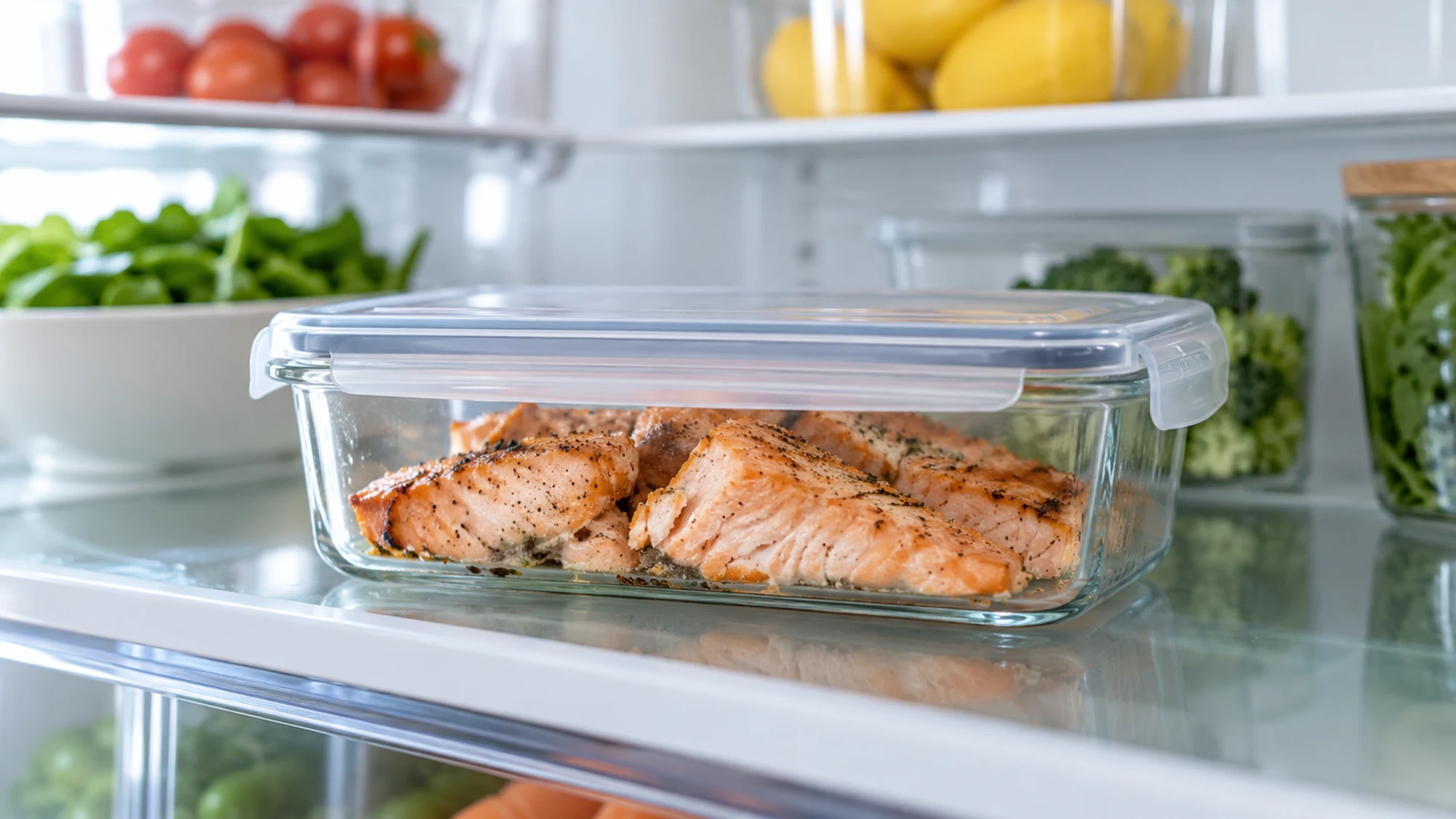
Handle the fish safely before and after dinner
The FDA seafood guidance recommends refrigeration at 40°F or below and using refrigerated raw seafood within two days, otherwise freezing it. Keep raw fish and its juices away from ready-to-eat foods. Freezing does not kill every harmful germ, so it does not replace safe handling and thorough cooking.
People who are pregnant, children, older adults and people with weakened immune systems should avoid raw or undercooked seafood, according to the FDA. For them especially, a lower-temperature texture recommendation is not an appropriate replacement for the safety advice.
After dinner, follow USDA leftover guidance: refrigerate within two hours, or one hour when temperatures are above 90°F. Divide larger portions into shallow containers for quicker cooling. Properly refrigerated leftovers should be used within three to four days and reheated to 165°F.
- Have a clean plate ready for cooked salmon, not the plate that held it raw.
- Put leftovers away promptly rather than waiting for them to reach room temperature.
- Label stored portions so their age is clear.
- If reheating dries the fish, adjust the method, not the safety target.
Bottom Line
Use 145°F in the thickest part for cooking salmon and 165°F for reheating leftovers. Keep lower chef-preference numbers clearly separate from official guidance, and do not rely on color or assumed carryover alone. Our salmon grilling guide can help with the cooking method; the thermometer supplies the final check.
The FDA’s seafood-handling video explains safe selection and preparation. Use it alongside the current temperature and storage guidance linked here.
Sources
- FoodSafety.gov: safe minimum internal temperatures
- USDA: food thermometers
- FDA: selecting and serving seafood safely
- USDA: leftovers and food safety
- ThermoWorks: culinary seafood temperature preferences

Emily is Spoonvale’s recipe-writing persona, bringing a warm, practical voice to everyday cooking. Her focus is simple: approachable meals, comforting flavors, and clear instructions that help make time in the kitchen more enjoyable.