
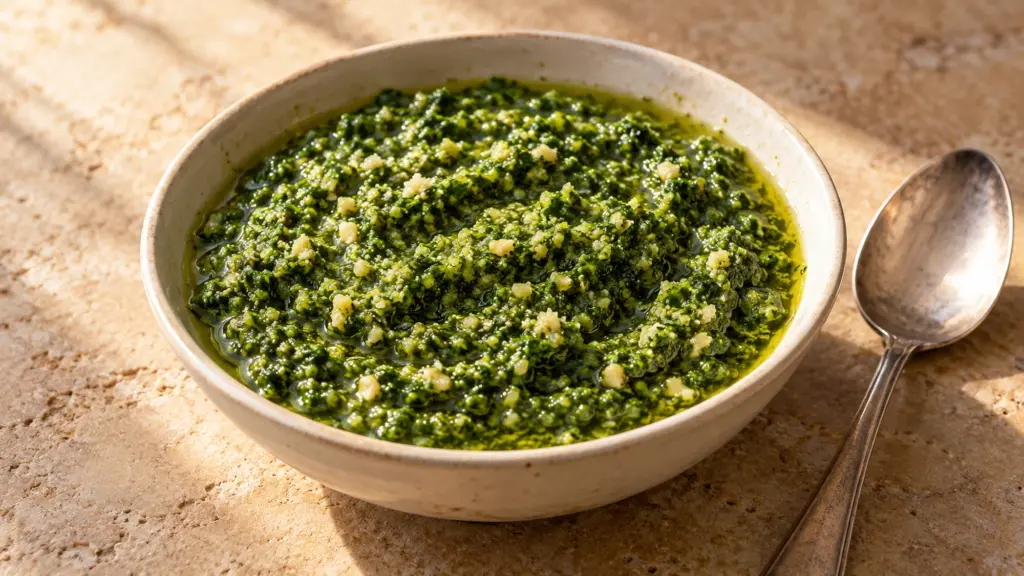
A generous bunch of basil can make dinner feel close before the stove is even on. The trick is turning those leaves into a sauce rather than a thin green oil. Learning how to make pesto means controlling the texture: chop the solid ingredients first, add the oil gradually, and stop when the mixture is cohesive but still has a little character.
Fresh basil, pine nuts, Parmesan, garlic and olive oil make a concentrated sauce that needs no cooking. Use brief pulses in the food processor, then adjust the consistency for the food you’re serving. A spoonable pesto can become a pasta sauce without making the entire batch runny.
I’d keep the first batch straightforward. Sweet basil gives this version its familiar aroma; other varieties can taste noticeably different. Penn State’s basil guide describes the citrus and licorice notes found in some alternatives, which is useful when the herb label is less specific than expected.
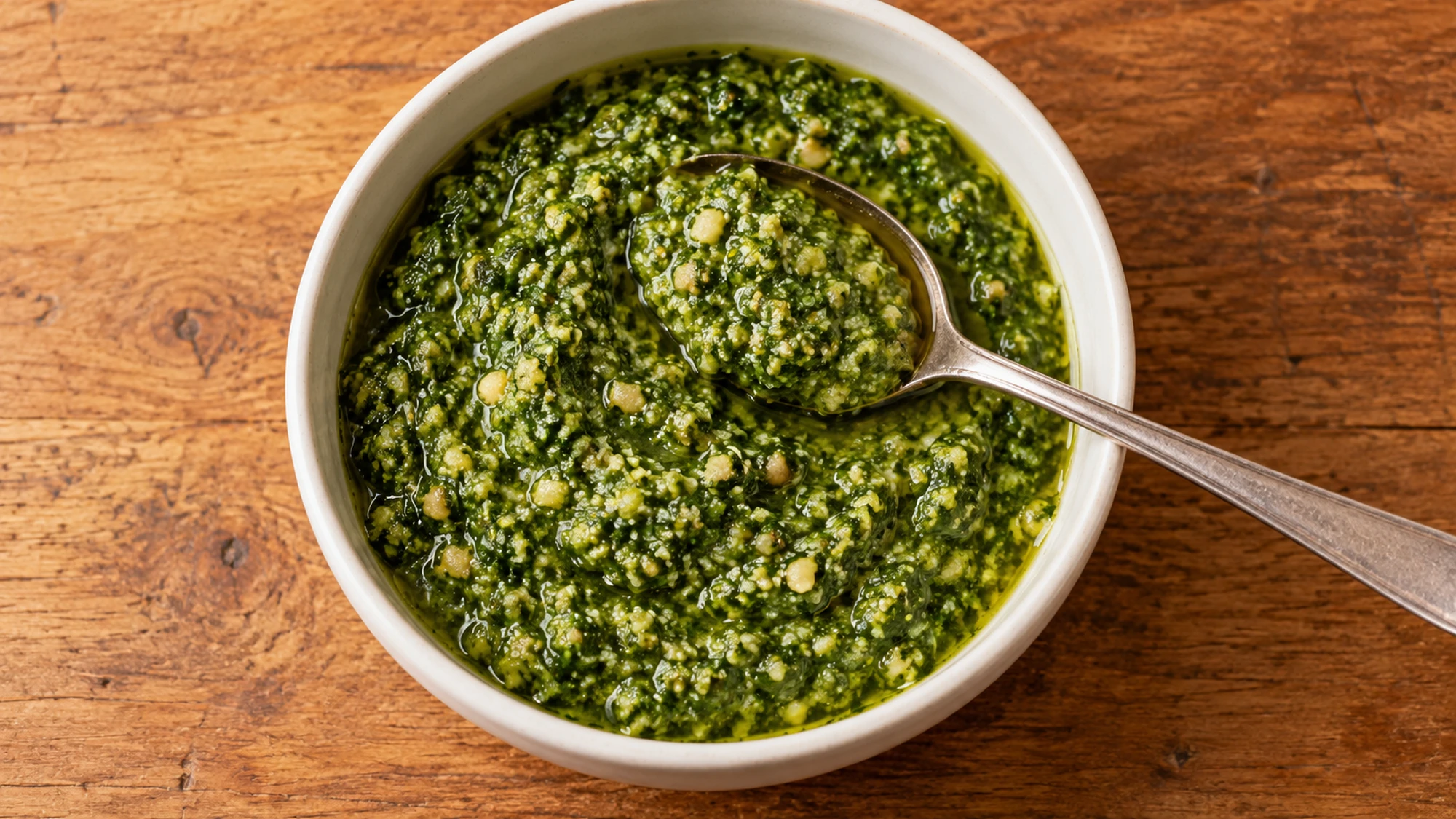
Serving Suggestions for Fresh Basil Pesto
Pesto is a seasoning as much as a sauce, so start with a modest spoonful and taste the finished dish. For pasta, loosen the amount you need with a little reserved cooking water and toss it through the drained noodles off the direct heat. Add that water gradually; a glossy coating is more useful than a puddle.
I’d also save some for a sandwich or a spoonful beside roasted vegetables. Salty cheese, fragrant basil and rich oil can lift relatively plain food without another elaborate component. A small spoonful alongside grilled salmon adds flavor without covering its browned surface.
- Pasta: loosen only the serving portion, not the storage container.
- Sandwiches: spread a thin layer before adding the other fillings.
- Roasted vegetables: spoon on a little after cooking.
- Soup: add a small finishing swirl to an individual bowl.
- Fish or chicken: serve alongside properly cooked food, using clean utensils.
Let the pesto do a focused job. A small amount can bring basil flavor to a whole plate; more sauce is not automatically a better balance.
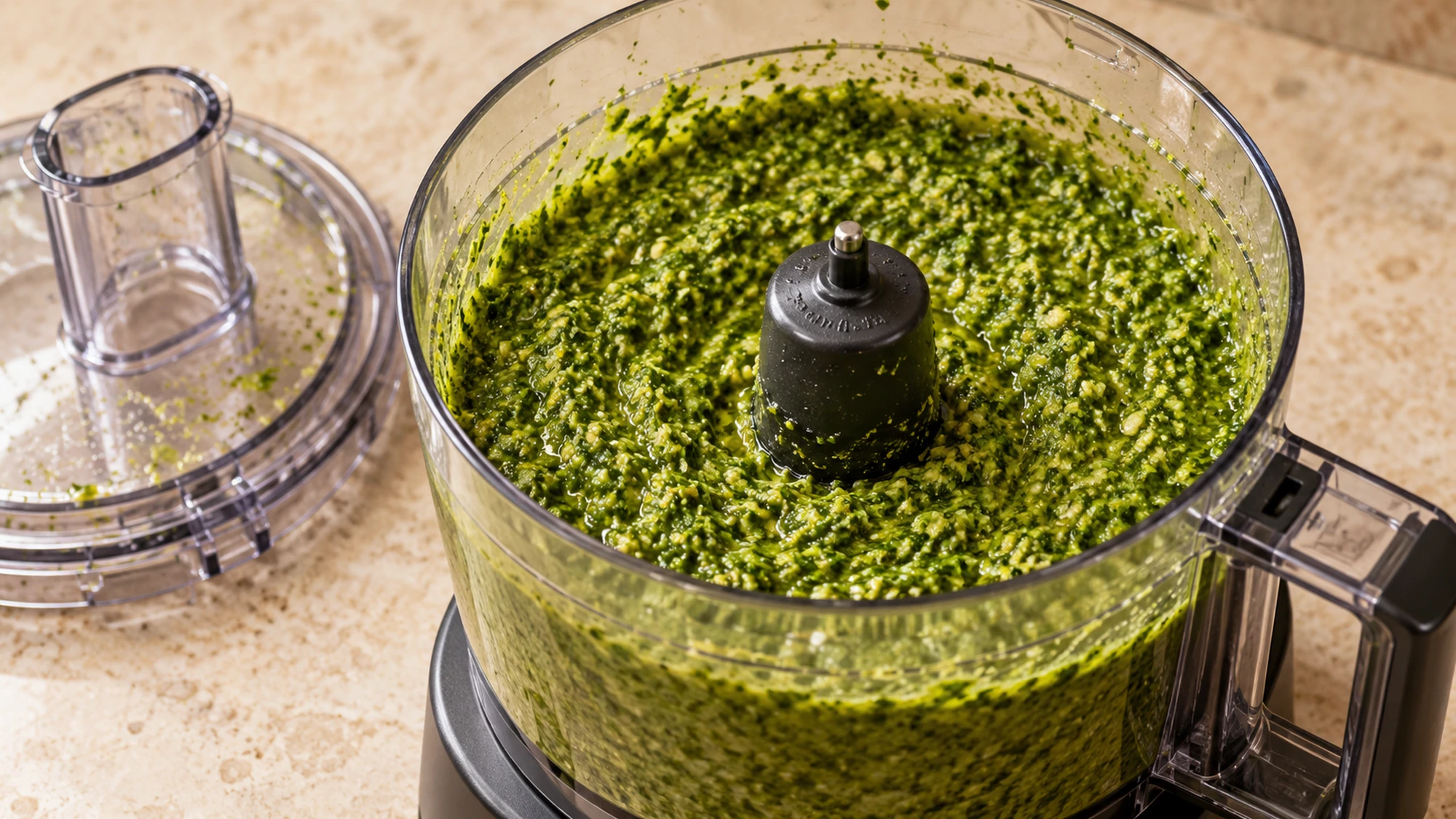
How to Make Pesto Variations That Still Taste Balanced
The ingredients have different jobs. Basil supplies the main aroma, nuts give body, Parmesan adds savory flavor and salt, and oil carries everything into a spreadable sauce. Before replacing something, consider which job needs covering. This is not a recipe where every green leaf tastes the same.
Walnuts make a stronger-flavored alternative to pine nuts, while parsley produces a different herbal character. A vegetarian hard cheese can replace Parmesan if its label confirms it suits your needs. I’d make one change at a time rather than adjusting the nuts, cheese and herbs together.
| Change | What to expect | Practical adjustment |
|---|---|---|
| Walnuts instead of pine nuts | More pronounced nut flavor | Chop well; taste before adding garlic |
| Some parsley with the basil | A different herbal aroma | Keep basil present for basil flavor |
| Vegetarian hard cheese | Saltiness varies by product | Check labels; season after blending |
| Less oil at first | A thicker spread | Loosen for the intended dish |
Change one ingredient deliberately, then judge the finished sauce. Substitutions can make excellent variations without tasting identical to the original.
Health Benefits and Sensible Storage
Pesto brings herbs, nuts and oil to a meal, but it remains a concentrated condiment rather than a serving of leafy vegetables. Cheese and added salt also affect the finished sauce. Consider the whole plate instead of asking a spoonful of pesto to carry a health promise.
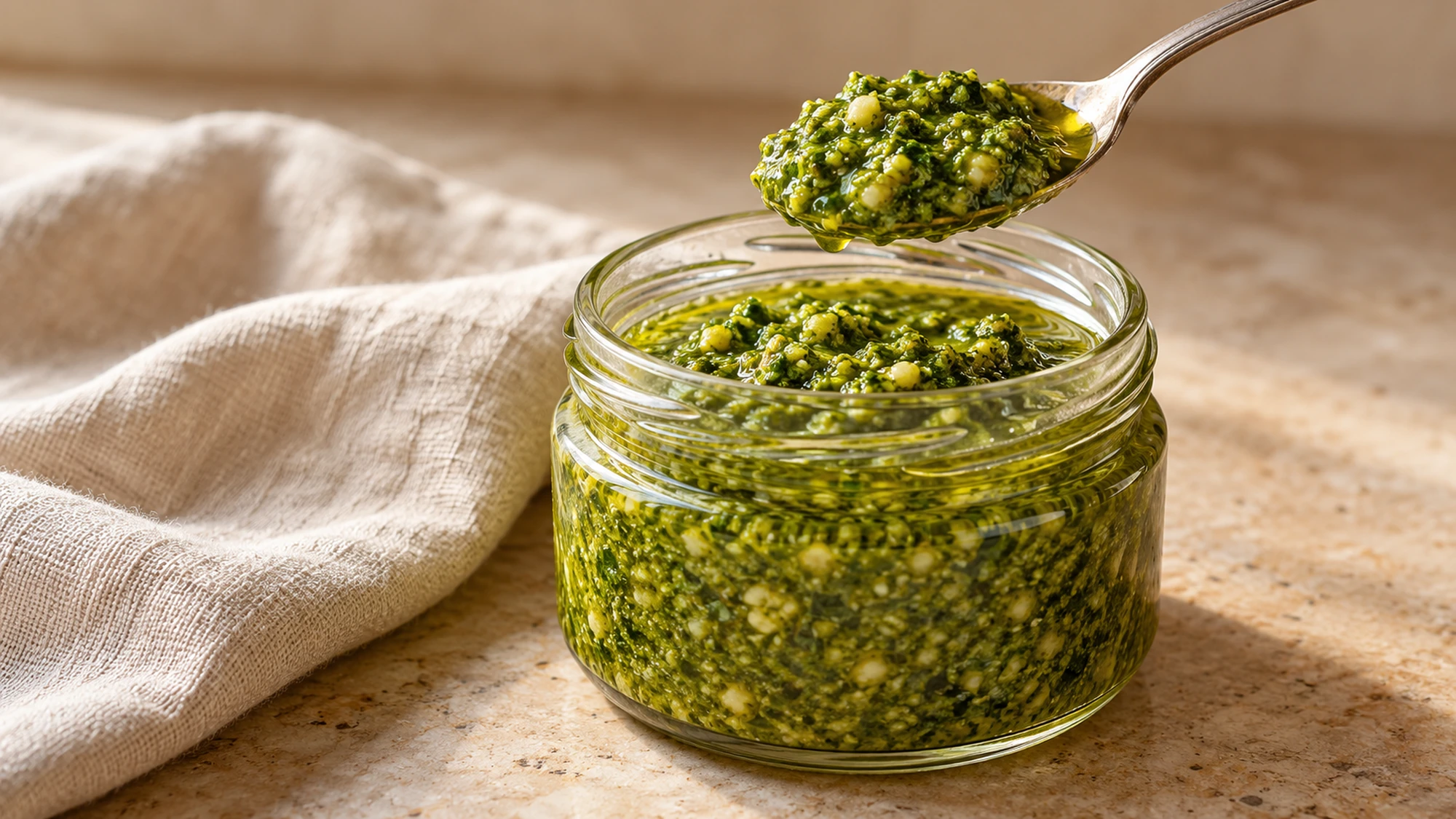
Storage deserves more attention than the green color. Oregon State University’s pesto and herb-in-oil guidance says homemade pesto must be refrigerated and used within four days or frozen for longer storage. Garlic and herbs in oil are not safe countertop preserves, and there is no researched home-canning process for pesto.
- Refrigerate promptly in a clean, covered container and label the preparation date.
- Keep the refrigerator at 40°F or below, following FDA food-handling guidance.
- Freeze small portions if you will not use the batch within four days.
- Thaw frozen portions in the refrigerator rather than on the counter.
- Check milk and nut ingredients for anyone with an allergy; a substitution does not automatically make the dish safe.
Keep pesto cold, date the container, and freeze extra portions early. A layer of oil is not a substitute for safe storage.
Bottom Line
How to make pesto comes down to a useful sequence: prepare dry basil leaves, chop the solid ingredients, and add oil with restraint. Keep the texture slightly coarse, taste before adjusting the salt, and loosen only the portion you need. The result is a flexible sauce, not another complicated dinner project.
Make a fresh, spoonable batch, use it where its flavor adds something useful, and give the leftovers a clear refrigerator-or-freezer plan.
How to Make Pesto Recipe

Ingredients
- 2 packed cups fresh sweet basil leaves about 50 g, large stems removed
- 1/4 cup pine nuts about 35 g
- 1/2 cup finely grated Parmesan about 50 g
- 2 small cloves garlic about 6 g, peeled
- 1/3 cup extra-virgin olive oil 80 mL
- 1/4 teaspoon fine salt about 1.5 g, then adjust to taste
Equipment
- Colander
- Clean kitchen towel or salad spinner
- Small food processor
- Flexible spatula
- Measuring cups and spoons
- Clean covered storage container
Instructions
- Rinse the leaves under running water and dry thoroughly with a clean towel or salad spinner. Remove large stems and damaged leaves. Clean the work surface and utensils before starting.
- Place the pine nuts and garlic in the food processor. Pulse several times until finely chopped, stopping to scrape down the bowl with the machine switched off.
- Add the dried basil leaves, Parmesan and measured salt. Pulse until the leaves are finely chopped and the mixture is evenly combined.
- Add the olive oil gradually in small additions, pulsing between additions. Scrape down as needed. Stop when the pesto holds together as a spoonable sauce with small visible flecks; do not process endlessly.
- Taste before adding any extra salt because Parmesan varies in saltiness. For pasta, loosen only the amount being served with a little reserved cooking water, then toss off direct heat.
- Transfer unused pesto to a clean covered container, refrigerate at 40°F or below, and use within four days. Freeze small portions for longer storage and thaw in the refrigerator. Do not store at room temperature or home-can this pesto.
Nutrition
Video
Notes
Tried this recipe?
Let us know how it turned out!Emily is Spoonvale’s recipe-writing persona, bringing a warm, practical voice to everyday cooking. Her focus is simple: approachable meals, comforting flavors, and clear instructions that help make time in the kitchen more enjoyable.