
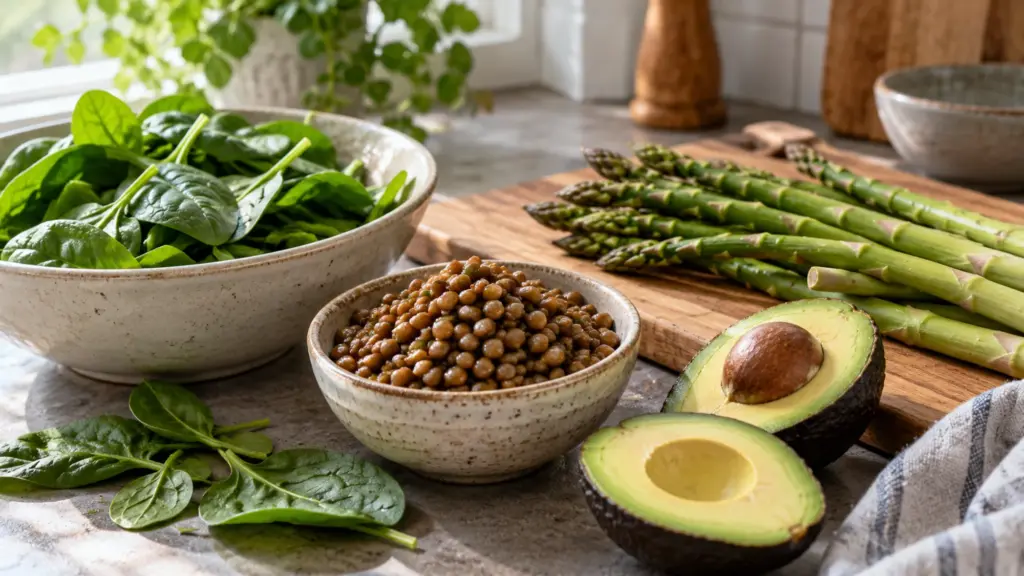
A bag of spinach and a box of enriched cereal can both contribute folate, even though the nutrient reaches them in different ways. That difference is easier to understand once you separate the vitamin’s name from the form added to food.
What is folate? It is vitamin B9, a nutrient the body needs to make DNA and support cell division. Folate occurs naturally in foods, while folic acid is a form used in fortified foods and many supplements.
I like a food label that answers a practical question: what am I getting in the portion I actually eat? With folate, the units need a little explanation before the numbers become useful.
What is folate, and how is folic acid different?
NIH’s folate fact sheet uses folate as the general term for this vitamin, including naturally occurring food folate and forms such as folic acid. Folic acid is not a different vitamin; it is a particular form used in food fortification and supplements.
The distinction matters because the body absorbs forms differently. That is why nutrition labels use dietary folate equivalents, abbreviated DFE, rather than treating every microgram of every form as identical. You do not need to calculate the chemistry to choose lunch, but you do need to keep the unit beside the number.
Folate supports normal DNA production and cell division. A food’s folate content is not evidence that eating it will treat fatigue, infertility or another symptom. Suspected deficiency needs professional assessment rather than a diagnosis based on a short symptom list.
Everyday foods that contribute folate
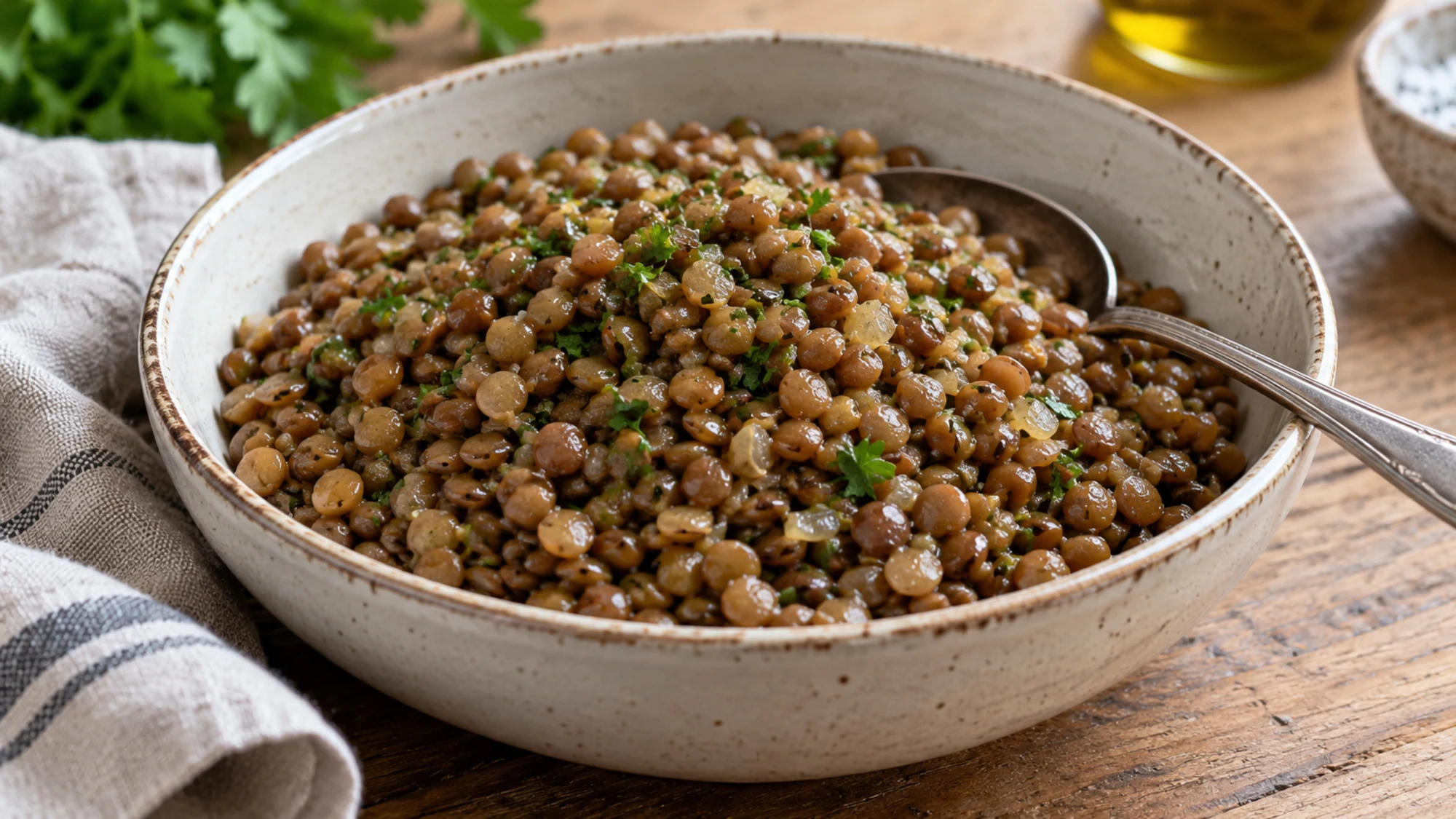
Leafy greens, legumes and some other vegetables and fruits provide naturally occurring folate. Enriched grain products can supply added folic acid. The following reference amounts come from NIH and describe specific foods and portions, not a guarantee for every brand or preparation.
Notice that a half-cup of boiled spinach and a full cup of raw spinach are different servings. Cooking changes how much leaf fits in the cup, so the numbers should not be read as a simple claim that one preparation creates more vitamin. For packaged foods, check the product’s own label.
| Food | Serving | Folate, mcg DFE |
|---|---|---|
| Spinach, boiled | ½ cup | 131 |
| Black-eyed peas, boiled | ½ cup | 105 |
| Asparagus, boiled | 4 spears | 89 |
| Brussels sprouts, frozen and boiled | ½ cup | 78 |
| Spaghetti, enriched and cooked | ½ cup | 74 |
| Romaine lettuce, shredded | 1 cup | 64 |
| Avocado, raw and sliced | ½ cup | 59 |
| Orange, fresh | 1 small | 29 |
How to read mcg DFE on a label
The FDA’s folate label guidance explains that mcg DFE accounts for differences in absorption. If a product contains added folic acid, its amount appears in parentheses after the total folate figure. For example, 667 mcg DFE (400 mcg folic acid) describes one contribution in two related ways, not two amounts to add together.
If folate is listed without a folic acid amount in parentheses, the label is not declaring added folic acid. If a food does not list folate at all, that does not automatically mean it contains none; nutrient-label requirements vary with the product and what has been added.
Enriched and fortified are useful clues, but they are not a substitute for checking the actual package. Do not assume every bread, rice, cereal or pasta has the same added nutrients. A gluten-free product, for example, may have a different enrichment profile from the wheat product beside it.
- Read the serving size before comparing nutrient amounts.
- Keep mcg DFE separate from mcg of folic acid.
- Look for the parenthetical folic acid amount where it is present.
- Compare the labels of the products you actually buy, not just the category name.
Daily reference amounts and pregnancy guidance
NIH gives an adult recommended dietary allowance of 400 mcg DFE per day, rising to 600 mcg DFE during pregnancy and 500 mcg DFE during breastfeeding. These are total-intake reference amounts, not instructions to take those quantities as a supplement.
Separately, CDC recommends 400 mcg of folic acid daily for all women capable of becoming pregnant, from fortified foods, supplements or both, alongside a varied diet. Folic acid helps prevent some neural tube defects, and CDC identifies it as the form of folate shown to prevent these defects. The 400 mcg folic acid recommendation should not be confused with the adult 400 mcg DFE reference amount.
That distinction deserves care, not alarm. If you are planning pregnancy, taking medicines, considering a high-dose product or concerned about deficiency, discuss your circumstances with a qualified clinician. This guide does not prescribe a supplement or suggest that extra folate guarantees a particular outcome.
- Use legumes in a soup or bowl when they fit the meal.
- Serve greens alongside a main dish you enjoy.
- Read the enrichment information on the grain products you buy.
Bottom Line
Folate is vitamin B9; folic acid is one form used in fortified foods and supplements. Greens, legumes and other foods contribute naturally occurring folate, while enriched products may add folic acid. Keep the serving and units attached to every comparison, and treat pregnancy guidance as a distinct recommendation rather than another food-table number.
CDC’s “Folic Acid and You: Your Healthy Pregnancy” explains why folic acid matters before and during early pregnancy. Use the current written CDC guidance linked below for recommendations; the video is a supplementary explanation.
Sources
- NIH Office of Dietary Supplements: folate functions, foods and reference intakes
- FDA: folate and folic acid on the Nutrition Facts label
- CDC: folic acid intake and sources

Emily is Spoonvale’s recipe-writing persona, bringing a warm, practical voice to everyday cooking. Her focus is simple: approachable meals, comforting flavors, and clear instructions that help make time in the kitchen more enjoyable.