
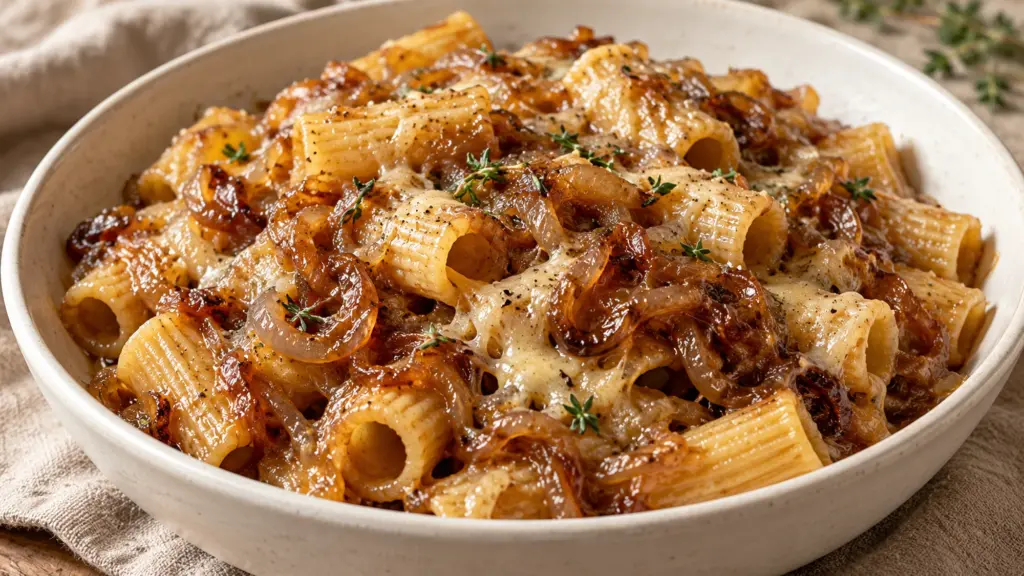
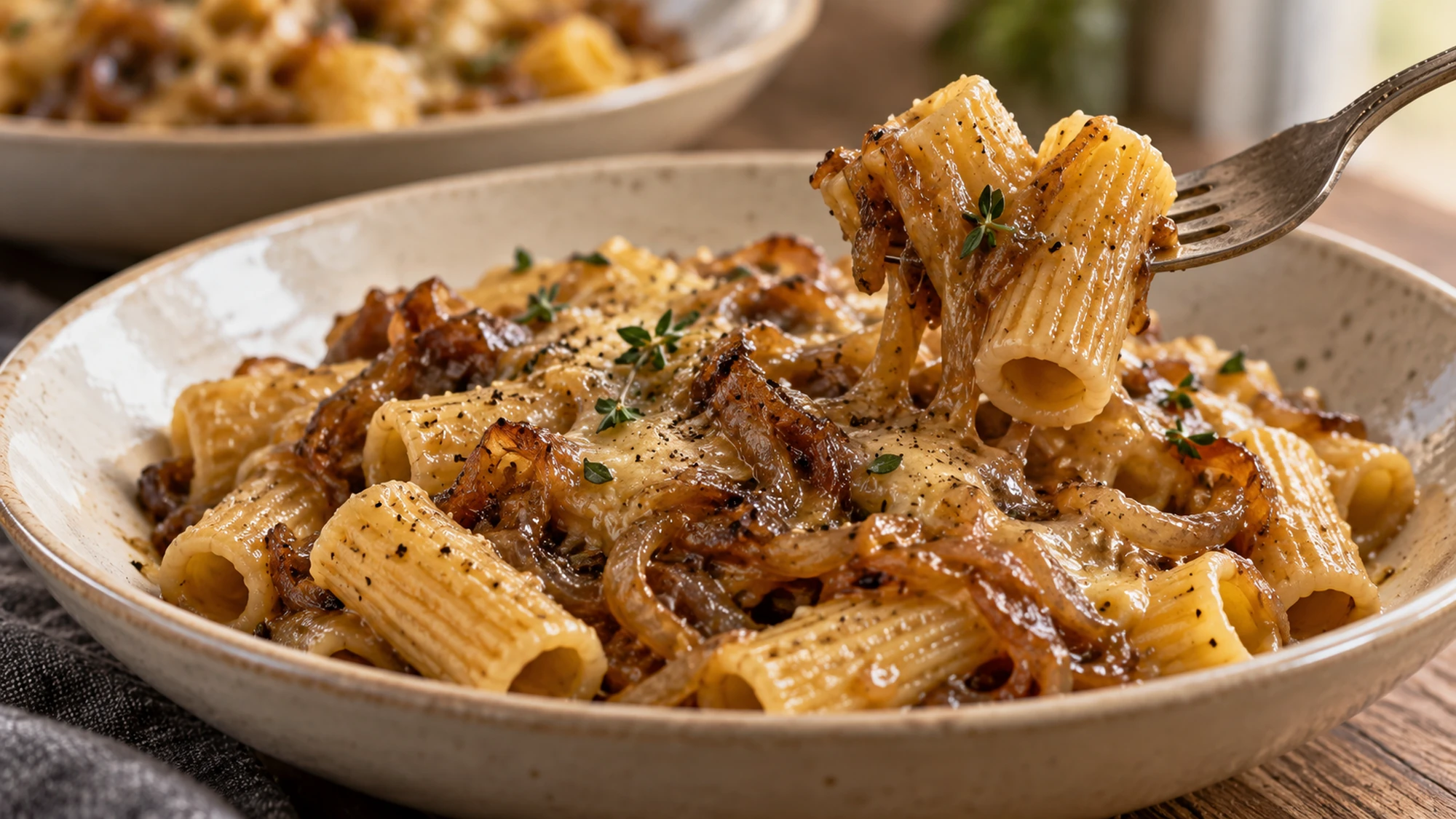
French onion pasta gets its glossy coating from finely grated Gruyère and a splash of reserved pasta water. Deeply browned onions provide the sweet-savory flavor underneath, while thyme and broth bring the sauce together without heavy cream. Keep the skillet off fierce heat for the cheese finish, then loosen the coating until it clings to every ridged tube.
Give the onions time to brown, then loosen their flavorful pan juices with broth. Finish the pasta with grated Gruyère and reserved cooking water for a glossy coating that leaves the onion flavor in charge.
I’d choose rigatoni for the little pockets of sauce inside each tube, though another ridged short shape works too. Keep a wide skillet and a wooden spoon nearby; a crowded, narrow pot makes the onions harder to stir evenly. The useful cue is their color and softness, rather than a promise that every stove finishes on the same minute.
Serving Suggestions for French Onion Pasta
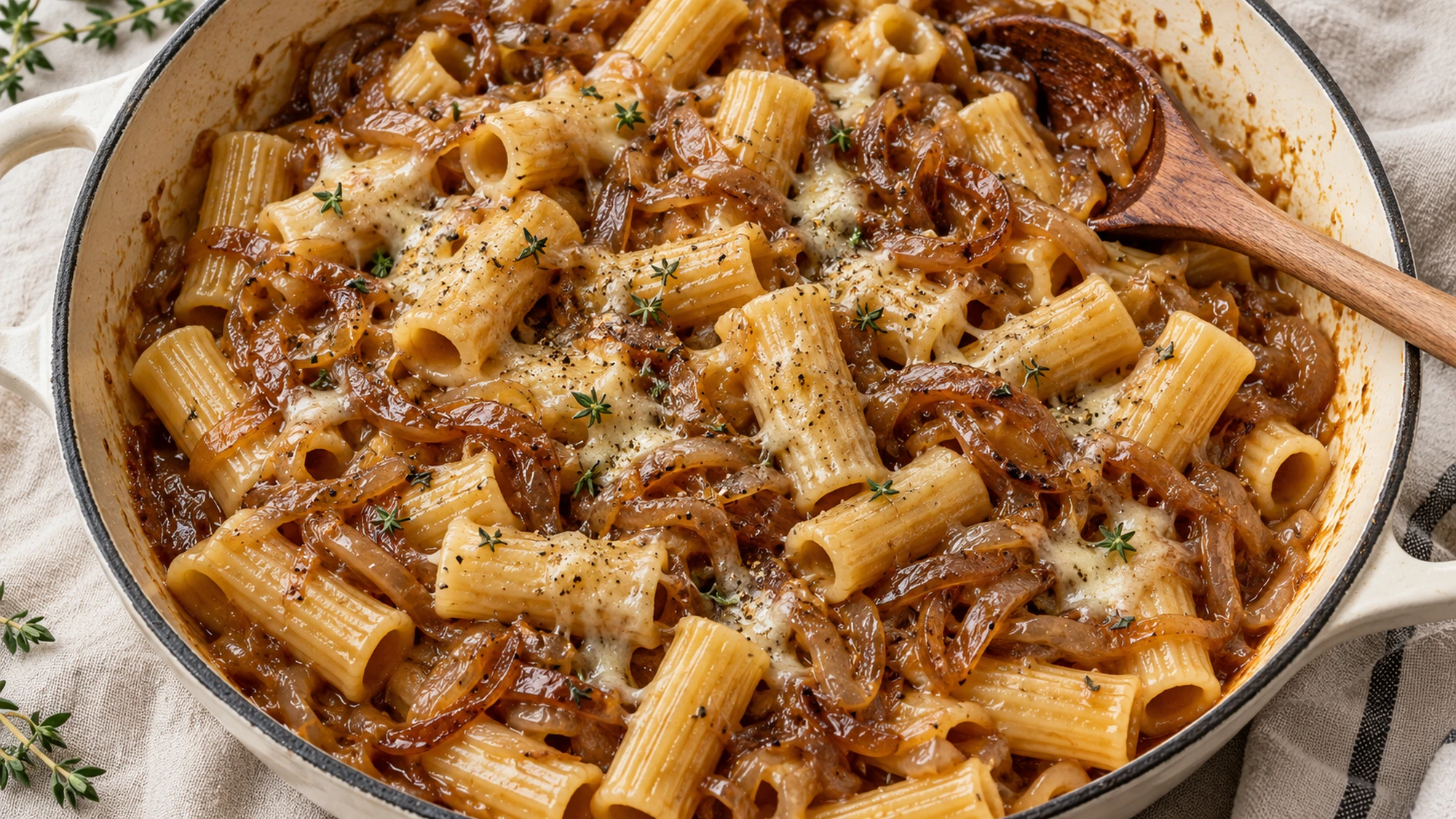
Bring the skillet to the table while the sauce still looks slightly loose. Pasta continues absorbing liquid as it stands, so a splash of warm cooking water just before serving is more useful than an extra handful of cheese. I prefer a crisp, sharp side here: it gives the soft onions and rich cheese some contrast.
- Keep it fresh: serve with a green salad dressed with lemon or vinegar, or sliced cucumbers with a light dressing.
- Add vegetables: steamed broccoli or simply cooked green beans sit comfortably beside the savory sauce without competing with it.
- Plan the next serving: follow the USDA’s leftover storage and reheating guidance: refrigerate in shallow covered containers within two hours, or one hour above 90°F (32°C). Use within three to four days and reheat thoroughly to 165°F (74°C).
Serve promptly, keep the sauce supple with a little water, and let a crunchy vegetable side balance the bowl.
French Onion Pasta Variations and Sauce Fixes
Keep the browned onion base intact when adapting the recipe. Cheese, pasta shape and broth can change the result in different ways; choose a swap for what it contributes. For another vegetable-centered pasta dinner, Spoonvale’s baked feta pasta with burst tomatoes takes a tangier route.
| Change | What to expect | Useful adjustment |
|---|---|---|
| Penne for rigatoni | Smaller tubes with the same sauce-catching ridges | Follow its package timing |
| Swiss for Gruyère | A milder cheese flavor | Grate finely and add off the heat |
| Whole-wheat pasta | A nuttier flavor and firmer bite | Check doneness independently |
| Sauce looks tight | Pasta has absorbed more liquid | Add warm water a little at a time |
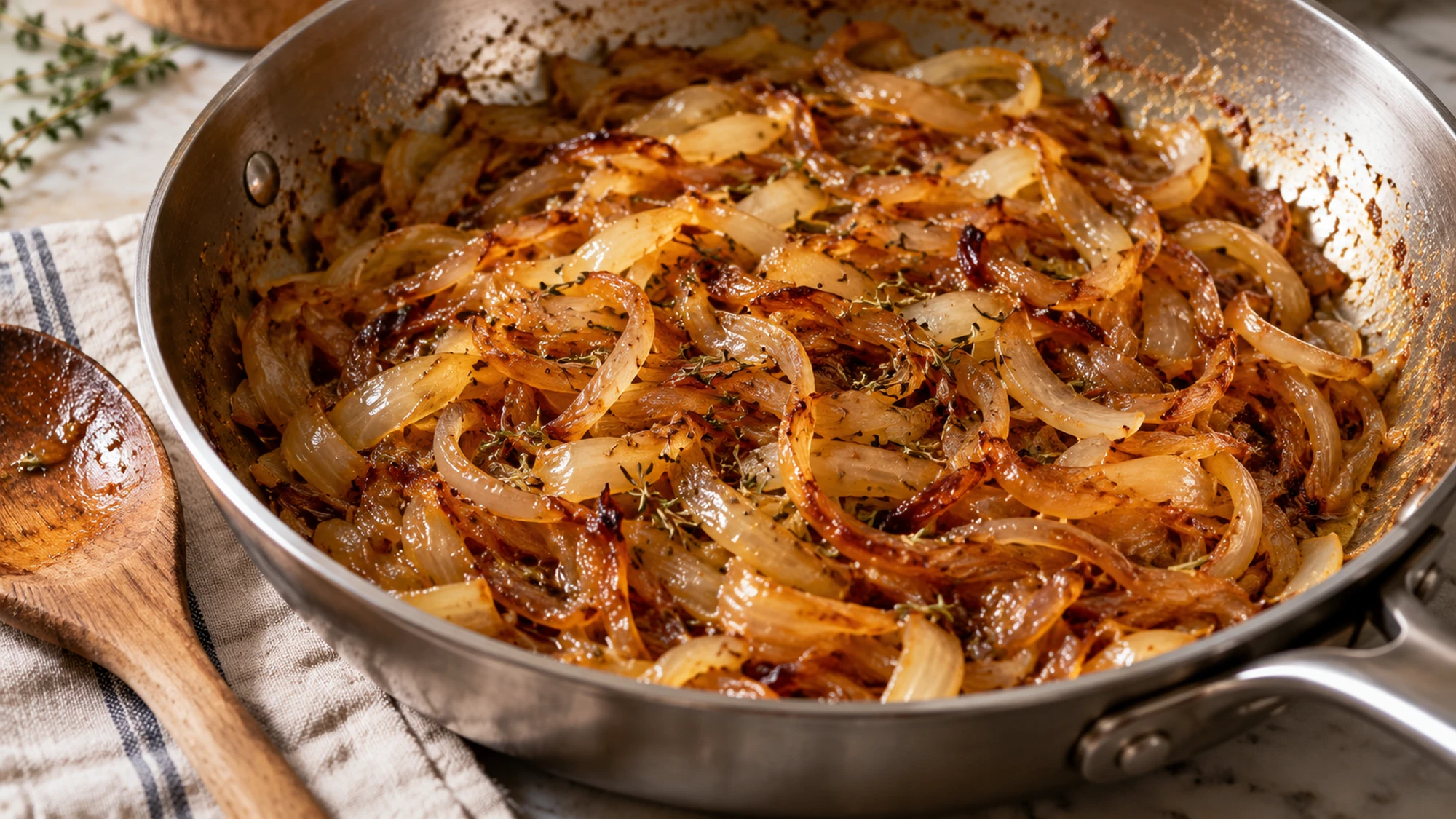
- Look for deep gold: pale, softened onions need more time before they give this dish its rounded flavor.
- Watch the pan: brown residue adds flavor; blackened patches signal that the heat needs lowering.
- Save the water: scoop some out before draining, while it is still available to help bring the sauce together.
- Onions catching too quickly? Lower the heat and add a spoonful of water to loosen the brown patches before they burn.
- Cheese turning stringy? Move the skillet off the heat before stirring it in; a rolling boil is unnecessary.
Adjust moisture before adding richness. The sauce should cling to the pasta, with tender onion ribbons visible throughout.
Health Benefits and Ingredient Balance
This meal combines a substantial onion base with pasta and cheese. It also contains butter, and the Gruyère and broth contribute sodium, so the overall balance depends on your portion and ingredient brands. The FDA’s guide to reading Nutrition Facts labels is useful when comparing sodium and saturated fat at the same serving size.
- Read the broth label: products differ considerably in sodium. Taste the finished sauce before adding seasoning beyond the measured salt.
- Keep portions practical: divide the finished skillet into the card’s four servings and add a vegetable side if you want more variety.
- Check dietary needs: standard pasta contains wheat, while butter and Gruyère contain milk. A gluten-free pasta swap still needs its own package instructions and label checks.
Think about the complete plate and your chosen ingredients; the onion base does not turn a cheesy pasta dinner into a health promise.
Bottom Line
French onion pasta rewards attention to the onions before the noodles enter the pan. Give them an even golden-brown color, keep the garlic from scorching and let the cheese melt into the sauce away from fierce heat. No sprinting required; the onions have their own schedule.
Use the card’s quantities as your starting point and the sauce’s texture as your final cue. A little reserved water can bring the skillet back to a glossy, spoonable finish.
French Onion Pasta Recipe

Ingredients
- 2 lb yellow onions 907 g after peeling; thinly sliced
- 2 tbsp unsalted butter 28 g
- 1 tbsp olive oil
- 0.5 tsp fine salt
- 3 garlic cloves about 9 g, minced
- 1 tsp dried thyme leaves
- 1 cup vegetable broth 240 ml
- 12 oz dry rigatoni 340 g
- 3 L water for boiling the pasta; reserve 1 cup (240 ml) before draining
- 4 oz Gruyère cheese 113 g, finely grated
- 1 tsp apple cider vinegar
- 0.25 tsp black pepper
Equipment
- Wide skillet 12-inch / 30-cm, with enough room for the onions
- Large pasta pot
- Colander
- Wooden spoon
- Chef’s knife and cutting board
- Cheese grater
- Measuring cup and spoons
Instructions
- Heat the butter and olive oil in a 12-inch (30-cm) skillet over medium heat. Add the thinly sliced onions and fine salt; stir to coat, then cook for 5 minutes, stirring often, until they begin to soften.
- Reduce the heat to medium-low. Cook for 35–45 minutes more, stirring regularly, until the onions are very soft and deep golden brown. If brown patches catch on the pan before the onions are ready, add 1 tablespoon water and scrape gently; reduce the heat if they darken too quickly.
- When the onions are nearly ready, bring the 3 liters water to a boil in a large pot. Cook the rigatoni according to its package until just al dente. Reserve 1 cup (240 ml) cooking water, then drain.
- Stir the garlic and thyme into the onions for 1 minute. Add the vegetable broth, scraping up the brown residue, and simmer for 3–5 minutes until slightly reduced.
- Add the drained rigatoni and 1/2 cup (120 ml) reserved cooking water to the skillet; toss for 1 minute. Remove from the heat and add the Gruyère in small handfuls, stirring until melted. Stir in the vinegar and pepper.
- Add more of the reserved water a little at a time if needed, until the sauce lightly coats the pasta. Divide into 4 servings and serve promptly.
Nutrition
Video
Notes
Tried this recipe?
Let us know how it turned out!Emily is Spoonvale’s recipe-writing persona, bringing a warm, practical voice to everyday cooking. Her focus is simple: approachable meals, comforting flavors, and clear instructions that help make time in the kitchen more enjoyable.