
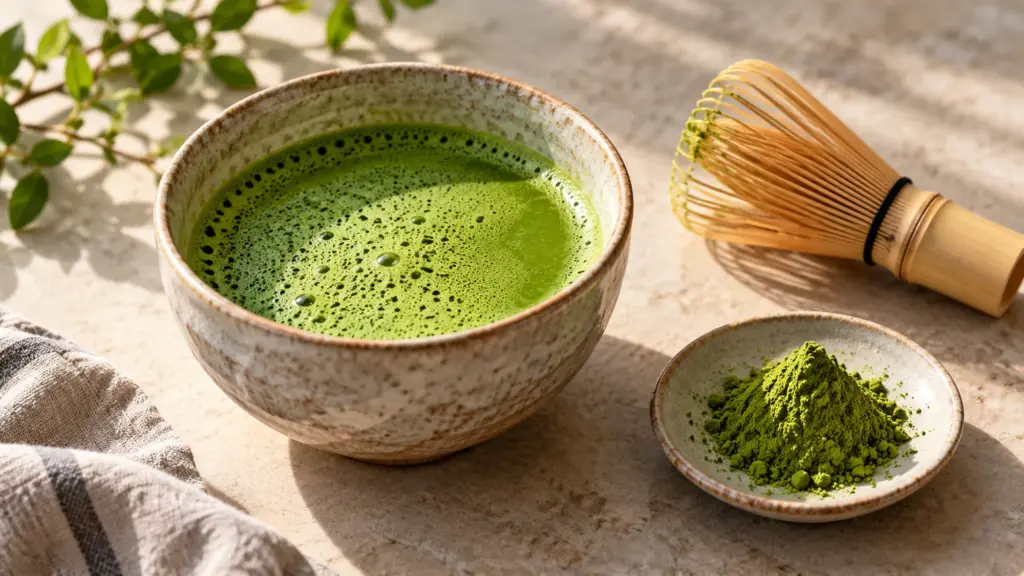
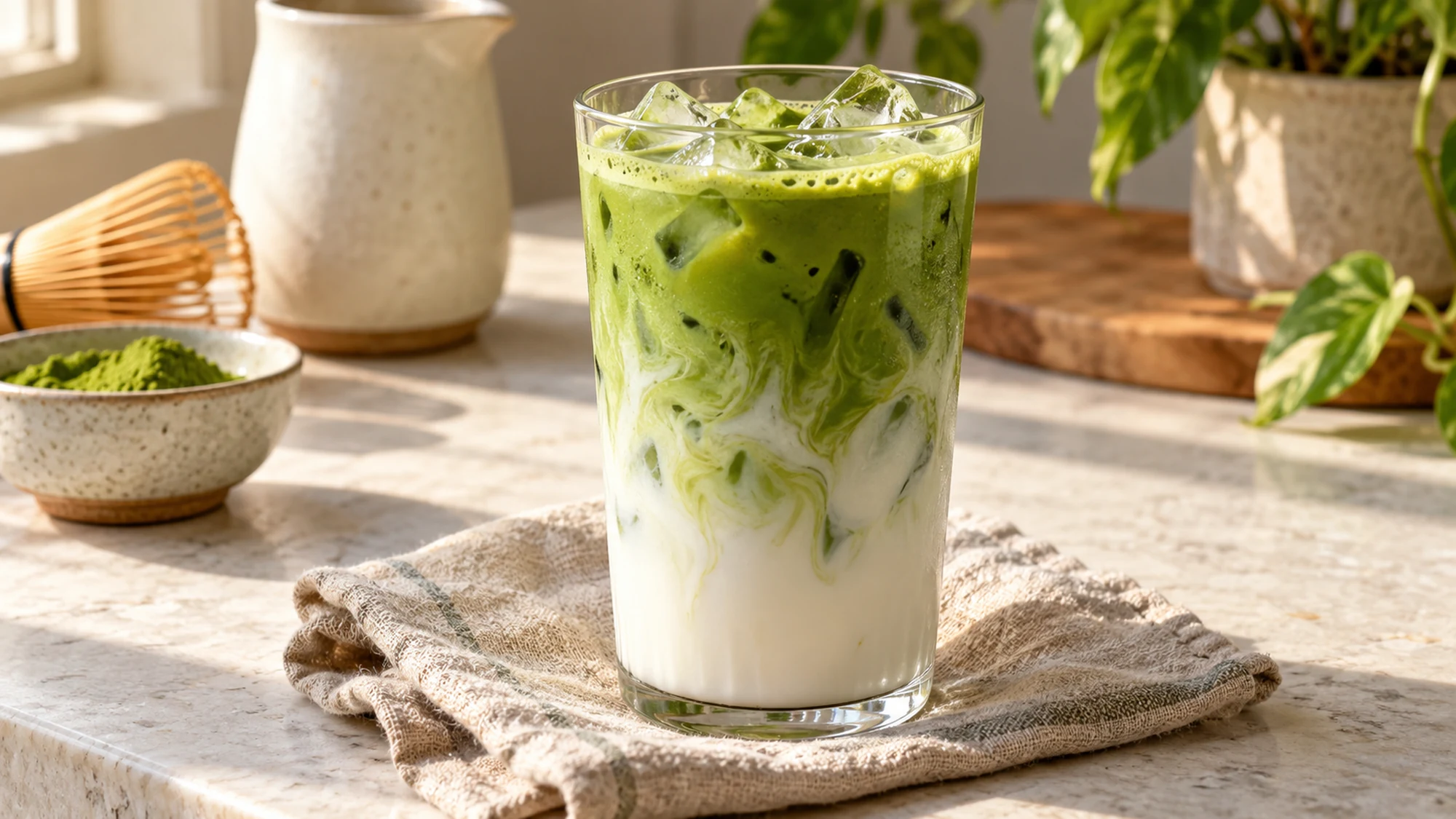
A tall matcha latte can look like a glass of milk with a little green swirled through it. That makes the caffeine question easy to misjudge: the cup tells you how much drink you have, but not how much matcha went into it.
Yes, matcha contains caffeine. The amount depends on the powder and the quantity used, so a small concentrated drink and a large milky latte cannot be compared by appearance alone.
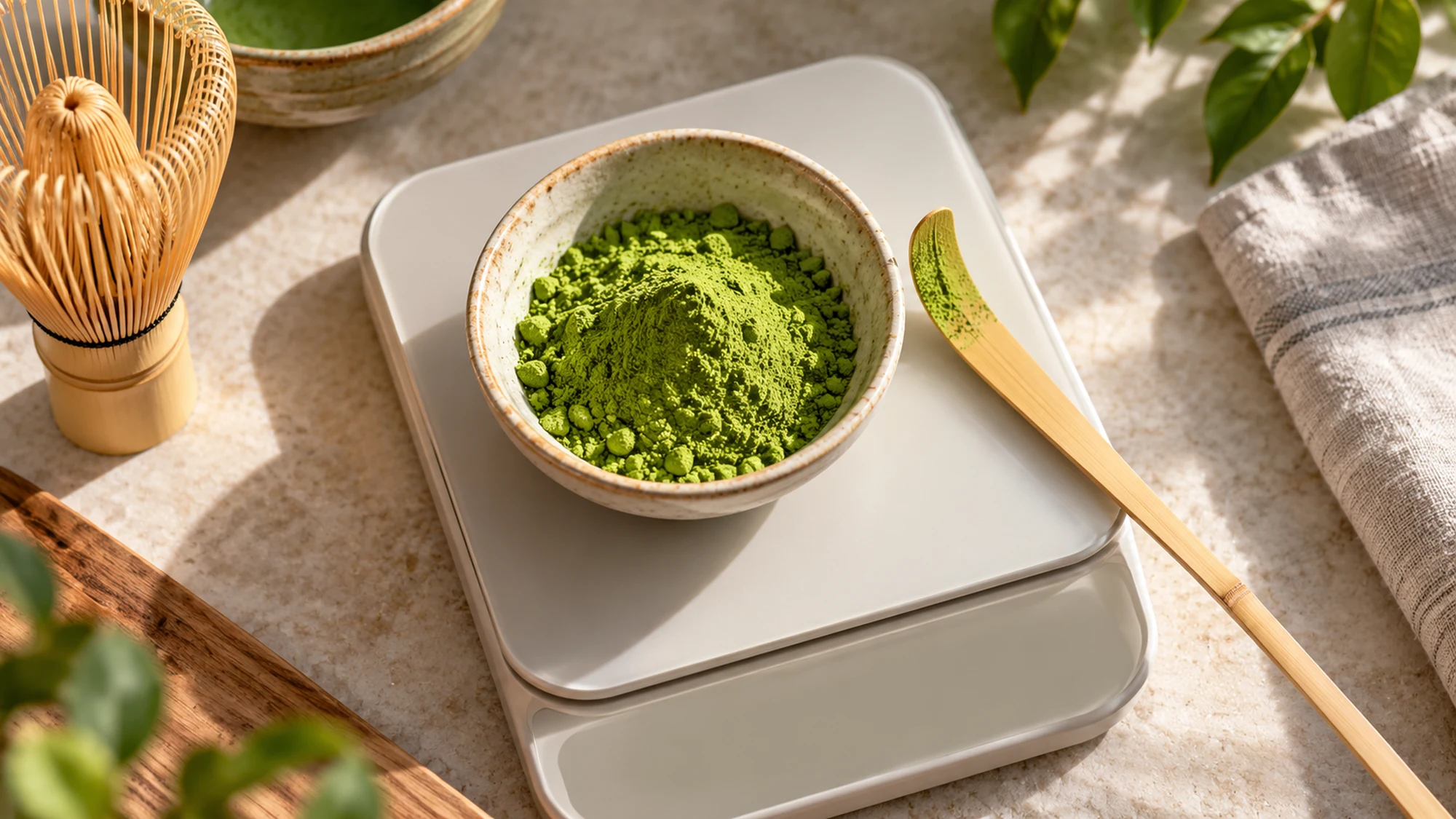
I’d start with the powder measurement before worrying about the foam, ice or cup size. It is the most useful detail to ask about, whether you are whisking a bowl at home or ordering from a café menu.
Does Matcha Have Caffeine in Every Serving?
Regular matcha is powdered green tea, not a caffeine-free herbal drink. Ippodo’s product guidance confirms that its matcha and other teas made from the tea plant contain caffeine. A number described only as “per cup” still needs context: the powder quantity and preparation determine what serving is being discussed.
Before using a caffeine figure, look for three details:
- The product it describes. A measurement from one powder does not automatically apply to another brand.
- The amount of powder. “Per gram” and “per prepared cup” answer different questions.
- The preparation. A café may use a different quantity from a home recipe or the package instructions.
General information cannot tell you exactly what an unmeasured scoop from your tin contains. Manufacturer information for that product is the more useful starting point. If none is available, treat a general estimate as an estimate, not a precise reading of your drink.
Why Powder Amount Matters More Than Cup Size
Adding more water or milk to an unchanged amount of matcha makes a larger, more diluted drink. It does not remove the caffeine supplied by the powder. Increasing the powder can change the dose even when the drink fits in the same cup.
| What changes? | What to watch | Useful next step |
|---|---|---|
| Powder quantity | A bigger dose supplies more of the same powder | Check grams or the stated scoop amount |
| Milk or water | More liquid can dilute an unchanged dose | Ask whether extra powder is also added |
| Brand or blend | Products need not have identical caffeine content | Look for product-specific information |
| Café serving size | Recipes can change between sizes | Ask about your chosen size |
| Added coffee | Espresso supplies another caffeine source | Count it separately |
For home preparation, a measured amount is easier to repeat than a heaped spoon. At a café, asking “How much matcha is in this size?” may be more helpful than asking whether it is strong. Strong can mean bitter, intensely colored, concentrated or caffeinated.
For a meaningful comparison, keep track of the powder as well as the finished drink.
How Matcha Compares With Coffee
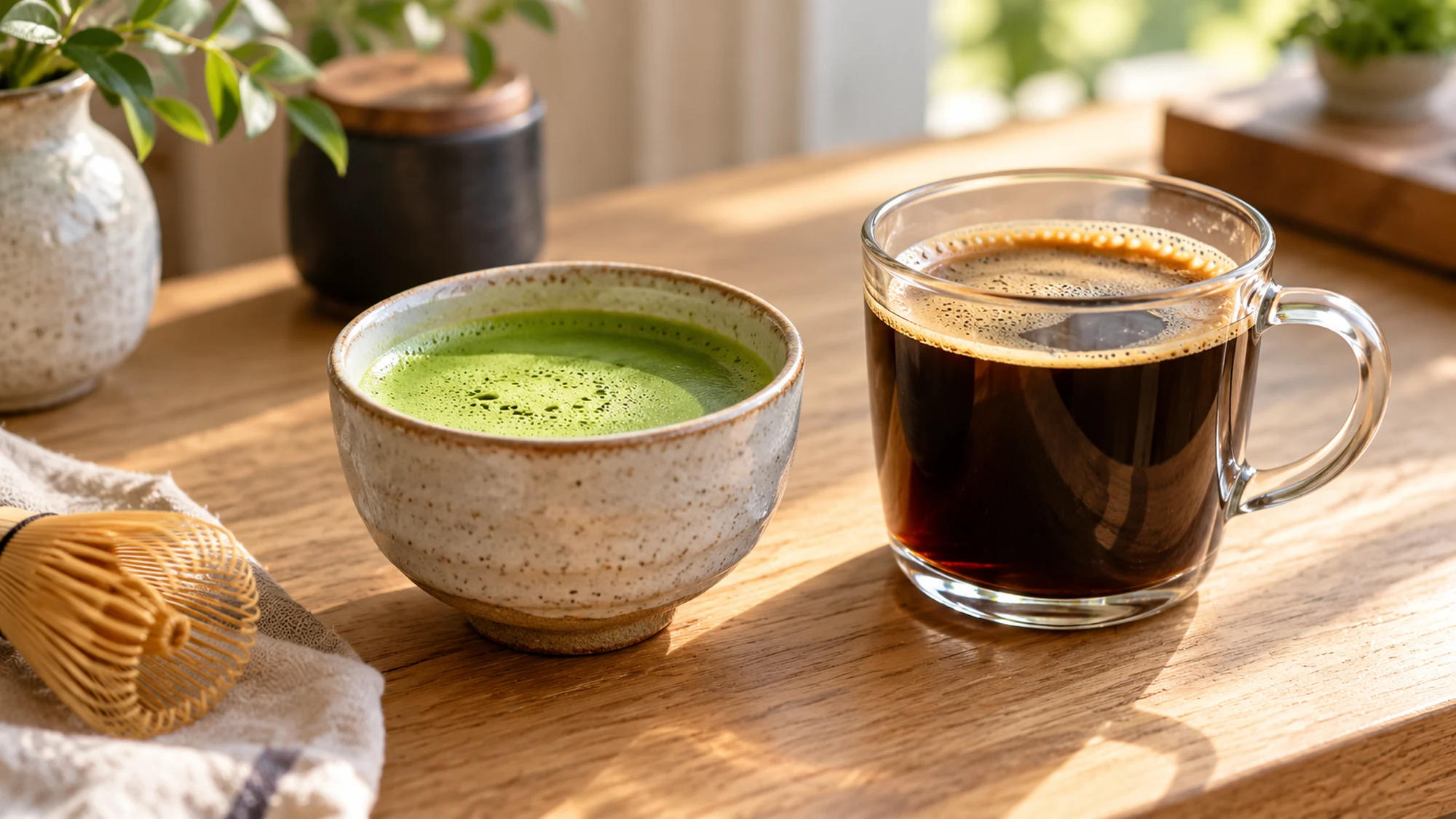
Matcha is not automatically lower in caffeine than every coffee. Both vary, and comparing a small matcha serving with a large coffee tells only part of the story. The FDA’s caffeine guidance lists 113–247 milligrams for a 12-fluid-ounce regular brewed coffee, while emphasizing that specific products and container sizes differ.
- Compare the servings you actually intend to drink, not a generic “cup.”
- Use café or manufacturer figures when provided.
- Include espresso additions rather than counting only the matcha base.
- Consider the rest of the day, including other caffeinated products.
I would not choose between the two based on a promise that one can never cause jitters. Naturally occurring caffeine is still caffeine, and a smooth, creamy drink is not proof of a small dose.
Choosing a Drink That Fits Your Caffeine Needs
The FDA cites 400 milligrams per day as an amount not generally associated with negative effects for most adults. That is not a goal to reach or a personal allowance for everyone. Sensitivity, medicines and health circumstances can change the decision.
- If caffeine disrupts your sleep or makes you feel unwell, consider timing and total intake rather than assuming matcha is exempt.
- If you are pregnant, breastfeeding, trying to become pregnant, or concerned about a condition or medication, ask your health professional about an appropriate limit.
- If a label lacks a caffeine quantity, contact the manufacturer instead of interpreting silence as zero.
I’d keep the choice simple: use a repeatable serving and choose the drink because you enjoy it, not because its green color seems to promise different caffeine rules.
Bottom Line
Matcha contains caffeine, including in a latte. Check the powder amount, use product-specific information when available, and compare actual servings rather than cup size or color. You do not need a perfect number to make a more informed choice, but you do need to recognize where the uncertainty is.
This TED-Ed explainer provides background on how caffeine affects alertness, rather than a measurement of your matcha serving.
Sources
- FDA: How Much Caffeine Is Too Much?
- Ippodo: Caffeine in Tea
- TED-Ed: How does caffeine keep us awake?

Emily is Spoonvale’s recipe-writing persona, bringing a warm, practical voice to everyday cooking. Her focus is simple: approachable meals, comforting flavors, and clear instructions that help make time in the kitchen more enjoyable.