
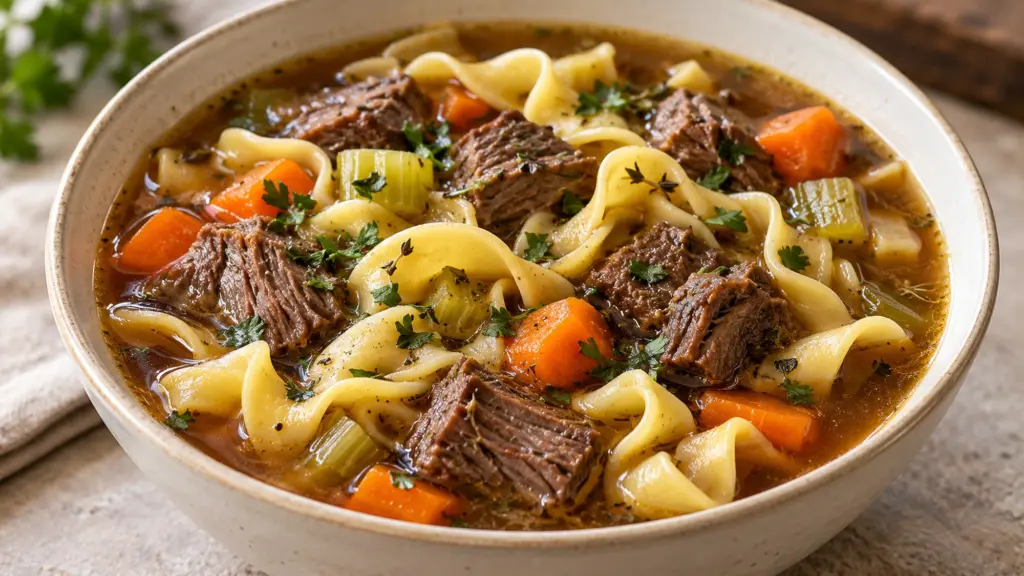
A bowl of soup should still have broth by the time it reaches the table. Egg noodles complicate that simple idea: leave them sitting in the pot, and they keep drinking. This beef noodle soup solves the problem with slow-simmered chuck, a savory broth with vegetables, and noodles cooked separately.
Browned beef gives the broth its foundation, thyme keeps the flavor familiar, and a little vinegar brightens the finish. The useful trick is to ladle the soup over the noodles just before serving, so each bowl has tender meat, distinct ribbons, and plenty to sip.
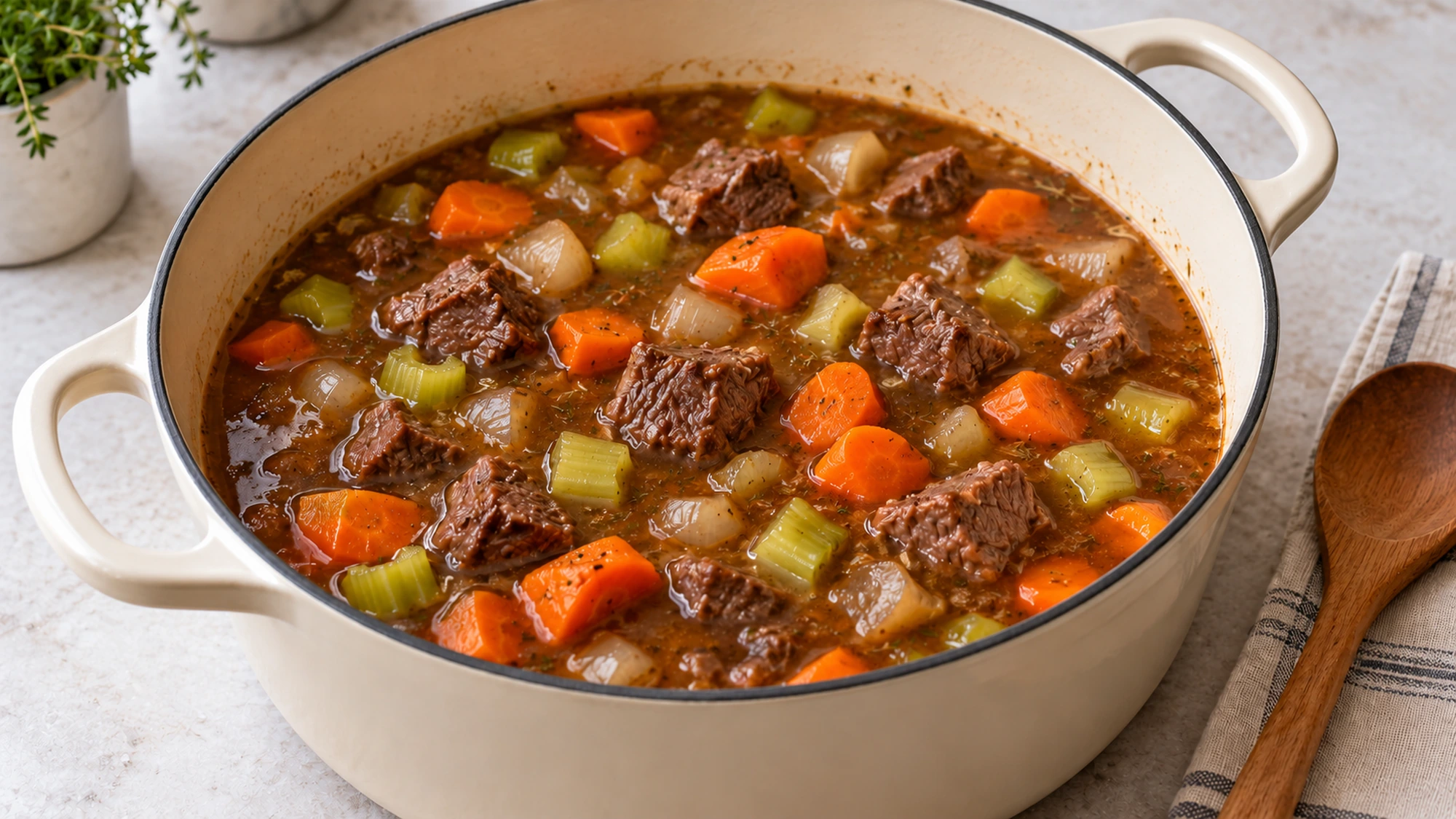
The beef needs an unhurried simmer rather than a deadline. Look for pieces that yield easily to a fork; if they resist, allow more time before adding the final vegetables. Carrots go in near the end so they stay recognizable instead of disappearing into the broth.
Serving Suggestions for Beef Noodle Soup
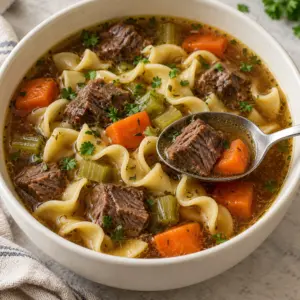
Set out deep bowls and a ladle, then portion the noodles before adding beef, vegetables, and broth. Parsley brings a fresh finish without turning this into a garnish project. If I were choosing a side, I’d pick something crisp or tangy to balance the rich chuck.
- A green salad with a sharp vinaigrette adds crunch alongside the soft noodles.
- Rye toast or a small piece of crusty bread is useful for the last spoonfuls of broth.
- For smaller appetites, begin with less pasta and offer another ladle of soup as needed.
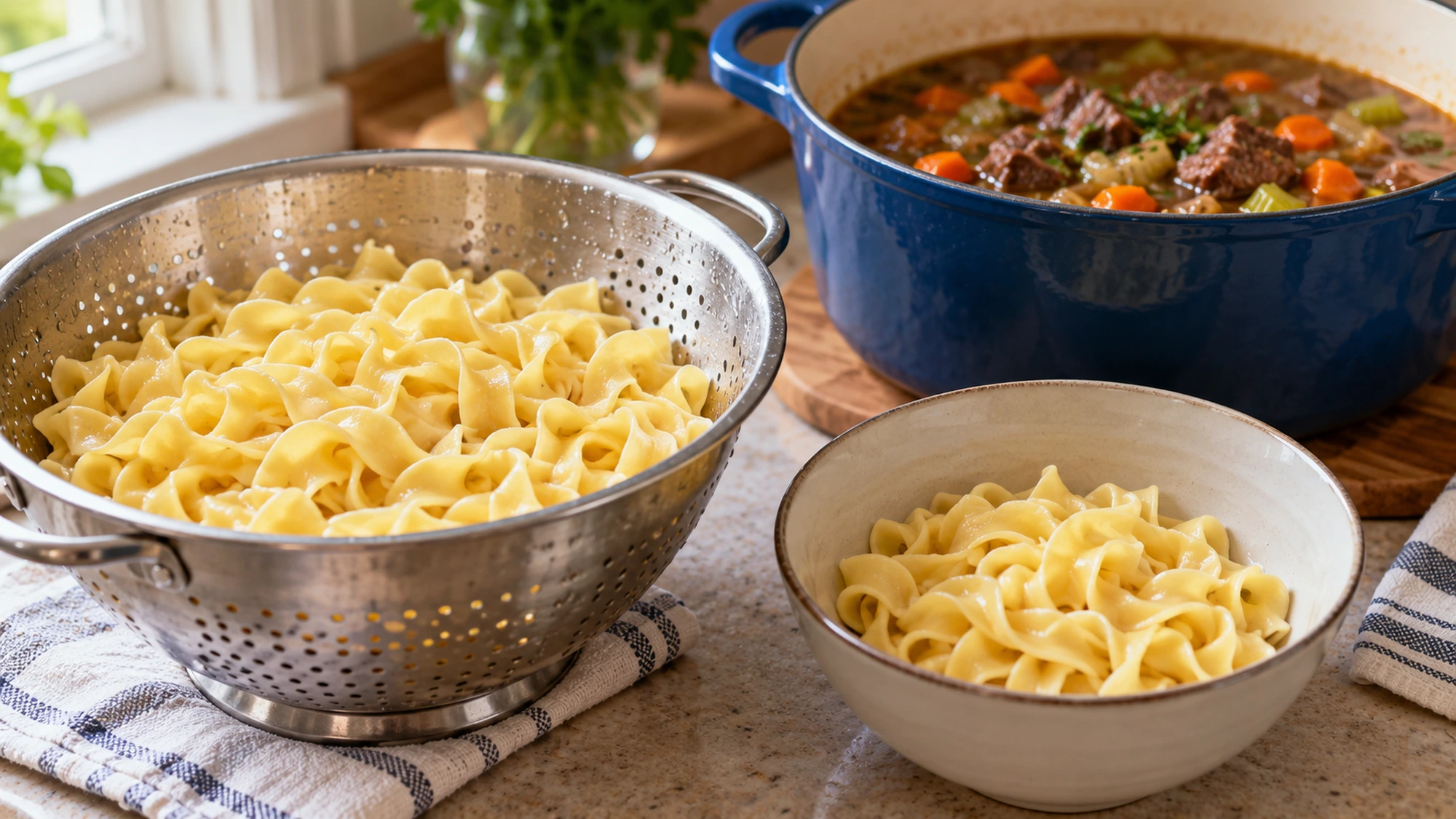
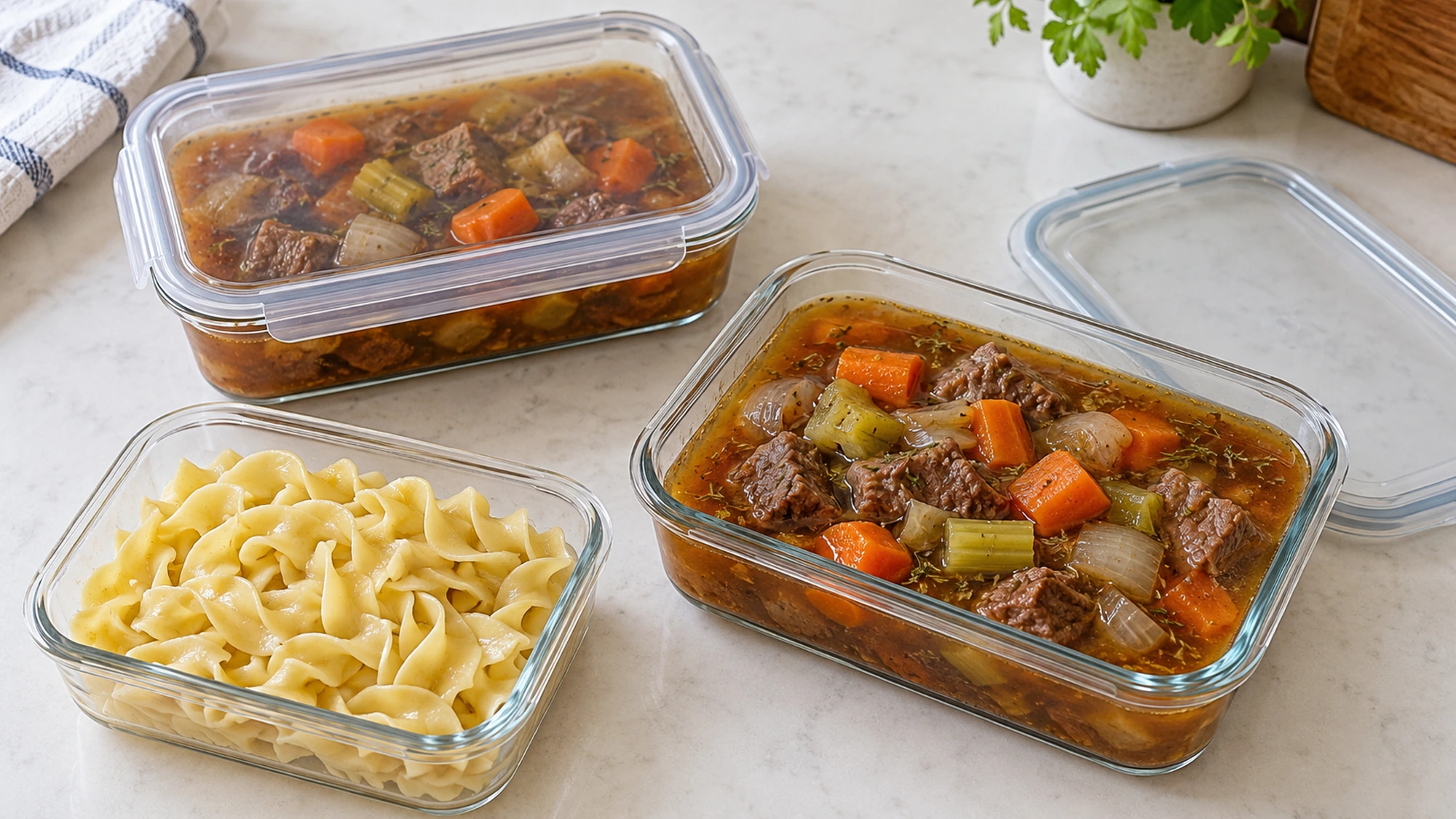
Use the following guide when planning how much to assemble now. The difference is practical: pasta stored in broth softens and absorbs liquid, while separate containers preserve more control over the next bowl.
| Serving plan | Noodles | Broth and beef |
|---|---|---|
| Eating immediately | Divide among bowls | Ladle over just before serving |
| Refrigerating portions | Keep in a separate container | Chill promptly in shallow containers |
| Freezing for later | Cook a fresh portion after thawing | Freeze the soup without noodles |
Separate storage is the small extra step that keeps tomorrow’s lunch from becoming a container of very enthusiastic pasta.
Variations That Keep the Soup Balanced
Chuck suits this recipe because the method gives a tougher cut time to become tender. A package labeled only “stew meat” may contain mixed cuts, so the cooking time can be less predictable. I’d choose a clearly labeled chuck roast when the choice is available.
- More greens: Stir a handful of baby spinach into each hot serving. Let it wilt before eating.
- Different noodles: Small shells or broken wide pasta work, but cook them separately according to their package.
- A deeper herb note: Replace half the thyme with dried rosemary; its flavor is more assertive.
- No parsley available: Leave it off. The vinegar already supplies brightness, and a missing garnish needn’t cancel dinner.
Avoid swapping in ground beef without changing the method: it needs a different cooking schedule and will not produce the same tender chunks. Likewise, instant noodles bring their own timing and sometimes a salty seasoning packet, which this broth does not need.
Keep the broth loose and the seasoning restrained until the beef is tender; a long simmer concentrates what is already in the pot.
Health Benefits and Everyday Trade-Offs
Beef contributes protein and dietary iron, while the vegetables add variety and the noodles provide carbohydrate. That combination makes a substantial meal, but it does not establish a particular nutrient amount for your bowl. Portions, trimming, and the products you choose all affect the result.
- Trim thick exterior fat from the chuck before cooking.
- Start with unsalted broth and compare sodium on package labels; “unsalted” does not necessarily mean sodium-free.
- Keep the vegetable portion generous rather than relying on a few parsley leaves to do the work.
- Check noodles and broth for allergens, especially wheat and egg in conventional egg noodles.
For leftovers, follow safe cooling and reheating guidance: refrigerate in shallow containers within two hours, or one hour above 90°F. Keep at 40°F or below for three to four days; reheat leftovers to 165°F and bring soup to a rolling boil.
The most useful health adjustment here is choosing the ingredients and portion that suit your needs while handling the leftovers carefully.
Bottom Line
Beef noodle soup rewards patience with the meat and a little restraint with the pasta. Let the chuck become fork-tender, keep the noodles separate, and finish the broth with vinegar after cooking.
I’d put the extra saucepan to work whenever leftovers are likely. It gives you a better starting point for a second meal, with distinct noodles and a broth that still behaves like soup.
Beef Noodle Soup Recipe

Ingredients
- 2 lb boneless beef chuck roast 907 g; trim thick exterior fat and cut into 1-inch cubes
- 1 tbsp neutral cooking oil 15 ml
- 1 large yellow onion about 250 g, diced
- 3 medium carrots about 225 g, cut into ½-inch pieces
- 2 ribs celery about 120 g, chopped
- 3 cloves garlic about 9 g, minced
- 1 tbsp tomato paste 16 g
- 8 cups unsalted beef broth 1.9 L, divided
- 1 tsp dried thyme about 1 g
- 2 bay leaves
- 0.5 tsp ground black pepper
- 0.5 tsp fine salt
- 6 oz dry wide egg noodles 170 g
- 1 tbsp red wine vinegar 15 ml
- 2 tbsp chopped fresh parsley about 8 g; optional
- 1 cup water up to 240 ml, only as needed to replace evaporation
Equipment
- 6-quart Dutch oven or heavy soup pot with lid
- 3-quart saucepan
- Colander
- Cutting board and chef’s knife
- Tongs, wooden spoon, and ladle
- Measuring cups and spoons
- Food thermometer
Instructions
- Trim thick exterior fat from the chuck and cut the meat into 1-inch cubes. Pat the cubes dry with paper towels, then season with the salt and black pepper.
- Heat the oil in the Dutch oven over medium-high heat. Brown the beef in three batches, leaving space between pieces, about 3–4 minutes per batch. Transfer each batch to a plate; the centers will finish cooking in the broth.
- Reduce the heat to medium. Add the onion and celery and cook for about 5 minutes, stirring. Add the garlic and tomato paste and cook for 1 minute. Pour in 1 cup of the broth and scrape up the browned bits.
- Return the beef and collected juices to the pot. Add the remaining broth, thyme, and bay leaves. Bring to a simmer, then reduce the heat to low and partially cover. Simmer gently for about 75–100 minutes, stirring occasionally, until the beef is nearly tender. If evaporation exposes much of the meat, add some of the measured water.
- Add the carrots. Continue simmering for about 20–30 minutes, until the carrots are tender and the beef yields easily to a fork. If the meat still resists, continue cooking and check periodically.
- While the carrots finish, cook the egg noodles in the separate saucepan according to the package directions. Drain. Cook only the amount needed immediately if saving some soup for later.
- Remove and discard both bay leaves. Stir the vinegar into the soup. Divide the noodles among six bowls and ladle the beef, vegetables, and broth over them. Sprinkle with the optional parsley and serve.
Video
Notes
Tried this recipe?
Let us know how it turned out!Emily is Spoonvale’s recipe-writing persona, bringing a warm, practical voice to everyday cooking. Her focus is simple: approachable meals, comforting flavors, and clear instructions that help make time in the kitchen more enjoyable.