
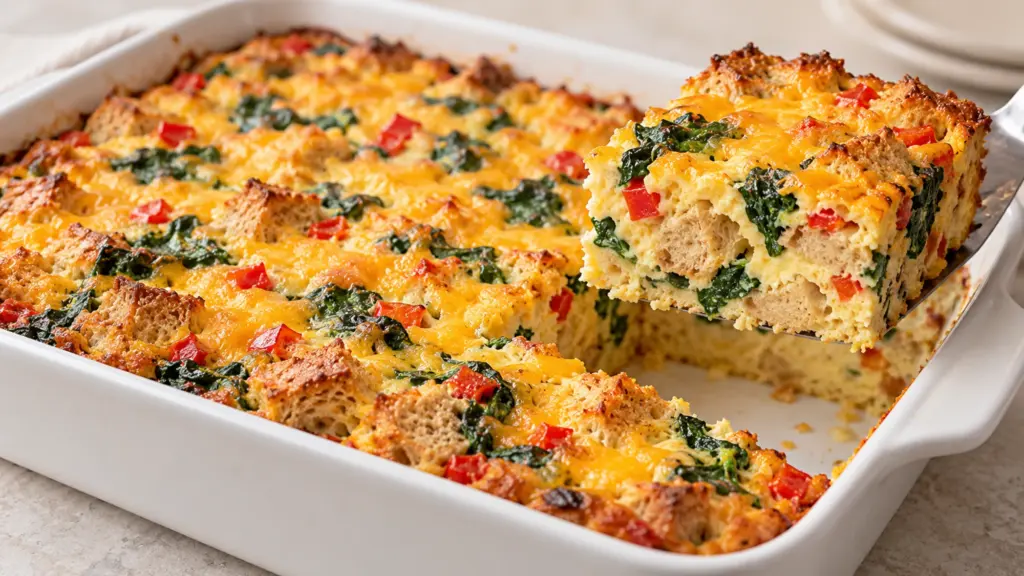
Breakfast for several people can leave the cook making eggs while everyone else is already reaching for coffee. A breakfast casserole shifts that work into one baking dish. Here, whole-grain bread catches an egg-and-milk custard, spinach and red pepper bring color, and cheddar browns across the top.

This breakfast casserole makes eight portions in a 9-by-13-inch dish. A short soak moistens the bread before baking, while cooked vegetables help keep excess water out of the filling. Expect tender bread inside, golden edges, and a cheesy top.
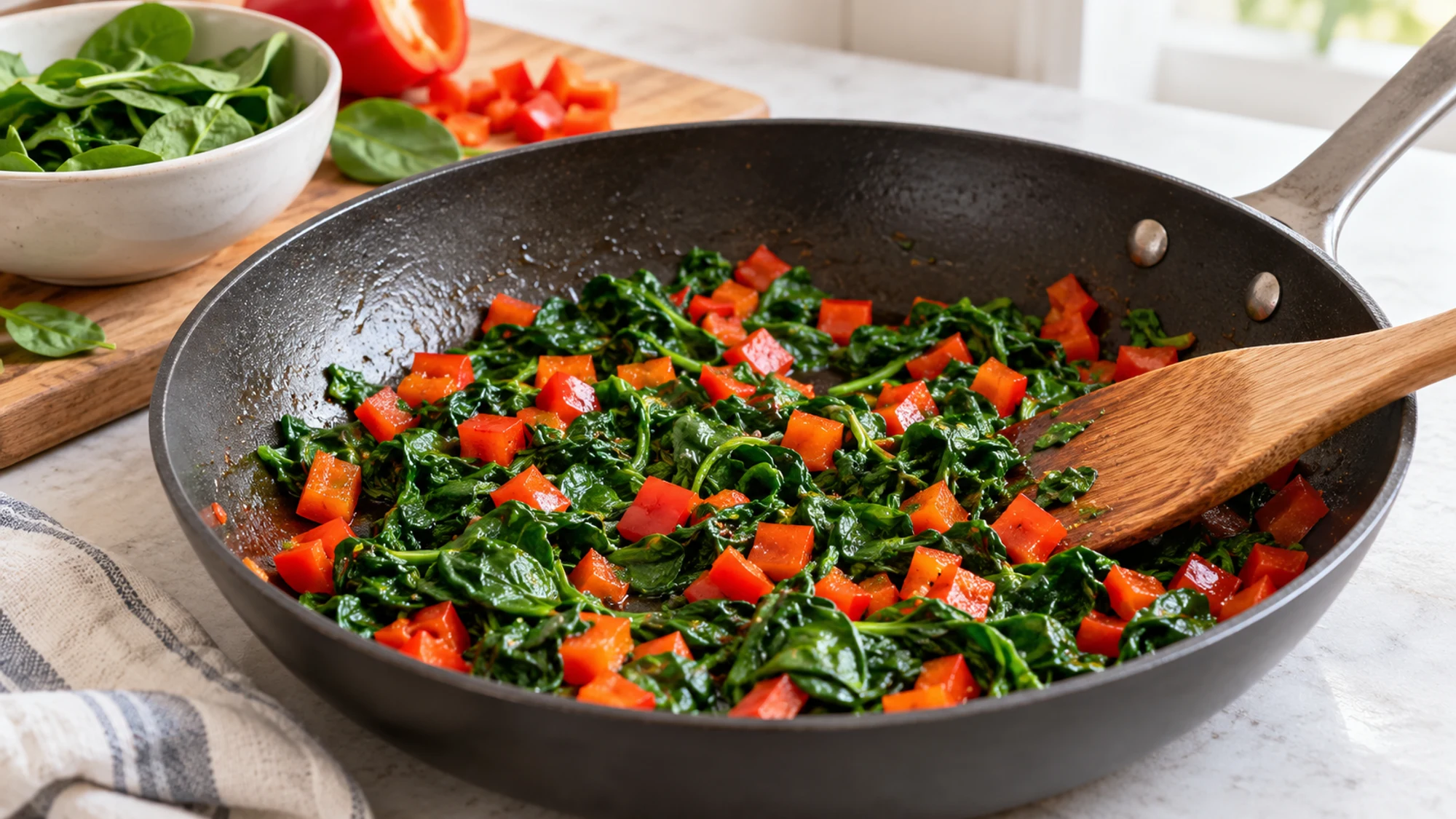
The useful balance is between a moist center and enough structure to cut a tidy square. I would give the bread time to absorb the custard rather than rushing it straight into the oven. Cooked spinach matters, too: water released in the skillet is water that does not end up diluting breakfast.
Serving Suggestions for Breakfast Casserole
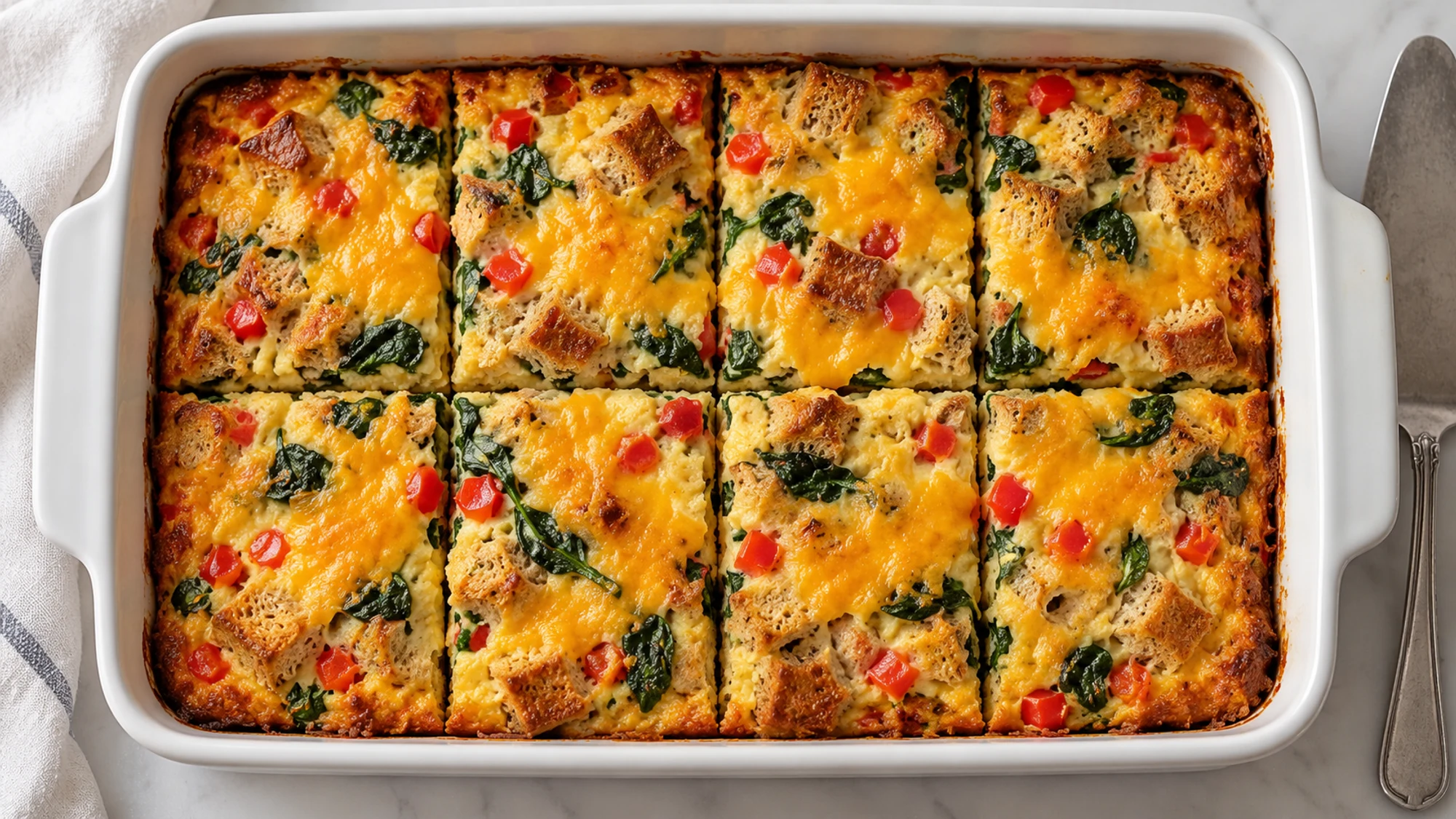
Let the finished casserole rest before slicing. That pause helps the filling settle, so a spatula can lift a portion instead of chasing loose bread around the dish. Serve it warm with something fresh and simple; a rich baked breakfast rarely needs another elaborate side competing for the table.
- Fruit: orange segments, berries, or sliced melon add a cool contrast to the warm egg filling.
- Vegetables: a lightly dressed green salad suits brunch, especially if breakfast is drifting toward lunchtime.
- Portions: cut the dish into eight pieces first, then let guests decide what else belongs on their plate.
| Situation | Temperature | Practical cue |
|---|---|---|
| Freshly baked egg casserole | 160°F / 71°C in the center | Check with a thermometer, then rest before slicing |
| Refrigerated leftovers | 40°F / 4°C or below | Store promptly; use within 3–4 days |
| Reheated portions | 165°F / 74°C in the center | Check the coolest area before serving |
Follow USDA food-handling guidance when storing and reheating. Refrigerate leftovers in shallow containers within two hours, or one hour above 90°F. Neither golden cheese nor a firm-looking surface replaces a temperature check in the center.
Rest, slice, and serve with a simple fresh side. Store the remaining portions promptly so tomorrow’s breakfast starts with properly chilled leftovers.
Breakfast Casserole Variations
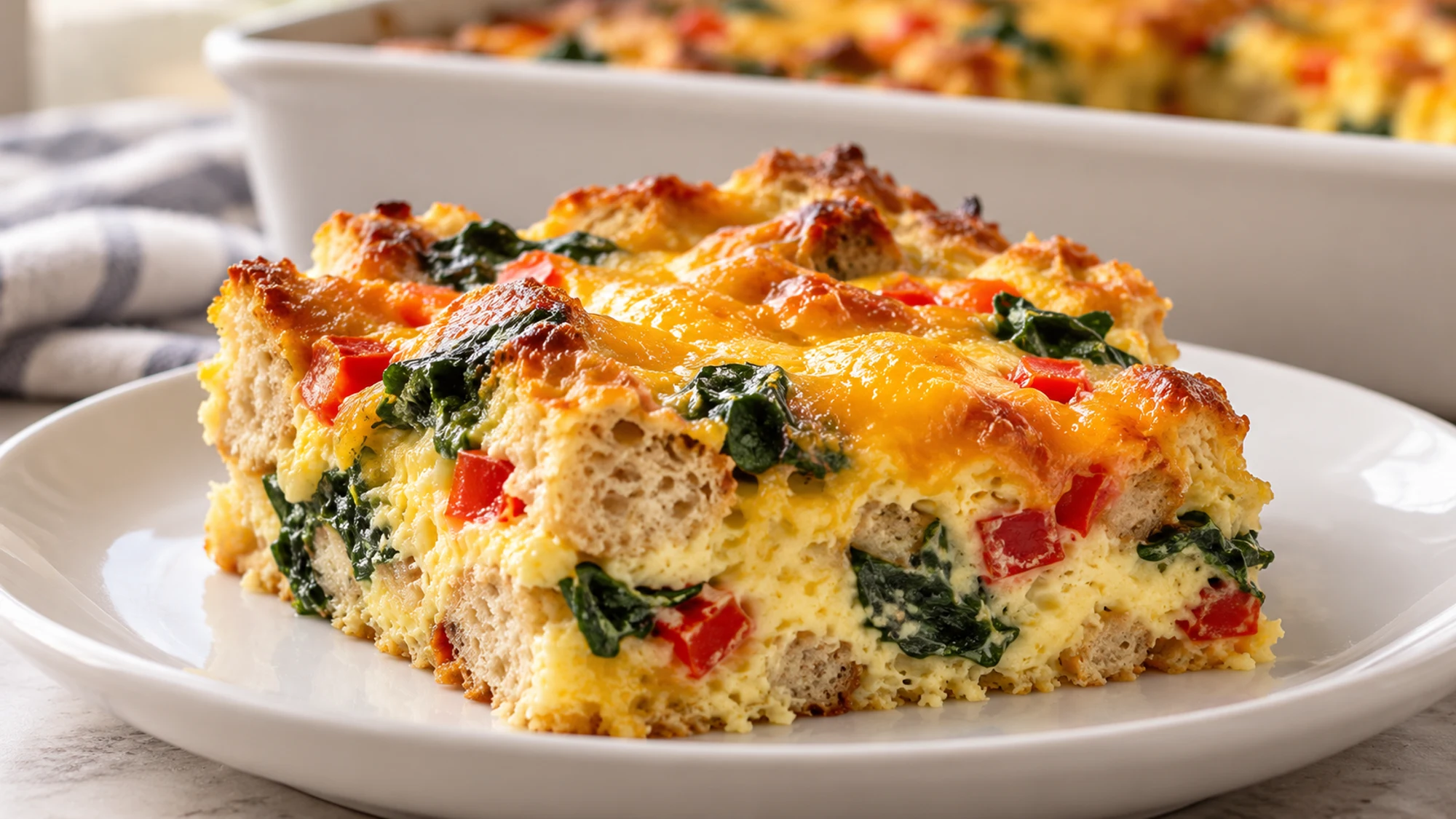
Keep the custard proportions steady and make considered changes to the bread, vegetables, or cheese. The aim is to preserve absorption and avoid extra moisture. I prefer one clear flavor change over a long collection of additions; the cheddar and vegetables already have plenty to say.
- Different cheese: a firm melting cheese such as Monterey Jack gives a milder result; sharper cheese brings more pronounced flavor.
- Different greens: use cooked, well-drained chopped greens rather than adding a pile of raw leaves to the dish.
- Crustier bread: cubed baguette offers another texture, although a white loaf changes the whole-grain contribution.
- Prepare ahead: refrigerate the assembled dish for up to 24 hours, follow the dish manufacturer’s thermal-shock guidance, and allow extra baking time if needed.
Preserve the egg-and-milk base, control vegetable moisture, and judge doneness by the center temperature. A substitution should change the flavor without turning the filling watery.
Health Benefits and Everyday Trade-Offs
Whole-grain bread contributes grain fiber, but the amount varies by loaf. The VA guide to whole grains and fiber explains why checking the ingredient list is more useful than judging bread by its brown color. Look for a whole grain near the beginning of the list.
Milk and cheddar contribute protein and calcium, while also affecting saturated fat and sodium. MyPlate’s dairy guidance offers context for those choices. The recipe’s vegetables add variety, but a slice should still be considered alongside the rest of your meal.
- Check bread and cheese labels when comparing sodium or fiber.
- Keep fruit or vegetables alongside rather than treating the casserole as the entire menu.
- Remember the egg, milk, and wheat ingredients when planning for guests with allergies.
Choose bread for its ingredients as well as its texture, keep the vegetables in the mix, and let your portion and accompanying foods guide the meal.
Bottom Line
A breakfast casserole earns its place when it makes serving easier and still gives you a satisfying contrast of tender filling and golden edges. Give the bread its soaking time, cook off vegetable moisture, and leave a brief rest before slicing. I would keep the accompaniments simple and make room in the refrigerator before cooking, so the eight portions are as practical to store as they are to serve.
Breakfast Casserole Recipe


Ingredients
- 1 tablespoon olive oil divided: 1 teaspoon for the dish and 2 teaspoons for the skillet
- 1 medium red bell pepper about 6 oz; seeded and diced
- 5 oz baby spinach roughly chopped
- 12 oz whole-grain bread cut into 1-inch cubes
- 12 large eggs
- 2 cups whole milk
- 8 oz sharp cheddar shredded; divided: 6 oz in the base and 2 oz on top
- 1 teaspoon dry mustard
- 0.5 teaspoon fine salt
- 0.25 teaspoon ground black pepper
Equipment
- 9-by-13-inch baking dish
- 12-inch skillet
- Large mixing bowl
- Whisk
- Cutting board
- Knife
- Grater
- Measuring cups and spoons
- Pastry brush
- Aluminum foil
- Instant-read food thermometer
- Serving spatula
Instructions
- Heat the oven to 350°F (177°C). Brush the base and sides of a 9-by-13-inch baking dish with 1 teaspoon of the olive oil.
- Heat the remaining 2 teaspoons of olive oil in a 12-inch skillet over medium heat. Cook the diced red pepper for 4–5 minutes. Add the chopped spinach and cook for 1–2 minutes, until wilted and the released water has evaporated. Let cool for 5 minutes.
- In a large bowl, whisk the eggs, milk, dry mustard, salt and black pepper until combined.
- Spread the bread cubes, cooked vegetables and 6 oz of the shredded cheddar evenly in the prepared dish. Pour the egg mixture over the bread, then gently press the cubes to moisten them. Let stand for 30 minutes.
- Sprinkle with the remaining 2 oz of cheddar. Cover loosely with foil and bake for 20 minutes. Uncover and bake for 25–35 minutes more, until golden and the center is set and reaches 160°F (71°C) on an instant-read thermometer. Tent with foil if the top browns before the center is ready.
- Let rest for 10 minutes, then cut into eight portions. Refrigerate leftovers promptly in shallow containers within 2 hours, or within 1 hour if the temperature is above 90°F (32°C).
Video
Notes
Tried this recipe?
Let us know how it turned out!Emily is Spoonvale’s recipe-writing persona, bringing a warm, practical voice to everyday cooking. Her focus is simple: approachable meals, comforting flavors, and clear instructions that help make time in the kitchen more enjoyable.