
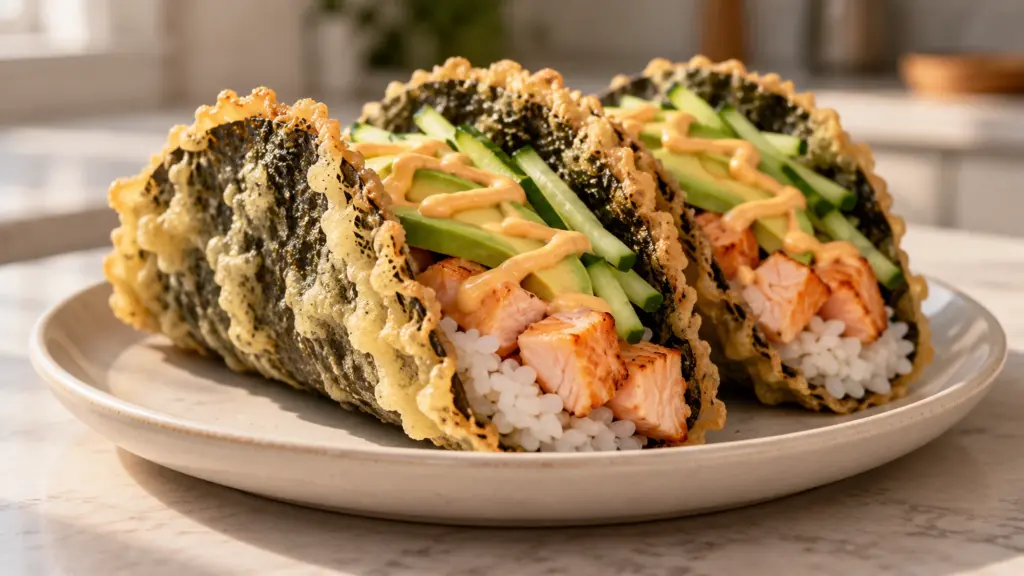
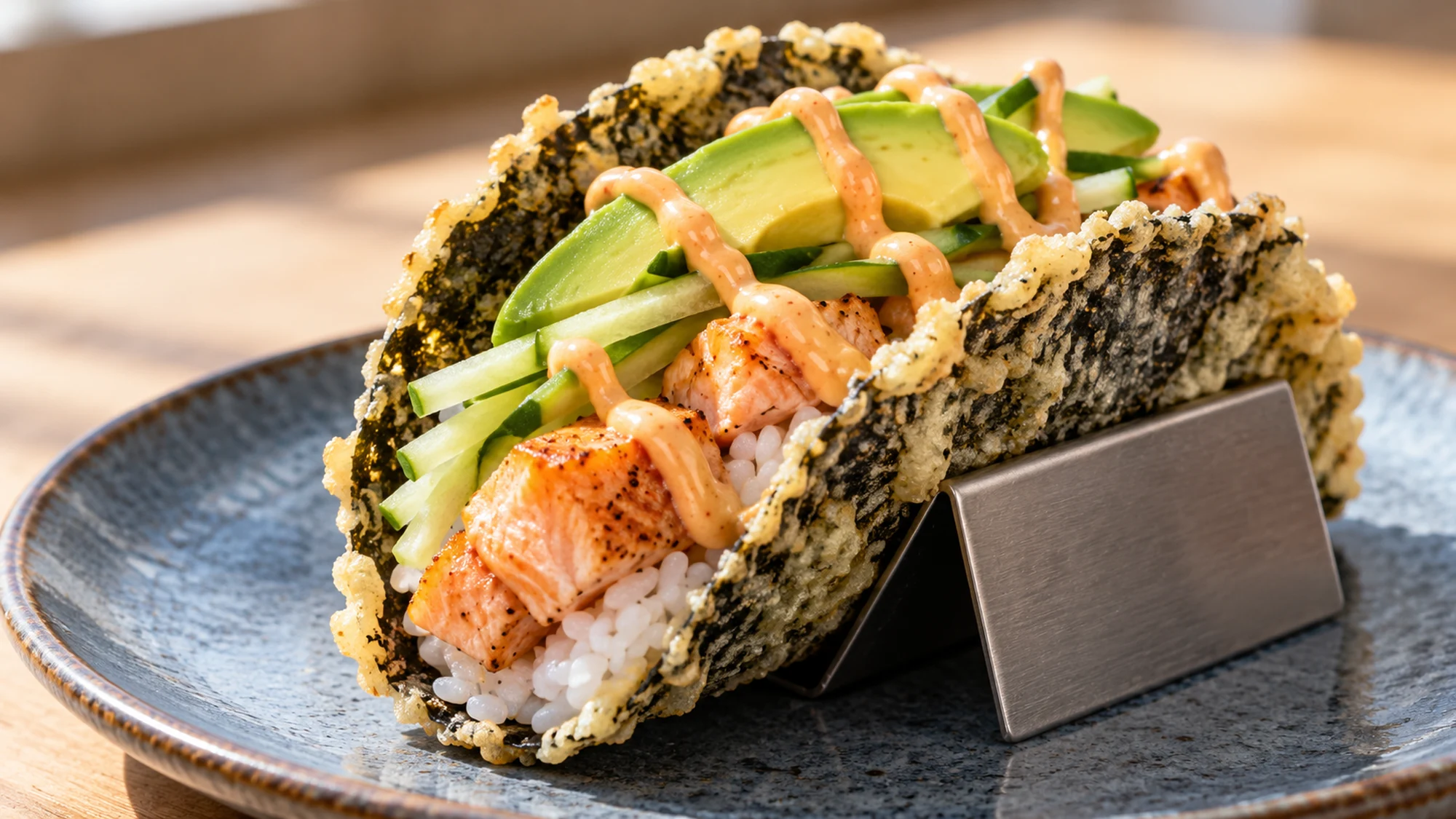
A sushi-style dinner gets a different kind of crunch when the seaweed becomes the shell. These crispy nori sushi tacos tuck warm seasoned rice, tender cooked salmon and cool vegetables inside a thin, golden batter. The first bite gives you a brittle edge, then something soft and creamy underneath.
The useful trick is to fry the nori shells first, drain them on a rack and fill them only when everyone is ready to eat. Cooked salmon makes this version approachable without asking you to select or handle raw fish.
I prefer a modest drizzle of spicy mayonnaise here; a heavy blanket hides both the seaweed and the crisp coating. This is a small-batch, eat-it-now recipe rather than a platter to assemble hours ahead. Have the cucumber cut and the serving plates waiting before you start frying. The batter should cling in a thin layer, with the dark seaweed still evident. Thick paste makes a heavier shell and takes longer to become crisp, so measure the water rather than guessing from the bowl.
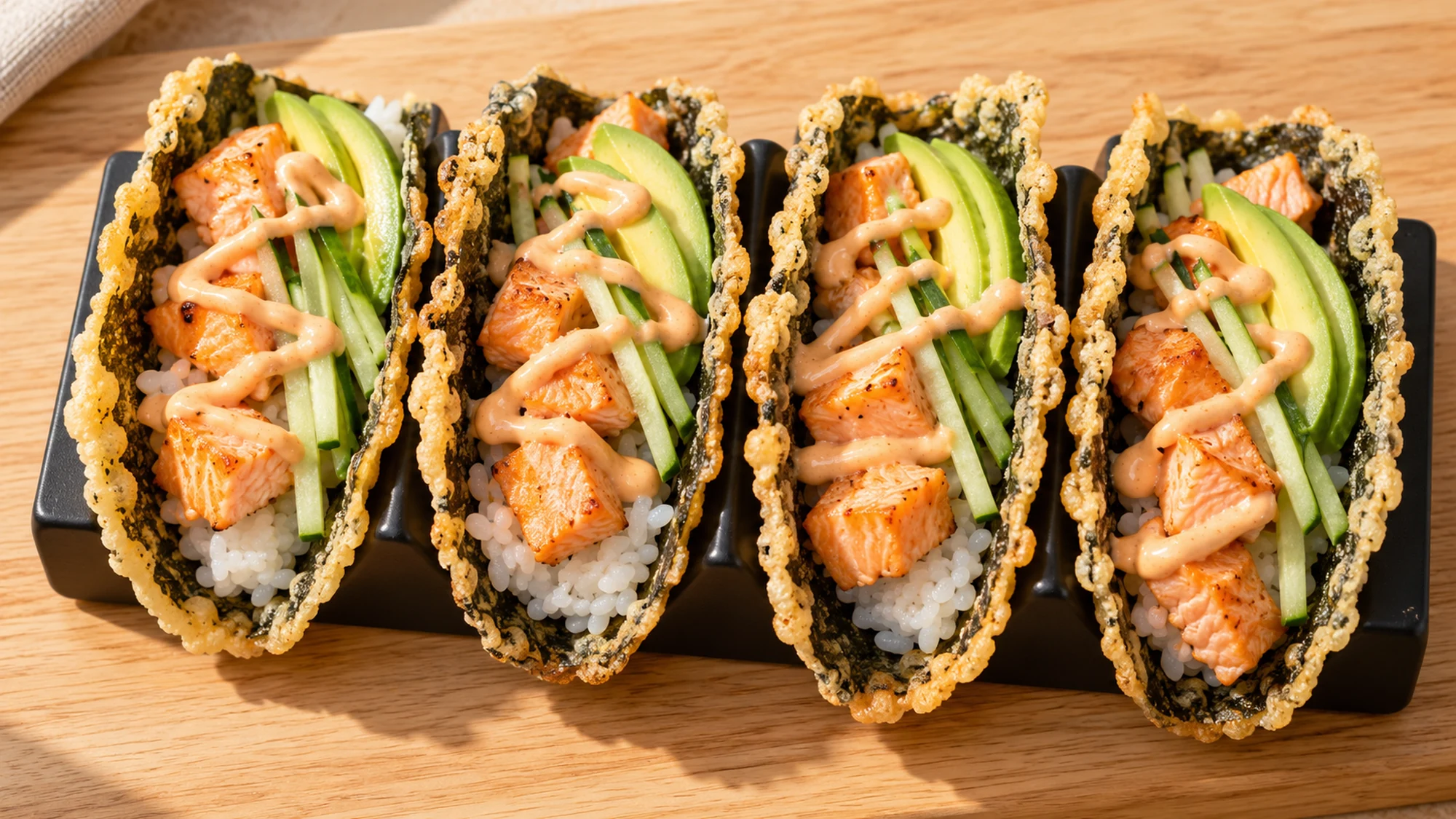
Serving Crispy Nori Sushi Tacos
Serve two tacos per person as the main dish, with a fresh vegetable side alongside. A little slaw works especially well because it brings acidity without adding another soft starch. For another cooked-fish supper, Spoonvale’s baked cod tacos with lime slaw offer a different shell and a cool yogurt drizzle.
Put the rice in first, followed by salmon, cucumber and avocado. Keep the filling comfortably below the rim so the shell can support it. I would set extra sauce on the table rather than pour it over the whole platter; people can add heat without soaking the batter. A taco holder is handy but optional. Without one, lean two shells gently against each other on a small plate, keeping the bases level so the rice does not tumble out.
Warm fish and cool vegetables make a good contrast, but crispness has a short window. Bring the components together close to serving, and make a second round if your pan or table is small.
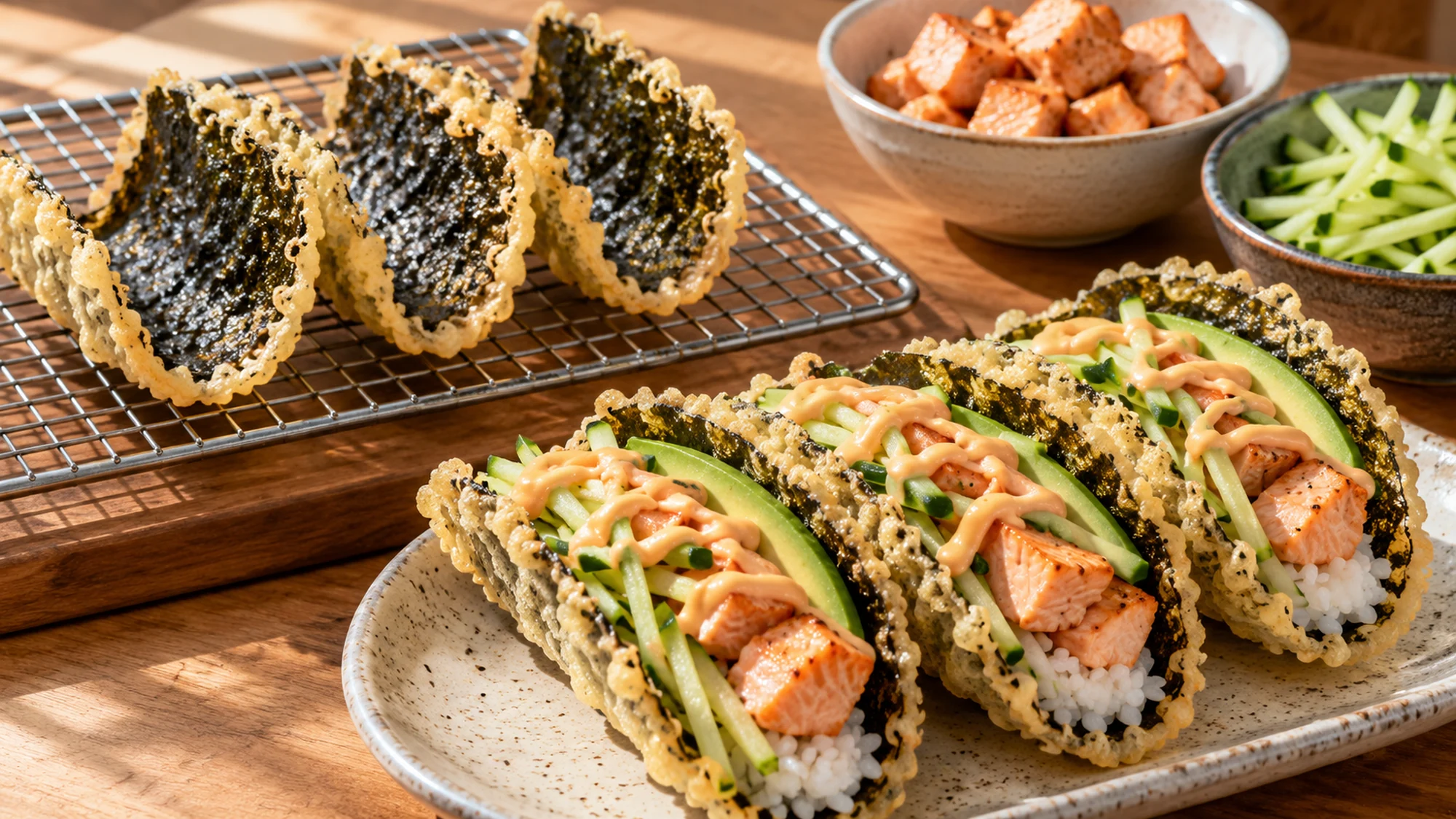
Variations for Crispy Nori Sushi Tacos
The nori shell is the defining element; the filling has room to move. Cooked shrimp or flaked cooked cod can replace salmon, while browned tofu offers a fish-free filling. Each needs its own suitable cooking method. Do not treat this cooked-salmon recipe as instructions for preparing raw seafood. Let hot alternative fillings stop steaming vigorously before assembly. Steam trapped beneath the rice and vegetables softens the shell from the inside, even when the outside was beautifully crisp moments earlier.
Use the comparison below to change one component at a time. If you switch to tamari, check the bottle rather than assuming the entire taco is gluten-free: ordinary flour is still in the shell. A different batter also changes how the shell sets, so it is a separate adaptation.
| Component | Alternative | What to watch |
|---|---|---|
| Cooked salmon | Cooked shrimp or cod | Cook thoroughly before filling |
| Cucumber | Drained shredded cabbage | Keep pieces fine and dry |
| Sriracha mayonnaise | Plain mayonnaise | Less heat; use a light drizzle |
| Avocado | Extra cucumber | Less creaminess; more crunch |
Keep watery ingredients well drained, choose small pieces and resist piling on extras. A shell that closes comfortably is much easier to pick up, and every bite still has room for the nori.
Health Benefits and Practical Food Safety
Salmon contributes protein, while cucumber and avocado add produce and contrasting textures. This remains a fried dish with mayonnaise and seasoned rice; it does not need a health halo to earn a place at dinner. Portions and the rest of the meal matter more than calling a single food good or bad. The sauce and shell contain common allergens, including egg and wheat, and the fish is another consideration. Read packaged ingredient labels carefully when serving someone with an allergy rather than relying on the dish name.
For food safety, use a thermometer to bring salmon to 145°F in the center. Keep raw-fish tools separate from ready-to-eat vegetables. The USDA’s safe-handling guidance also supports prompt refrigeration of perishables; do not leave cooked rice or fish on the counter throughout a long gathering.
Enjoy the texture for what it is, use fully cooked fish and prepare only the number of filled tacos you plan to serve promptly. Those choices are more useful here than an unreliable calorie figure for unmeasured frying oil.
Bottom Line
Crispy nori sushi tacos are at their best when the shell stays light and the filling stays balanced. Prepare the vegetables first, cook the salmon through and give each shell room to drain. Then assemble a small, colorful batch with a restrained drizzle and carry it straight to the table.
Crispy Nori Sushi Tacos Recipe

Ingredients
- 4 sheets nori cut in half to make 8 shells
- 80 g all-purpose flour
- 40 g cornstarch
- 180 ml ice-cold water
- 1 liter neutral frying oil or enough for a 3 cm depth in a 20 cm deep saucepan; includes the oil needed for the frying bath
- 400 g cooked short-grain rice freshly cooked or safely chilled, gently reheated until steaming
- 15 ml unseasoned rice vinegar
- 5 g sugar
- 2 g fine salt divided
- 400 g skinless boneless salmon cut into 2 cm cubes
- 150 g cucumber cut into thin matchsticks
- 1 medium avocado about 150 g flesh, sliced
- 45 g mayonnaise
- 10 g sriracha adjust to taste
Equipment
- 1 20 cm deep heavy saucepan never fill more than halfway with oil
- 1 frying thermometer
- 1 Instant-read food thermometer
- 1 rimmed sheet pan for the salmon
- 1 wire rack over a tray
- 1 long metal tongs
- mixing bowls, whisk, knife and cutting board
Instructions
- Heat the oven to 425°F (220°C). Put the warm cooked rice in a bowl. Fold in the rice vinegar, sugar and 1 g of the salt without crushing the grains. Let it stand while you prepare the fish; do not leave it sitting out for longer than needed.
- Spread the salmon cubes on a parchment-lined rimmed sheet pan and season with the remaining 1 g salt. Roast for about 8–12 minutes, until the centers reach 145°F (63°C) on a food thermometer. Wash any tools and surfaces that touched raw fish. While it cooks, mix the mayonnaise with the sriracha and prepare the cucumber and avocado.
- Pour oil to a depth of about 3 cm in the deep saucepan, staying below its halfway mark. Heat to 350°F (175°C). Set a wire rack over a tray nearby. Whisk the flour, cornstarch and ice-cold water briefly; small lumps are fine. Keep water away from the hot oil.
- Work one or two shells at a time without crowding. Brush or dip one side of each nori half in a thin coat of batter. Using long metal tongs, lower it into the oil, battered side down, and gently hold it in a loose U shape for the first 10–15 seconds as it sets. Keep hands clear of the oil. Fry for about 1–2 minutes, turning carefully as needed, until the batter is pale golden and firm. Drain upright on the rack. Return the oil to 350°F between batches.
- Divide the seasoned rice, cooked salmon, cucumber and avocado among the 8 shells. Add the sriracha mayonnaise just before serving. Serve promptly while the shells are crisp.
Video
Notes
Tried this recipe?
Let us know how it turned out!Emily is Spoonvale’s recipe-writing persona, bringing a warm, practical voice to everyday cooking. Her focus is simple: approachable meals, comforting flavors, and clear instructions that help make time in the kitchen more enjoyable.