
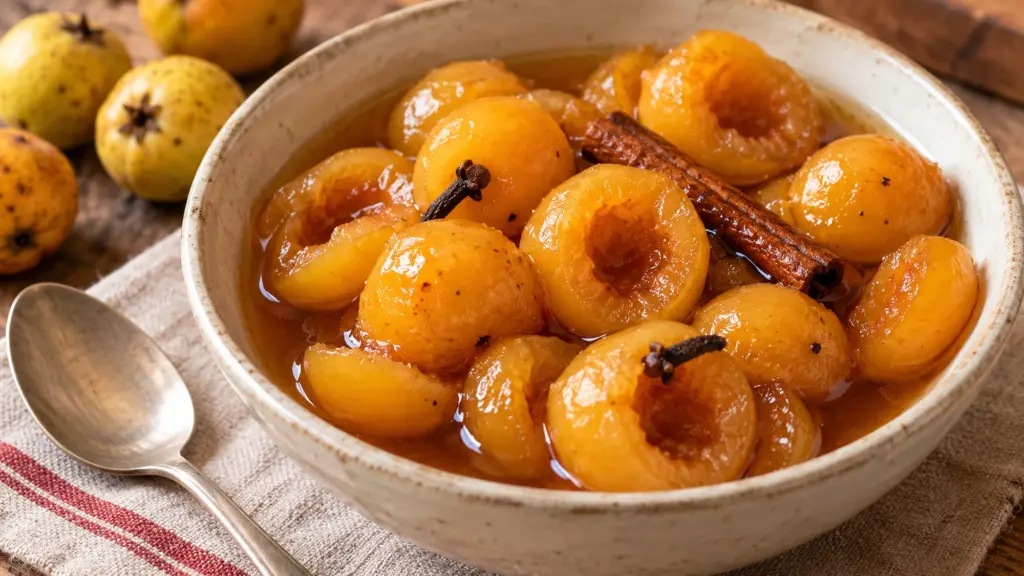
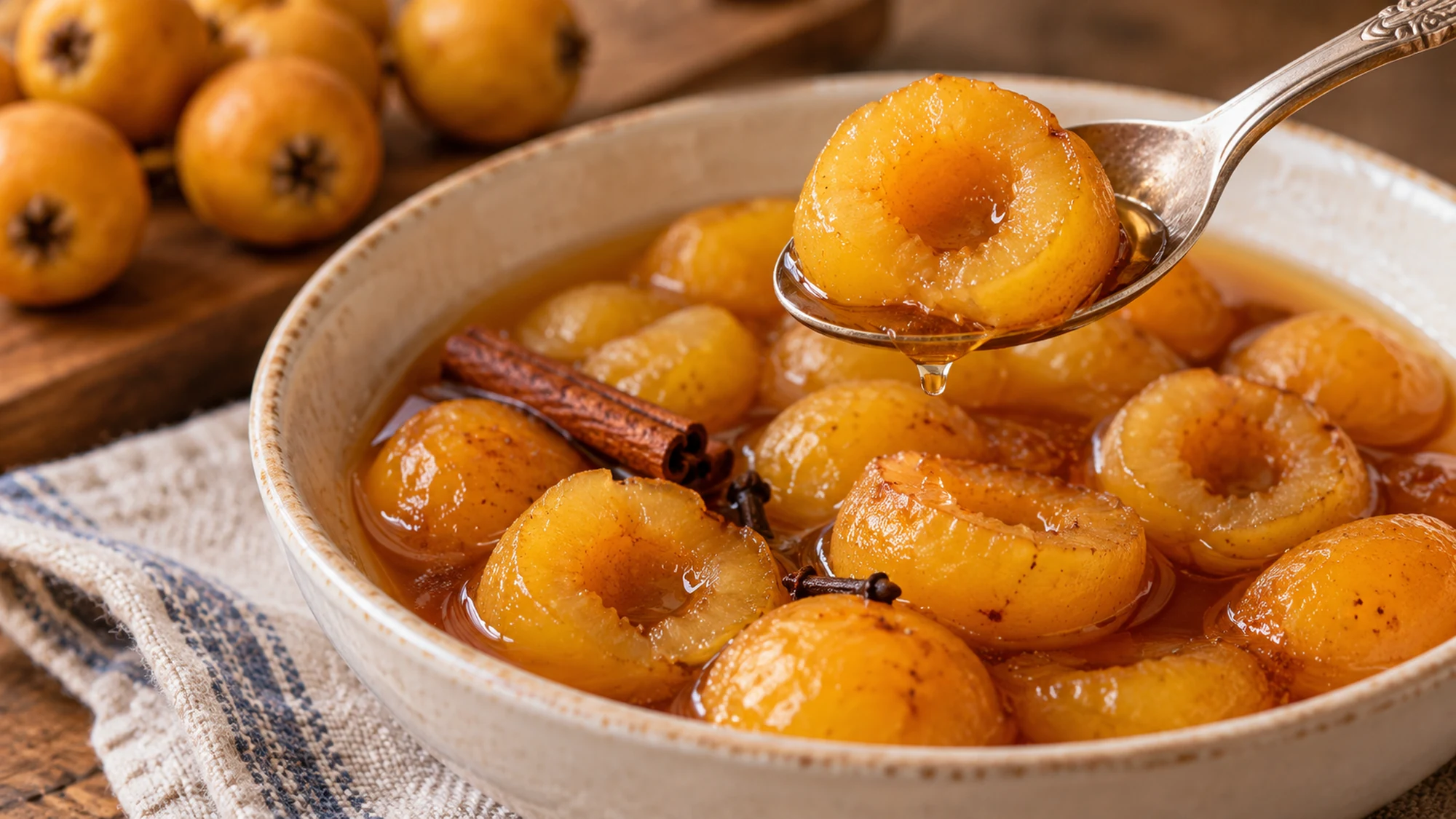
A bowl of tiny golden fruit can look inviting and puzzling at the same time. Tejocotes have firm flesh, a distinct aroma and hard pits that deserve a little attention before dessert. This dulce de tejocote turns the fruit into tender halves in a warm, cinnamon-scented piloncillo syrup.
Blanch the fruit to loosen its skin, remove the hard pits and simmer the prepared halves gently. Stop when a knife slips through the flesh; the syrup should coat a spoon lightly and still pour.
I’d choose fruit sold specifically for eating and make the pitting part of the preparation, rather than leaving diners to discover the pits. The halves also make it easier to judge tenderness. Ripeness varies, so treat the suggested simmering time as a window, with the fruit itself making the final call.
Serving Suggestions for Dulce de Tejocote
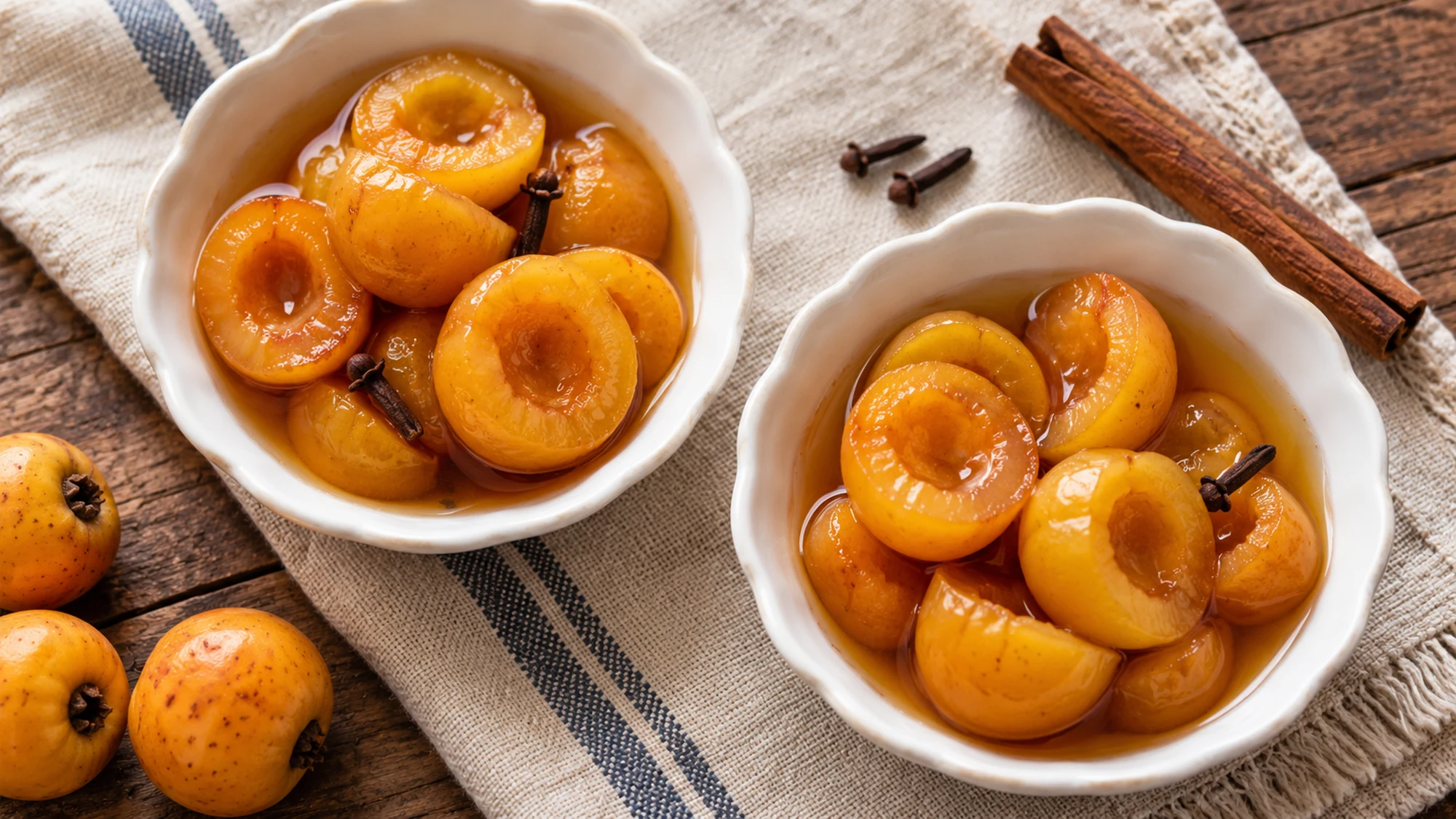
Serve a few fruit halves in a small bowl with enough syrup to surround them. Warm fruit brings the cinnamon aroma forward, while chilled fruit makes a refreshing finish to a savory meal. Let hot syrup cool to a comfortable eating temperature before taking a spoonful.
I’d try the first serving plain to appreciate the fruit’s own flavor. For another presentation, spoon a modest amount over plain yogurt or a simple rice pudding. Those additions change both the flavor and the nutritional profile; they are serving options, rather than ingredients in the base recipe.
- For a small dessert: divide the fruit and syrup among eight bowls, checking once more for overlooked pit fragments.
- For a contrasting texture: add a few toasted, chopped nuts at the table if they suit your guests; keep them separate for anyone avoiding nuts.
- For a drink pairing: choose unsweetened tea or coffee. If you prefer atole de pinole, remember that it brings its own sweetness to the table.
Keep portions small enough to enjoy the fruit as well as the syrup. Remove the whole cinnamon stick and cloves before serving.
Dulce de Tejocote Variations and Ingredient Choices
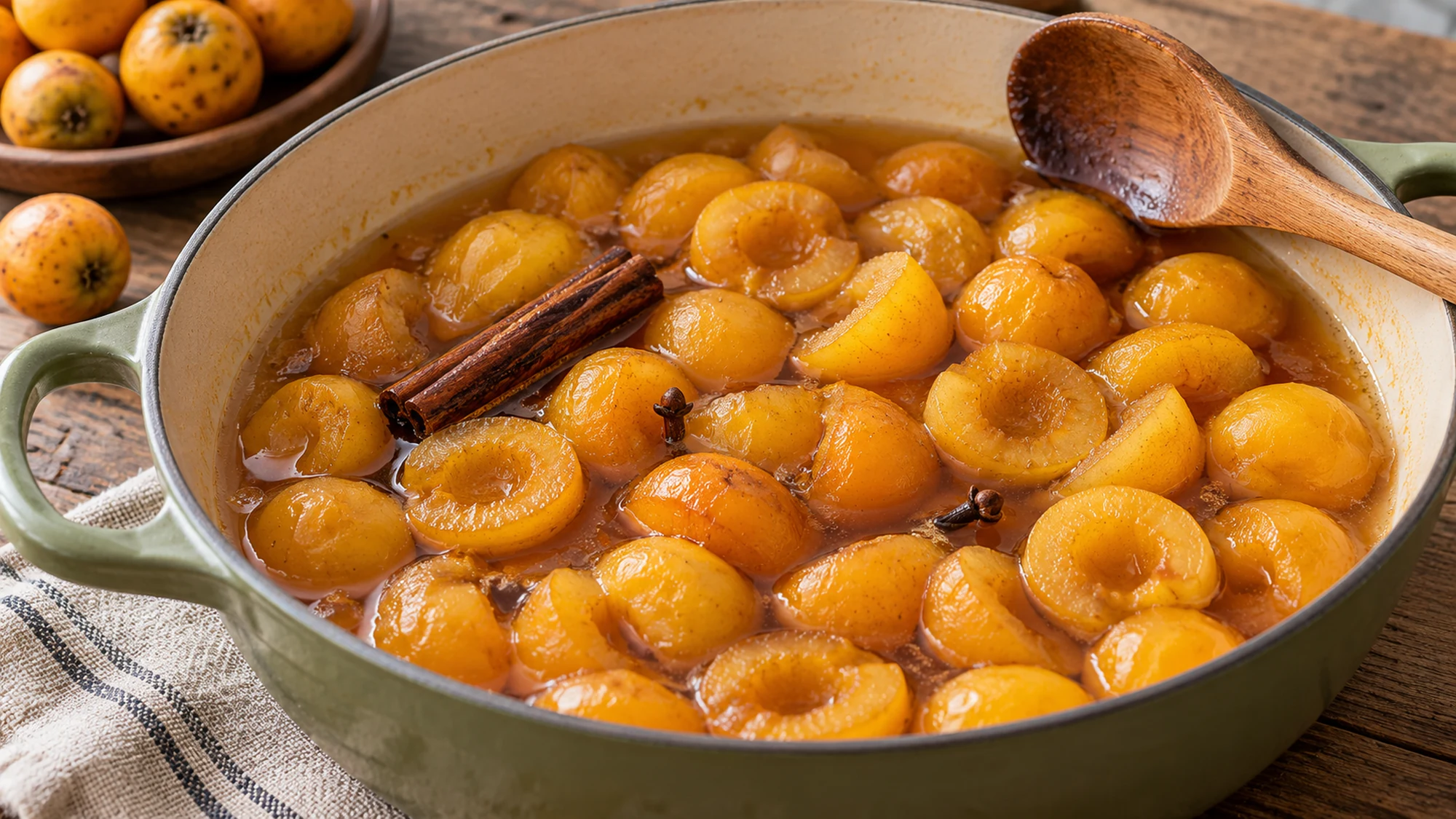
Piloncillo gives the syrup a rounded, molasses-like flavor. Chop or grate it carefully so it dissolves without prolonged boiling. Brown sugar is a practical alternative, although the flavor will differ. Avoid increasing the sugar just to force a thick glaze; this recipe is meant to have a light syrup.
Tejocote is a Mexican hawthorn fruit, and Mexico’s agriculture information describes its place in seasonal preparations. Fresh fruit, sweetened jarred fruit and fruit already simmered in syrup are different starting points. Choose fresh, food-grade fruit for the amounts and method here.
| Choice | How to use it | What changes |
|---|---|---|
| Piloncillo | Dissolve the measured amount completely | A deeper cane-sugar flavor. |
| Brown sugar | Replace piloncillo by equal weight | A more familiar molasses note. |
| Cinnamon only | Omit the two cloves | A simpler spice profile. |
| Softer, riper fruit | Check tenderness earlier | A shorter simmer may be enough. |
| Thinner syrup | Stop reducing while it still pours | More liquid around each fruit half. |
If the fruit is tender before the syrup is ready, lift it out, reduce the liquid briefly and return it to the pan.
Health Benefits and Considerations for Dulce de Tejocote
Tejocote brings fruit to the bowl, but adding piloncillo still makes this a sweetened dessert. Unrefined cane sugar is not a reason to treat the syrup as unlimited. The amount of syrup you actually eat matters, particularly if some stays in the serving bowl.
The fruit-to-syrup balance also changes from bowl to bowl. A few tender halves with a little syrup make a different serving from a bowl filled mainly with sweet liquid. I’d keep the fruit at the center and add syrup by the spoonful. The FDA’s added-sugars guide explains how sweeteners fit into the overall eating pattern.
- Check the fruit carefully: use food-grade tejocotes, remove hard pits and discard damaged fruit. Decorative or unidentified hawthorn is not a recipe substitute.
- Treat dairy and nut toppings separately when considering allergies and dietary needs.
- Refrigerate leftovers promptly in a covered container. This stovetop dessert is not a tested canning recipe; use tested preservation guidance for any shelf-stable project.
Enjoy the fruit and aromatic syrup as a dessert, with the portion and any toppings chosen to suit the rest of your meal.
Bottom Line
Dulce de tejocote rewards careful preparation: loosen the skins, remove the pits and let a gentle simmer soften the fruit. Cinnamon and piloncillo supply warmth without needing a heavy glaze. Keep the syrup pourable, check tenderness early and serve a few halves with just enough liquid to make each spoonful fragrant.
Dulce de Tejocote Recipe

Ingredients
- 1 kg fresh food-grade tejocotes Mexican hawthorn fruit, washed
- 250 g piloncillo chopped or grated
- 3 cups water 720 ml, plus enough water for blanching
- 1 cinnamon stick about 3 inches (7.5 cm)
- 2 whole cloves
- 1 tbsp fresh lime juice 15 ml
Equipment
- 1 Large saucepan for blanching
- 1 Wide saucepan for fruit and syrup
- 1 Colander
- 1 Paring knife and cutting board
- 1 kitchen scale
- Measuring jug and spoons
- 1 Slotted spoon
Instructions
- Wash the tejocotes and remove the stems. Bring a large saucepan of water to a boil. Add the whole fruit and blanch for 3–5 minutes, just until the skins loosen. Drain and cool until comfortable to handle.
- Peel off loosened skins if desired. Halve the fruit carefully and remove all hard pits and any hard fragments with a small knife. Keep the fruit halves as intact as possible.
- Put the piloncillo, 3 cups water, cinnamon stick and cloves into a wide saucepan. Bring to a gentle simmer, stirring until the sugar dissolves.
- Add the prepared fruit halves. Simmer gently, partly covered, for about 20–35 minutes, turning carefully as needed, until a small knife slides easily through the flesh. Check early; ripeness and fruit size change the time.
- If the fruit is tender while the syrup is too thin, lift the fruit into a bowl with a slotted spoon. Simmer the syrup uncovered for 5–10 minutes until lightly thickened but still pourable, then return the fruit. Avoid boiling it into a heavy glaze.
- Remove from the heat and stir in the lime juice. Remove the cinnamon stick and cloves. Divide into 8 dessert portions with syrup and serve warm at a comfortable temperature or chilled. Refrigerate leftovers promptly; this is not a shelf-stable canning recipe.
Video
Notes
Tried this recipe?
Let us know how it turned out!Emily is Spoonvale’s recipe-writing persona, bringing a warm, practical voice to everyday cooking. Her focus is simple: approachable meals, comforting flavors, and clear instructions that help make time in the kitchen more enjoyable.