
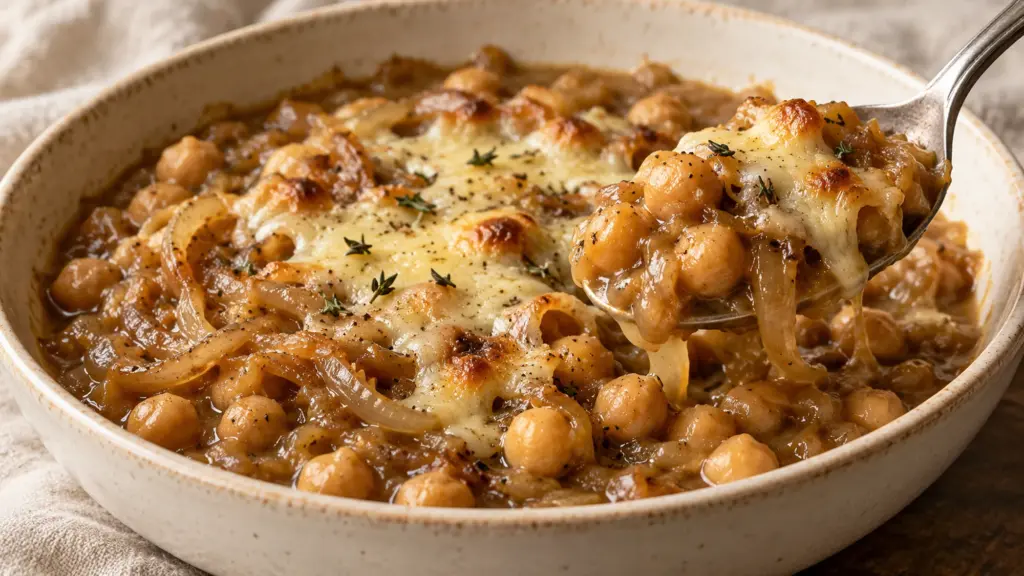
A skillet crowded with pale onion slices can look as though dinner is going nowhere. Give those slices time to soften and turn golden, though, and they become the foundation of French onion chickpeas: a spoonable dinner with savory gravy, tender beans and a lightly browned cheese topping.
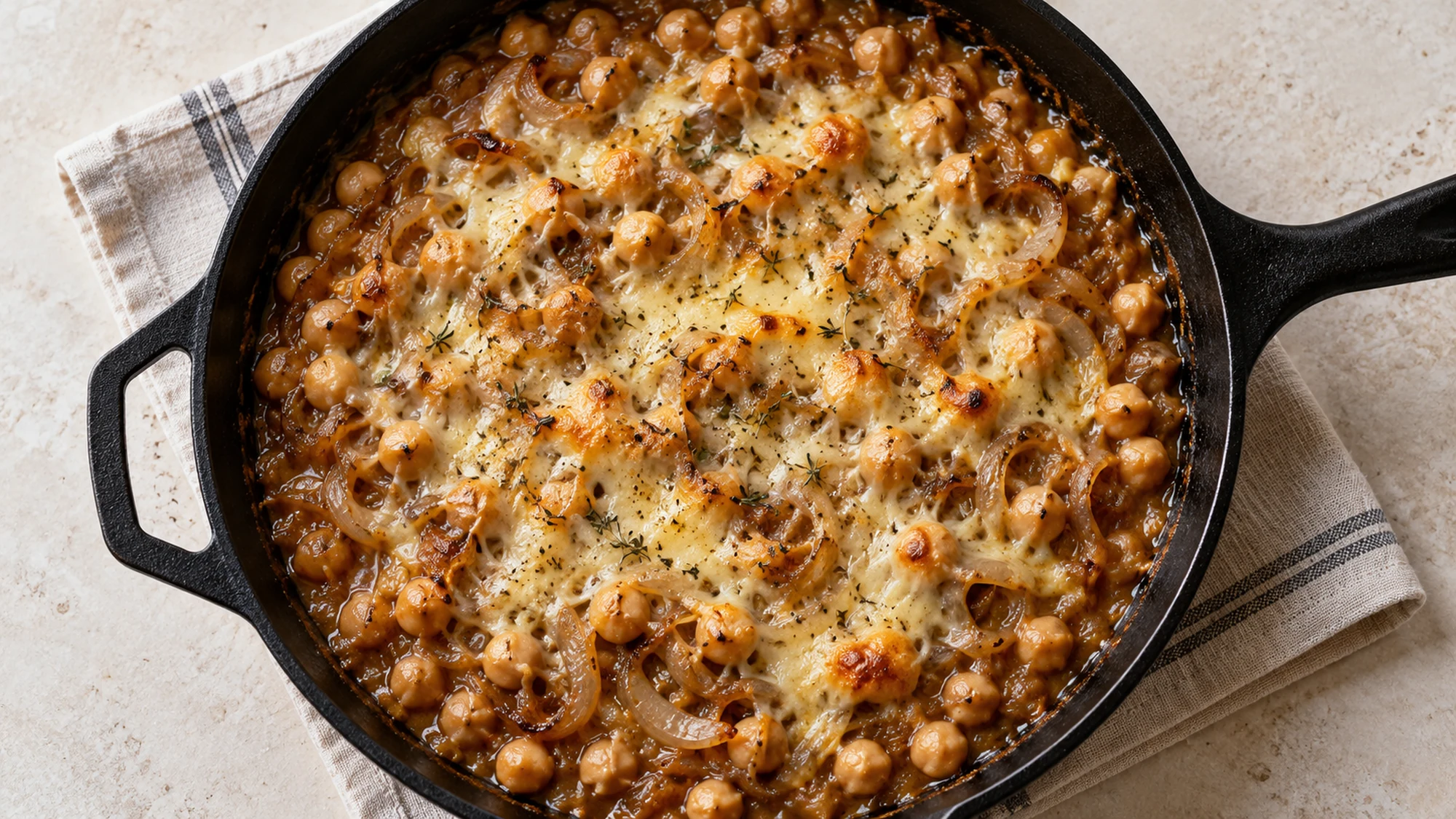
Cook the onions until deeply golden before adding the chickpeas. Their slow-built sweetness, a little Dijon and melted Gruyere give this skillet its French onion character without turning dinner into a bowl of soup.
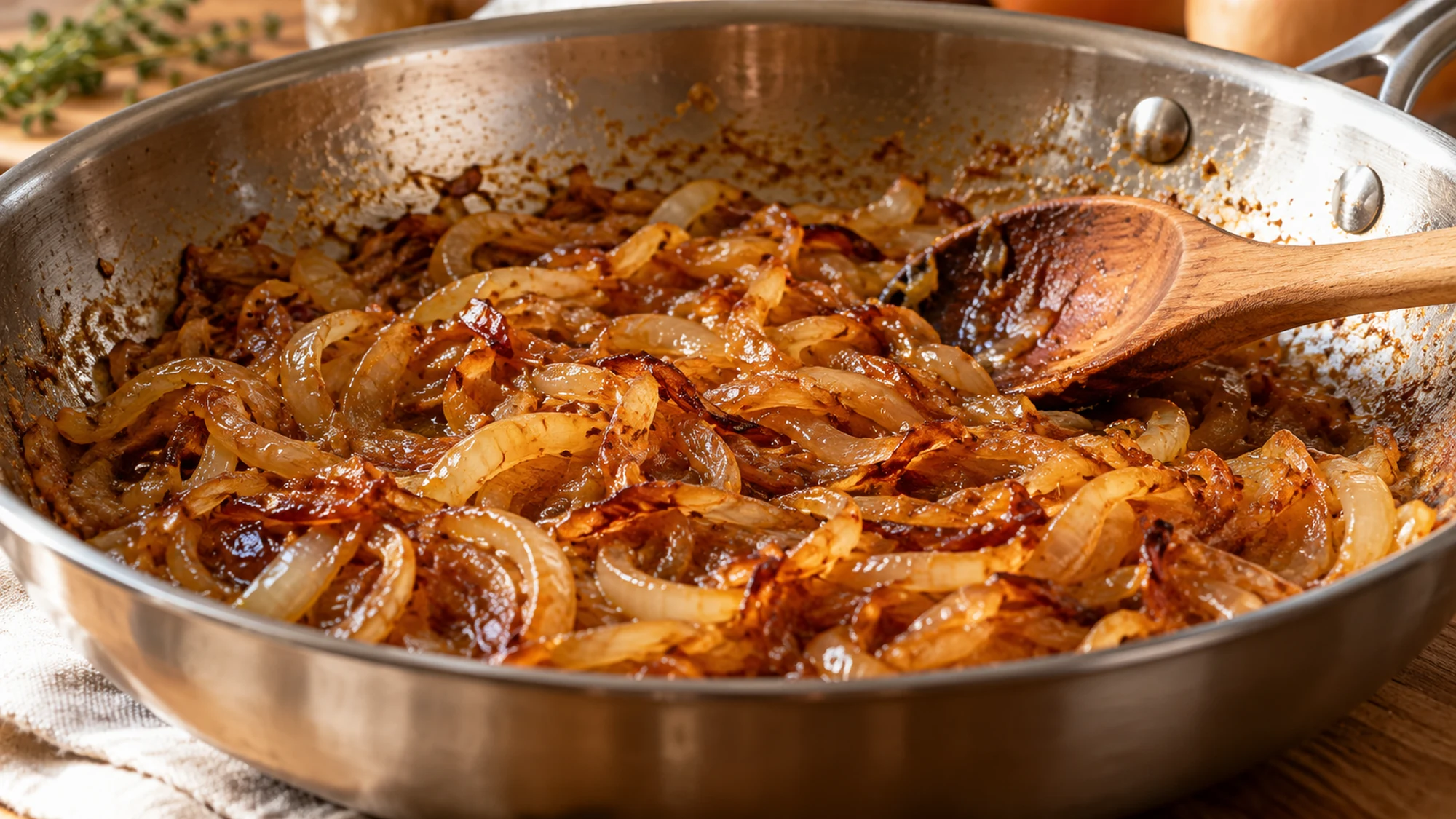
I’d give the onions the most attention here. Canned chickpeas are already cooked, so they need warming and a short simmer, while the onions need room and patience. Expect roughly an hour overall rather than a rushed weeknight shortcut; the full quantities and method are in the card below.
Serving Suggestions for French Onion Chickpeas
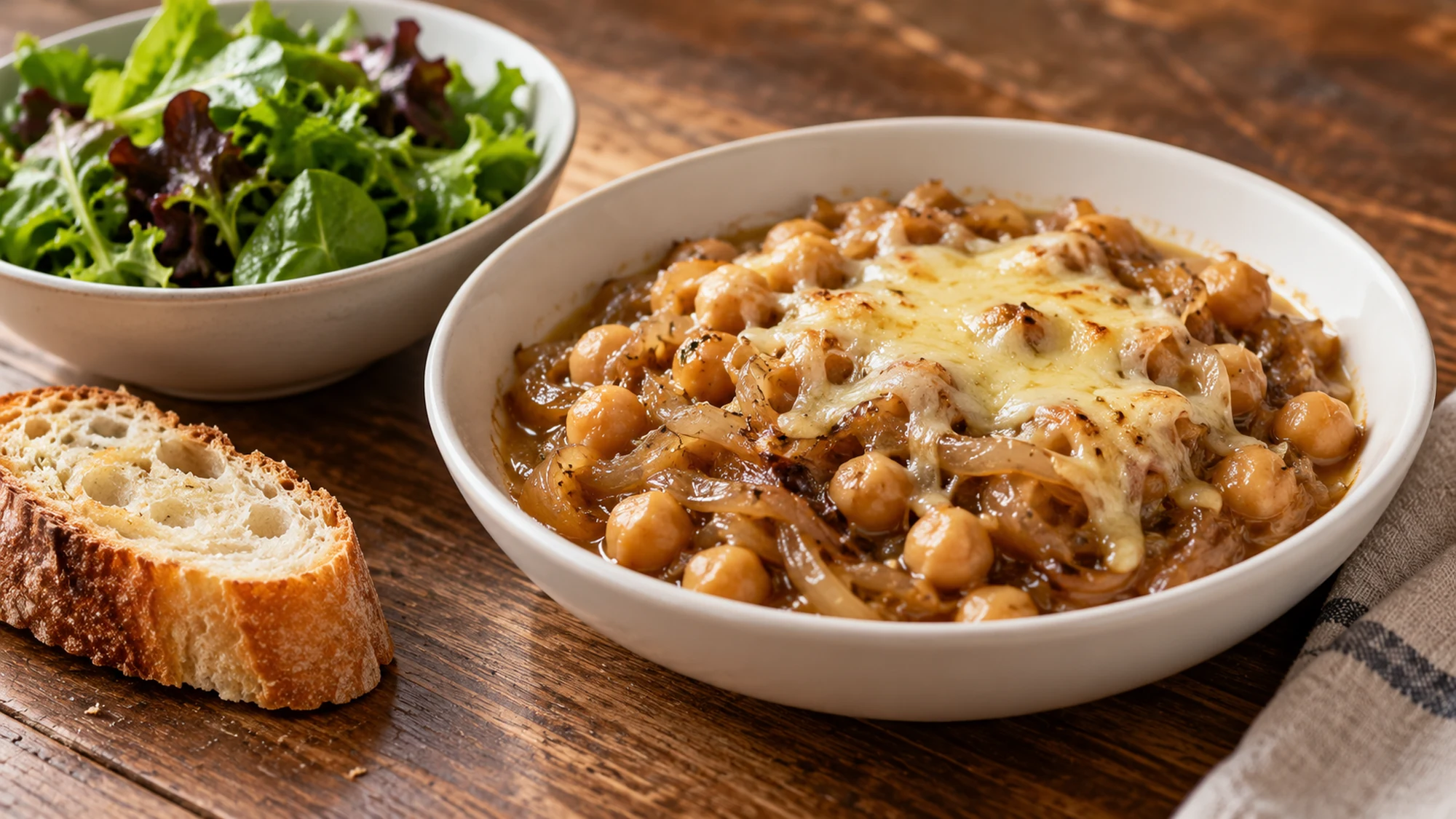
Spoon the chickpeas into shallow bowls while the cheese is soft and the sauce still moves easily. A rich onion base welcomes something crisp or fresh beside it. I prefer a sharp green salad to another creamy side, because that contrast gives each mouthful a little breathing room.
Bread makes sense for the gravy, but it needn’t become the whole meal. A slice of Spoonvale’s crackly homemade baguette is a useful option. Keep any bread separate until serving so its crust stays crisp instead of disappearing into the sauce.
- For a lighter plate: add a generous green salad with a simple vinegar dressing, keeping the dressing separate from the hot chickpeas.
- For extra vegetables: serve steamed broccoli or roasted carrots alongside; their texture gives the soft onions some welcome company.
- For a grain bowl: spoon a smaller portion over cooked brown rice or farro. Add the grain separately rather than expecting it to cook in the finished gravy.
- For reheating: loosen the chilled sauce with a splash of water, cover and warm thoroughly, stirring so the center heats evenly.
Choose one fresh or crisp accompaniment and let the onion gravy remain the main attraction.
French Onion Chickpeas Variations
The chickpeas should remain whole enough to offer a little bite. If you choose softer white beans instead, fold them in gently and expect a creamier result. Substitutions can be useful, but they are changes to the dish, not promises of an identical finish.
| Change | What to expect | Practical cue |
|---|---|---|
| Swiss for Gruyere | Milder cheese flavor | Use a modest, even topping |
| White beans for chickpeas | Softer, creamier beans | Fold gently to limit breaking |
| Mushroom broth | Earthier gravy | Taste before adding salt |
| Dairy-free topping | Different melting and browning | Follow the product’s heat guidance |
- Watch the pan: lower the heat if onion edges darken before the centers soften. A small splash of the measured water loosens browned bits.
- Keep garlic from scorching: add it after the onions have caramelized. Burnt garlic brings bitterness that more cheese cannot fix.
- Check the skillet: use a pan explicitly suitable for the broiler. Keep its handle protected and watch the cheese continuously.
- Store promptly: divide leftovers into shallow covered containers and refrigerate within two hours, or one hour above 90°F (32°C). Use within three to four days and reheat to 165°F (74°C).
Adjust the heat and sauce consistency before adding extra ingredients; browned onions should taste sweet and savory, never scorched.
Health Benefits and Everyday Balance
Chickpeas contribute plant protein and dietary fiber; onions add vegetables, and cheese contributes calcium and protein along with sodium and saturated fat. Portion size, your broth and cheese labels, and the rest of the plate all matter.
The USDA protein-food guide includes chickpeas among beans, peas and lentils. For this dish, I’d compare sodium on the broth and chickpea labels first, then season the finished gravy cautiously. A low-sodium ingredient is helpful only if the final seasoning stays thoughtful too.
- Keep the vegetables visible: offer a salad or another vegetable rather than relying on the onions alone for variety.
- Read allergen labels: the base contains milk and wheat, while mustard is also present. Broth and alternative toppings may introduce other allergens.
- Use safe leftovers: the USDA leftover guide explains prompt chilling and short refrigerated storage; do not leave the skillet on the counter overnight.
Think of this as a satisfying bean-centered meal, with sensible portions and a fresh vegetable side.
Bottom Line
The success of French onion chickpeas rests on a simple distinction: soften the onions first, then give them enough time to become genuinely golden. Chickpeas bring substance, while Dijon sharpens the gravy and Gruyere adds a savory finish. None of those ingredients can replace properly cooked onions.
Keep the heat patient, the gravy spoonable and the cheese topping modest. Serve promptly with something crisp, and you have a comforting skillet dinner with clear flavors and useful leftovers.
French Onion Chickpeas Recipe

Ingredients
- 2 large yellow onions 600 g peeled weight
- 2 tbsp unsalted butter 28 g
- 0.25 tsp fine salt plus more only if needed after tasting
- 0.25 cup water up to this amount, added only if onions stick
- 3 garlic cloves minced
- 1 tsp dried thyme
- 1 tbsp all-purpose flour 8 g
- 1 cup low-sodium vegetable broth 240 ml
- 1 tsp Dijon mustard
- 0.25 tsp ground black pepper
- 2 15 oz cans chickpeas rinsed and drained, about 480 g drained total
- 3 oz Gruyere cheese 85 g, freshly grated
Equipment
- 12-inch broiler-safe skillet
- Wooden spoon
- Chef’s knife and cutting board
- Box grater
- Colander
- Measuring cup and spoons
- Oven mitts
Instructions
- Peel and thinly slice the onions into roughly 1/8-inch (3 mm) slices.
- Melt the butter in a 12-inch broiler-safe skillet over medium heat. Add the onions and salt. Reduce to medium-low and cook for 30–40 minutes, stirring regularly, until soft and deep golden. Add the measured water a tablespoon at a time only if sticking; reduce heat if edges scorch.
- Stir in the garlic and thyme for 1 minute, then add the flour and stir for 1 minute more.
- Gradually stir in the broth, scraping the bottom. Add Dijon, pepper and drained chickpeas. Simmer gently for 8–10 minutes until the gravy coats the chickpeas; add a small splash of water if it becomes too thick.
- Heat the broiler according to its instructions. Scatter the Gruyere over the skillet and broil until melted and lightly browned, usually 1–3 minutes. Watch continuously and use oven mitts; keep handles away from direct heat as the pan manufacturer requires.
- Taste the gravy before adding further salt. Divide among four bowls and serve promptly. The skillet and handle remain hot.
Notes
Tried this recipe?
Let us know how it turned out!Emily is Spoonvale’s recipe-writing persona, bringing a warm, practical voice to everyday cooking. Her focus is simple: approachable meals, comforting flavors, and clear instructions that help make time in the kitchen more enjoyable.