
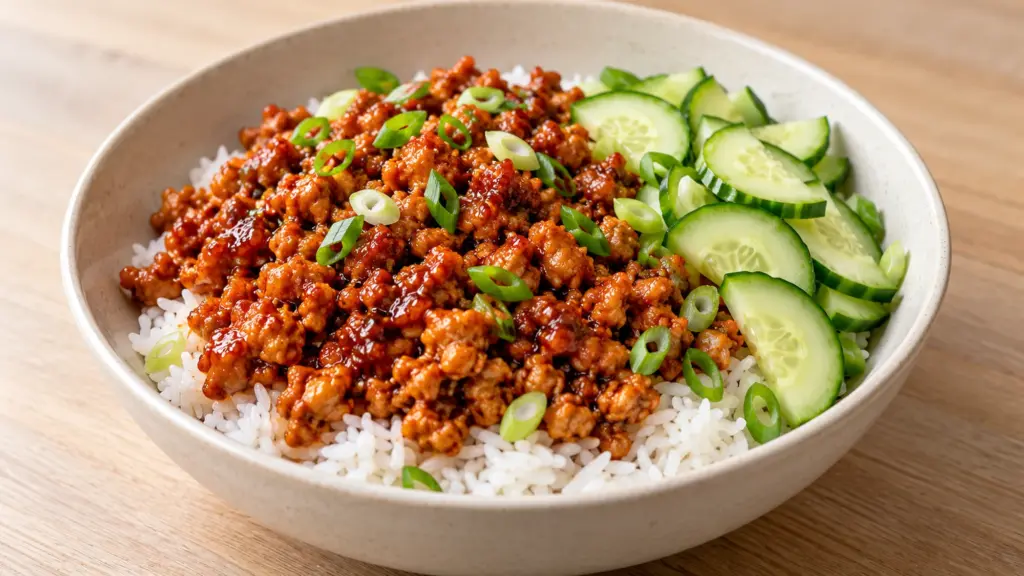
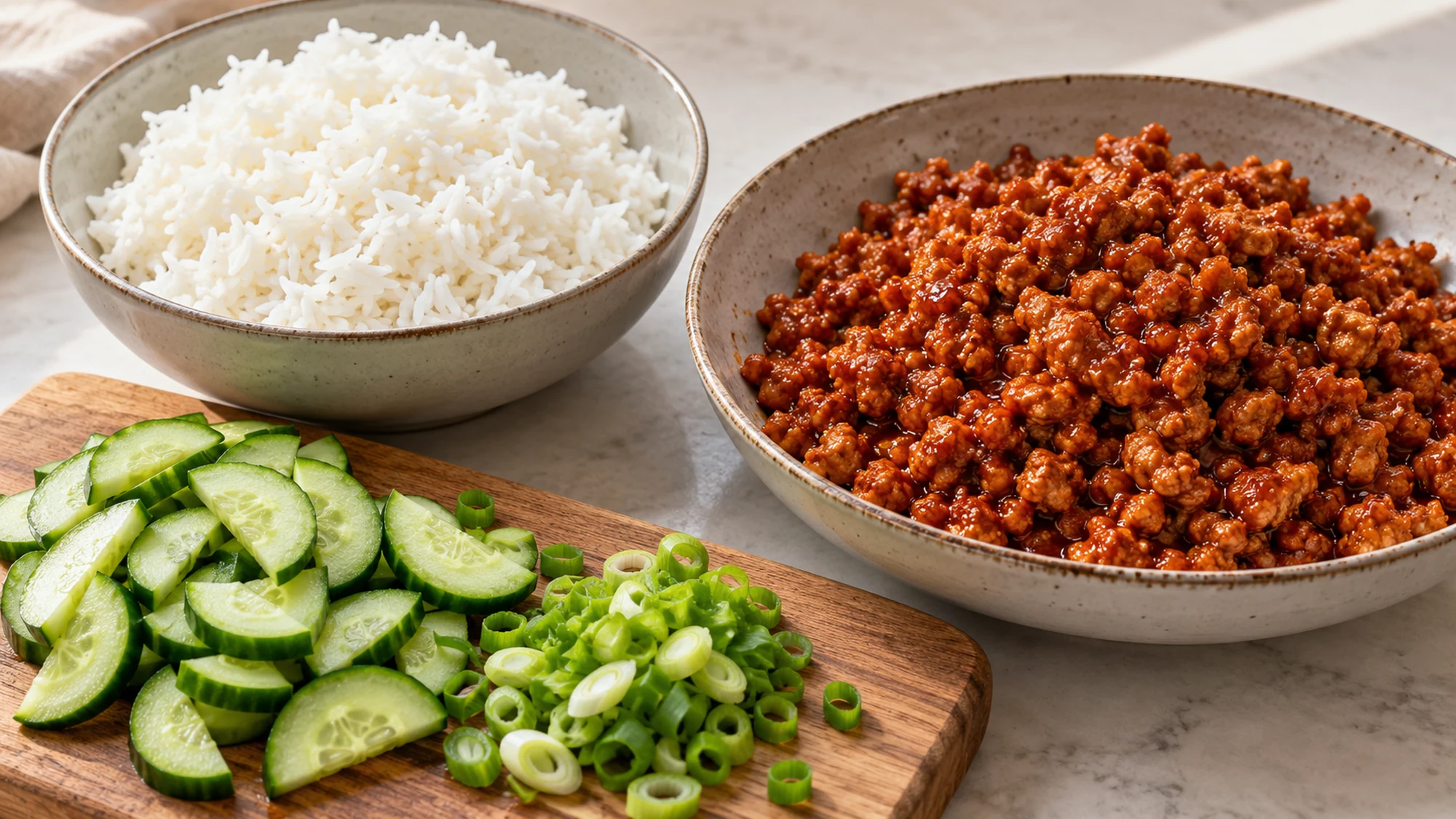
These gochujang ground chicken bowls offer a useful contrast: hot, savory chicken against cool cucumber, with plain rice catching the sauce underneath. The red pepper paste brings enough character that the bowl needs only a few fresh finishing touches. It is a practical dinner when a packet of ground chicken needs more direction than another burger.
Start the rice first, measure the sauce before heating the skillet, and add the cucumber at the table. Gochujang ground chicken bowls work best when the sauce clings to the crumbles and the fresh toppings stay crisp.
I would spend the small amount of chopping time on cucumber and scallions instead of making a second sauce. Their clean flavors leave room for the fermented chile paste. This is a Korean-inspired bowl built around that ingredient, with a home-kitchen method and an adjustable level of heat.
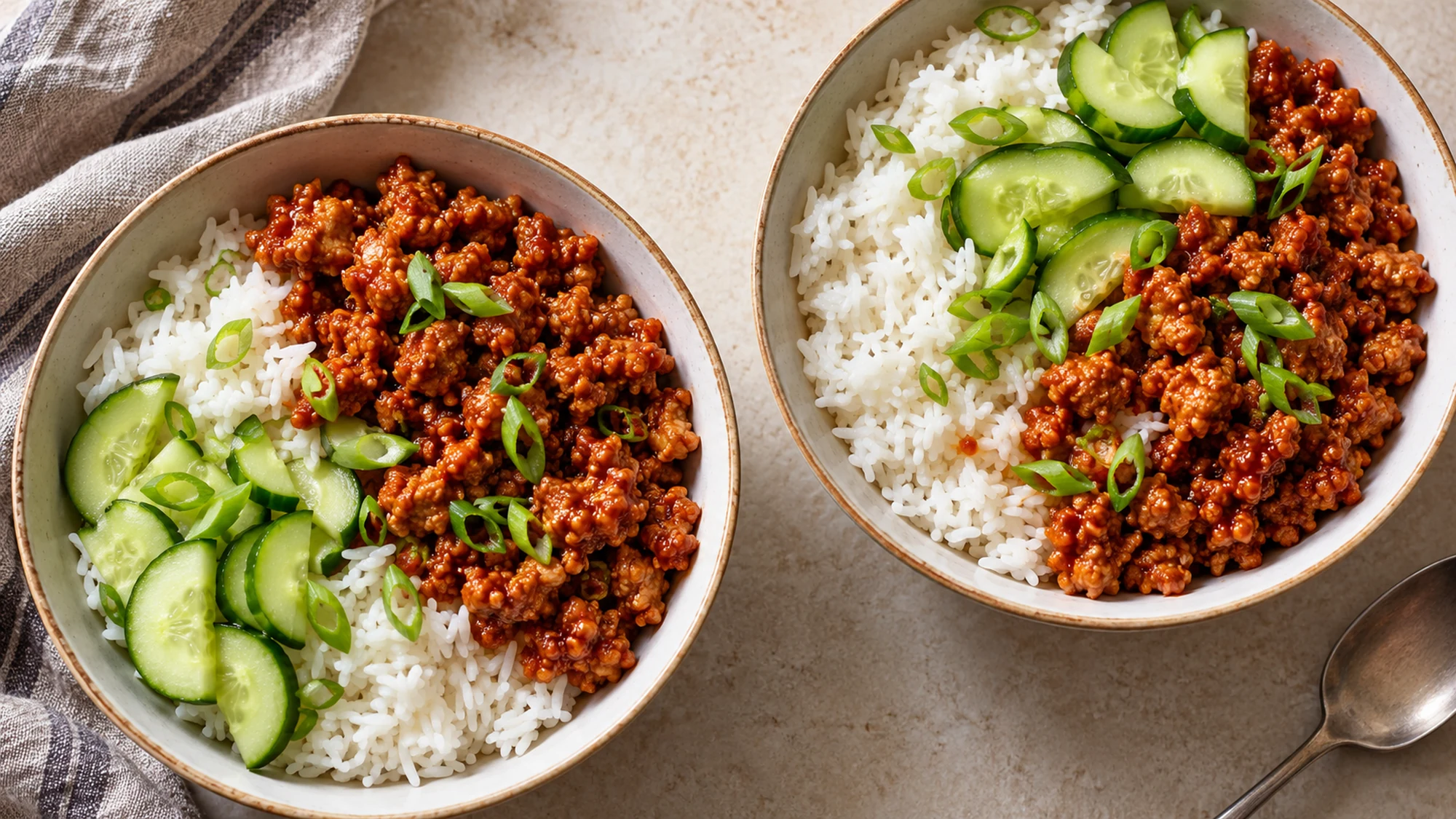
Serving Suggestions for Gochujang Ground Chicken Bowls
Divide the rice between wide bowls, then spoon the chicken over just part of the surface. A plain patch of rice gives you somewhere to balance a spicy bite. Add cucumber half-moons and scallion greens at the end, where their coolness and crunch remain noticeable rather than disappearing into the warm sauce. There is no need to coat the cucumber in the skillet sauce. Let the contrast come from alternating forkfuls, and spoon over more chicken only after tasting the balance already in the bowl.
If you are packing lunch, keep the cucumber in a separate container. Refrigerate the cooked rice and chicken promptly in shallow containers. USDA leftovers guidance allows three to four days in the refrigerator and calls for reheating to 165°F. Refrigerate within two hours, or one hour when the temperature is above 90°F.
- Offer steamed broccoli alongside when you want a larger vegetable portion.
- Let diners add their cucumber and scallion greens after the hot components.
- Keep the sesame oil measured: a little gives aroma without making the rice greasy.
Build each bowl with warm rice, saucy chicken, and a fresh finish. Keeping those parts distinct makes every bite easier to balance.
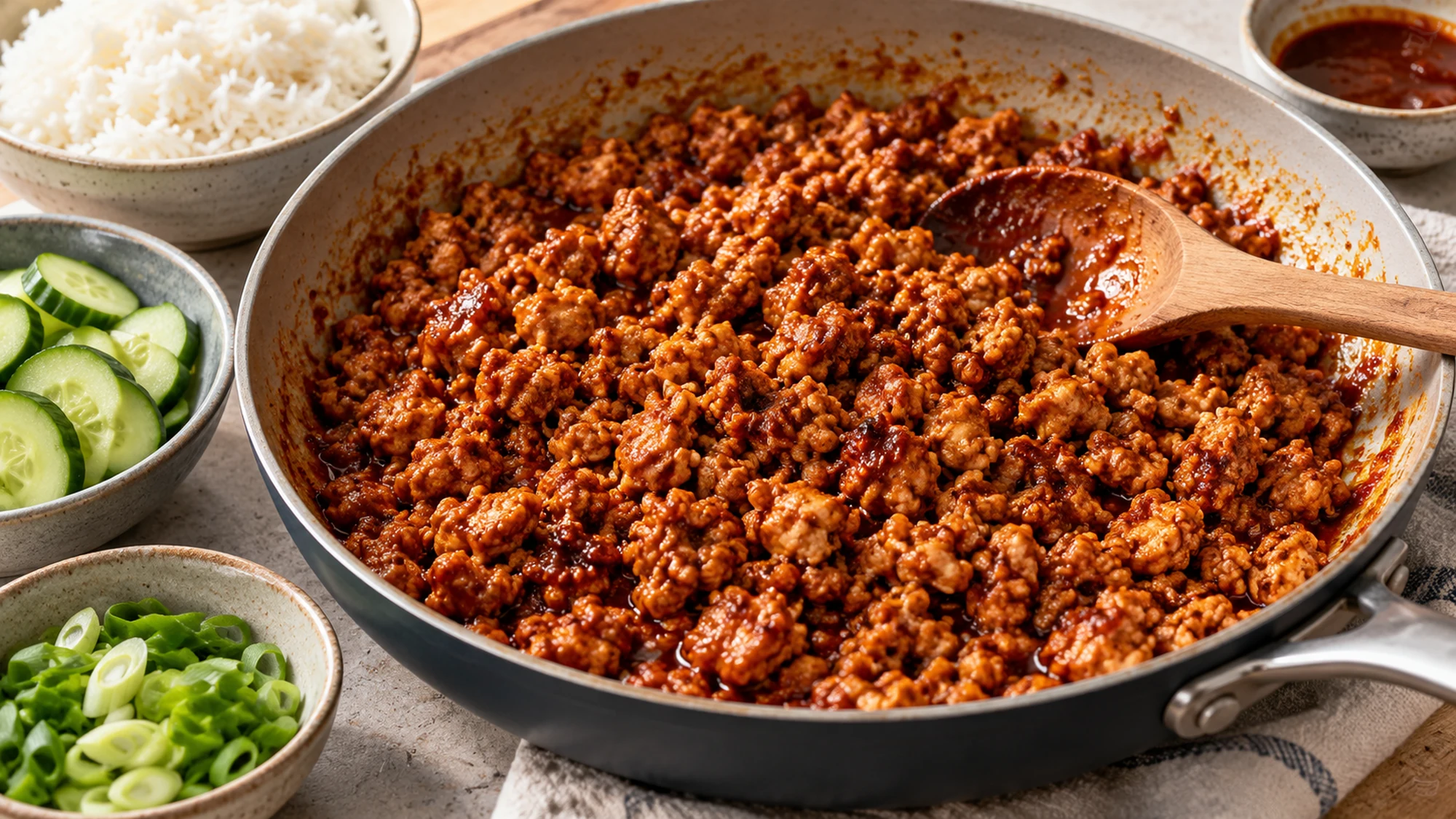
Gochujang Ground Chicken Bowls Variations
Gochujang is a thick fermented red pepper paste, and jars vary in heat, sweetness, and salt. Choose a mild version if that suits your table. A thin bottled hot sauce will not behave the same way in this measured sauce. For a gentler bowl, start with less paste and reserve the rest for another meal.
I would measure the paste before the chicken hits the skillet. Sticky spoonfuls are easier to manage while the pan is quiet, and the ready-mixed sauce can go in as soon as the chicken is cooked. If it thickens too far, a small splash of water helps distribute it without adding more salt. Scrape the bowl with a spatula so the measured sauce reaches the pan.
| Change | What changes | Useful adjustment |
|---|---|---|
| Brown rice | Chewier grain and longer cooking | Use the package water and timing |
| Ground turkey | A different poultry flavor | Cook to the same 165°F endpoint |
| Less gochujang | A milder sauce | Add water only as needed to coat |
| More vegetables | A fuller plate | Serve cooked broccoli beside the bowl |
Choose the heat level from your own jar, then aim for a coating of sauce. The chicken should stay visible instead of floating in a pool.
Health Benefits and Balance
Ground chicken provides protein, rice supplies a grain portion, and cucumber adds a fresh vegetable component. A few slices are a topping rather than a large serving of vegetables, so a side is useful when you want more. The meal’s nutrition depends on the chicken, rice portion, and exact condiments you choose.
Reduced-sodium soy sauce still contains sodium, and gochujang contributes some too. The FDA’s sodium guidance recommends comparing labels and serving sizes. For cooking safety, follow USDA ground-poultry guidance: check that the chicken reaches 165°F with a food thermometer. Browning alone cannot confirm that endpoint.
Use the labels to compare condiments and a thermometer to check the chicken. Add a vegetable side according to your appetite and the rest of the meal.
Bottom Line
Gochujang ground chicken bowls need a measured sauce, rice that can absorb it, and something cool at the finish. Start the rice before the skillet, keep an eye on the sauce as it thickens, and let the cucumber stay fresh. Those small decisions give an ordinary package of ground chicken a clear, satisfying place at the dinner table.
Gochujang Ground Chicken Bowls Recipe

Ingredients
- 0.75 cup dry long-grain white rice 150 g
- 1.5 cups water 360 ml; for the rice
- 1 lb ground chicken 454 g
- 1 tbsp neutral oil 15 ml
- 2 tbsp gochujang 36 g; mild or medium, according to preference
- 1 tbsp reduced-sodium soy sauce 15 ml
- 1 tbsp honey 21 g
- 1 tbsp rice vinegar 15 ml
- 0.25 cup water 60 ml; for the sauce
- 2 garlic cloves 6 g; minced
- 2 tsp fresh ginger 5 g; finely grated
- 1 English cucumber about 250 g; sliced into thin half-moons
- 2 scallions about 30 g; sliced, whites and greens kept separate
- 1 tsp toasted sesame oil 5 ml
Equipment
- Small saucepan with a lid
- 12-inch skillet
- Wooden spoon
- Mixing bowl
- Measuring cup and spoons
- knife and cutting board
- Fine grater
- Instant-read food thermometer
Instructions
- Put the rice and 1½ cups water in a small saucepan. Bring to a boil, cover, and reduce to a gentle simmer. Cook for 15–18 minutes, until the water is absorbed, then remove from the heat and rest, covered, for 5 minutes.
- Meanwhile, stir the gochujang, soy sauce, honey, rice vinegar, and ¼ cup water together in a mixing bowl. Set the cucumber and scallion greens aside for serving.
- Heat the neutral oil in a 12-inch skillet over medium-high heat. Add the ground chicken and cook for 6–8 minutes, breaking it into small crumbles and stirring so that it browns evenly. Add the garlic, ginger, and scallion whites; stir for 30–60 seconds.
- Pour in the mixed sauce and simmer for 2–3 minutes, stirring until it coats the chicken. Check several thicker clumps with an instant-read thermometer: ground chicken must reach 165°F (74°C). Continue cooking if needed. If the sauce becomes too thick before the chicken is ready, add a small splash of water.
- Remove the skillet from the heat and stir in the toasted sesame oil. Fluff the rice, divide it among four bowls, and add the chicken. Finish with cucumber half-moons and scallion greens.
- Refrigerate leftover rice and chicken in shallow containers within 2 hours, or within 1 hour when the temperature is above 90°F. Use within 3–4 days and reheat to 165°F. Store the cucumber separately and add it after reheating.
Notes
Tried this recipe?
Let us know how it turned out!Emily is Spoonvale’s recipe-writing persona, bringing a warm, practical voice to everyday cooking. Her focus is simple: approachable meals, comforting flavors, and clear instructions that help make time in the kitchen more enjoyable.