
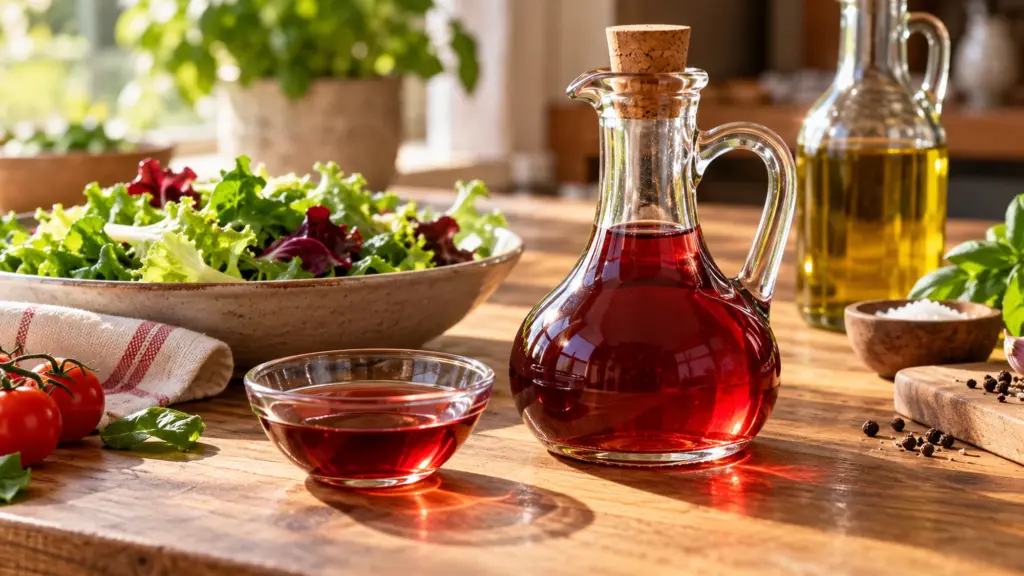
A bowl of beans can taste pleasantly hearty and still need a little spark. The answer is not always more salt or another spoonful of oil. Sometimes the bottle at the back of the cupboard has exactly the sharp, fruity edge the dish is missing.
Red wine vinegar is a wine-based vinegar used for tangy dressings, marinades and finishing dishes. Its acidity can brighten food, but it is not interchangeable with red wine, sweet balsamic glaze or an untested vinegar in a home-canning recipe.
I like ingredients that earn their shelf space in several different meals. This is one I’d reach for in a salad or bean dish, with a light hand and a taste before adding more.
What red wine vinegar brings to a dish
Wine vinegar begins with a fermented grape base, then develops the acidity associated with vinegar. Its flavor is sharper and more acidic than drinking wine, with a character that varies by bottle. Oregon State University’s vinegar guide places red wine vinegar among the useful choices for dressings and marinades.
The color can also matter: a red or rose-colored vinegar may tint pale ingredients. I’d choose it where its flavor belongs rather than expecting every vinegar to disappear into the dish. A tiny addition can make a rich or earthy mixture feel livelier without taking over.
| Where you use it | What it contributes | Practical caution |
|---|---|---|
| Leafy or bean salad | A bright, tangy dressing | Taste with the food, not only from the spoon |
| Cooked lentils or beans | A sharp finishing note | Add gradually |
| Marinade | Acidity and wine-like flavor | Follow a suitable recipe and refrigeration guidance |
| Pale dressing | Flavor plus possible pink tint | Consider white wine vinegar if color matters |
| Home canning | An acid component only when specified | Use the tested vinegar type and strength |
Use the flavor before committing the whole bowl
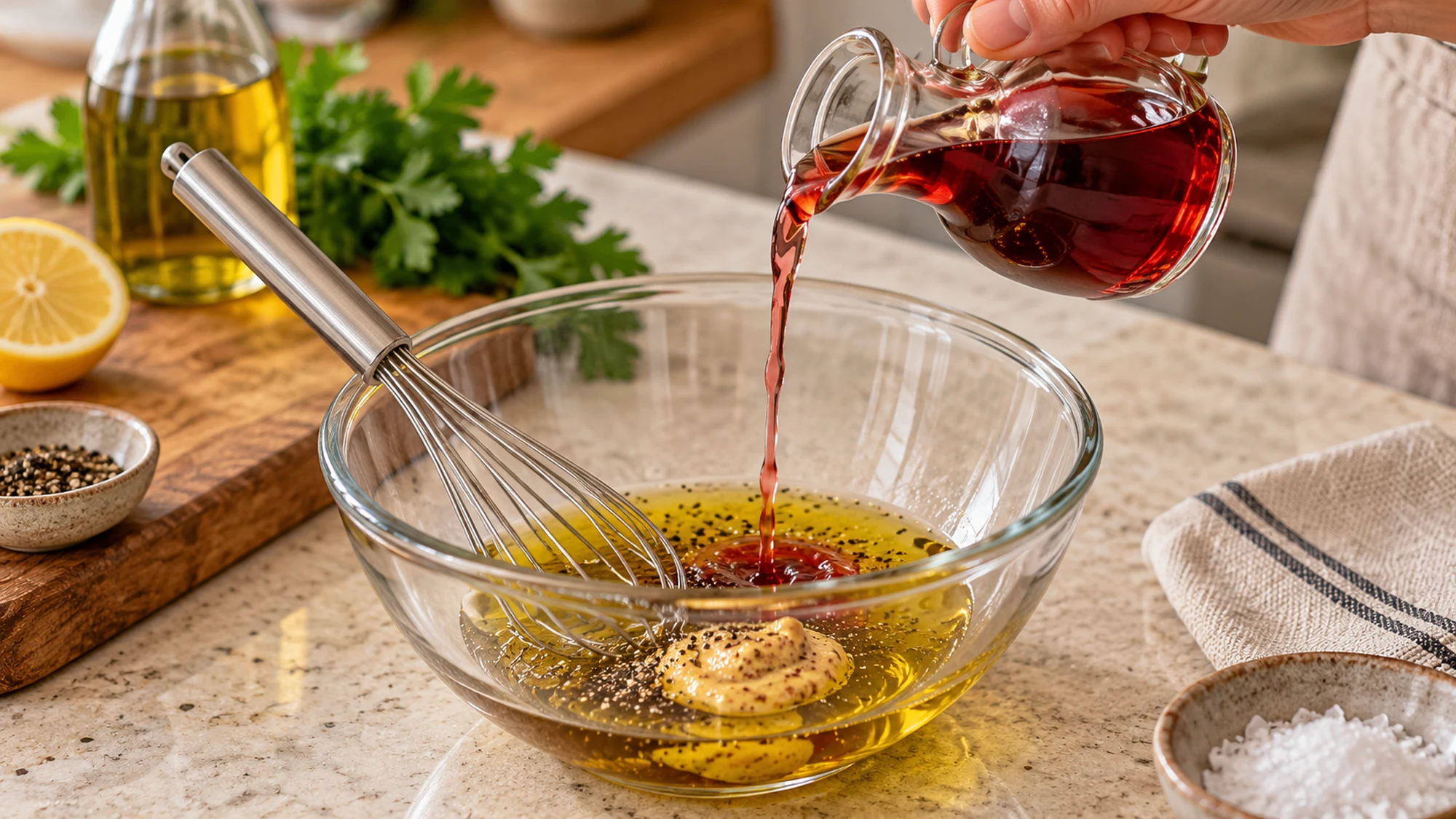
Mix a little dressing separately, then taste it on a leaf, a bean or a piece of the food you will serve. That gives you a more useful impression than tasting concentrated vinegar alone. The manufacturer Pompeian lists dressings, marinades and sauces as ordinary uses, rather than presenting the bottle as a wellness treatment.
For a cooked dish, stir a small amount into a separate spoonful before adjusting the pot. I prefer this little trial to pouring freely and trying to rescue an overly sour dinner. Keep the other flavors in view: salty cheese, mustard, citrus or pickled ingredients may already provide plenty of punch.
- Whisk or shake a dressing before serving when the oil separates.
- Use a clean spoon so food does not get carried back into the bottle.
- Keep a marinade refrigerated and follow a food-safe recipe.
- Let vinegar support the food rather than make every bite taste mainly sour.
Choose a substitute for the job, not just the color
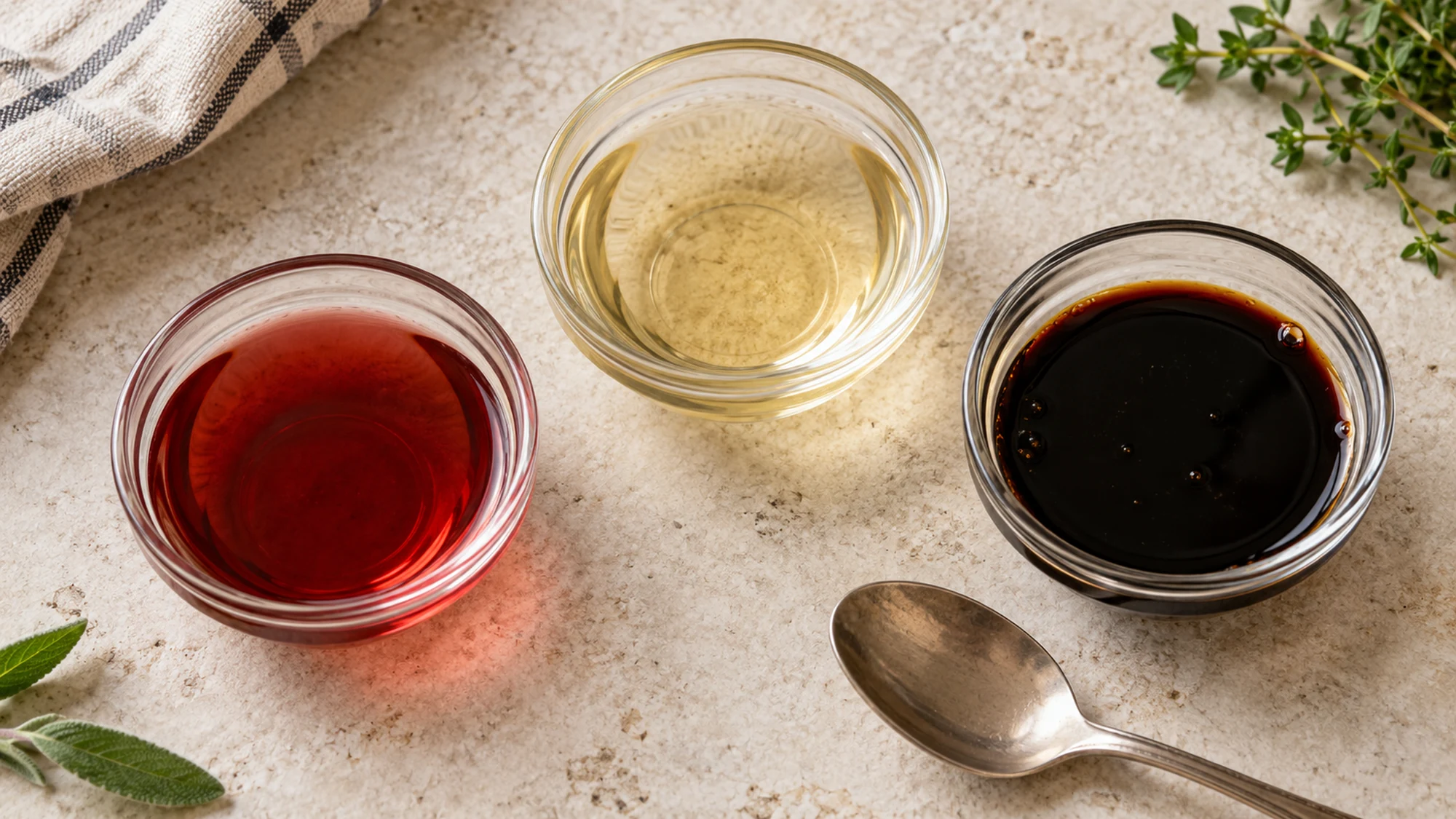
In an ordinary dressing, white wine vinegar is a practical alternative when a lighter color is welcome. Apple cider vinegar brings a different fruity note; balsamic vinegar is generally sweeter and can change both color and texture. Start with a smaller amount if the replacement tastes stronger to you, then adjust.
Red wine itself is not a direct acid substitute for red wine vinegar. Likewise, a sweet, thick balsamic glaze is not the same ingredient as a pourable wine vinegar. Our dense bean salad offers a useful context for thinking about acid, oil and seasoning together rather than treating substitutions as invisible.
- For a salad, compare the replacement’s sweetness and sharpness.
- For a cooked sauce, consider whether the extra color or sweetness fits.
- For a recipe relying on a specific chemical balance, use a tested substitution.
- For canning, do not apply casual salad-dressing swaps.
Store the bottle well and keep canning rules separate
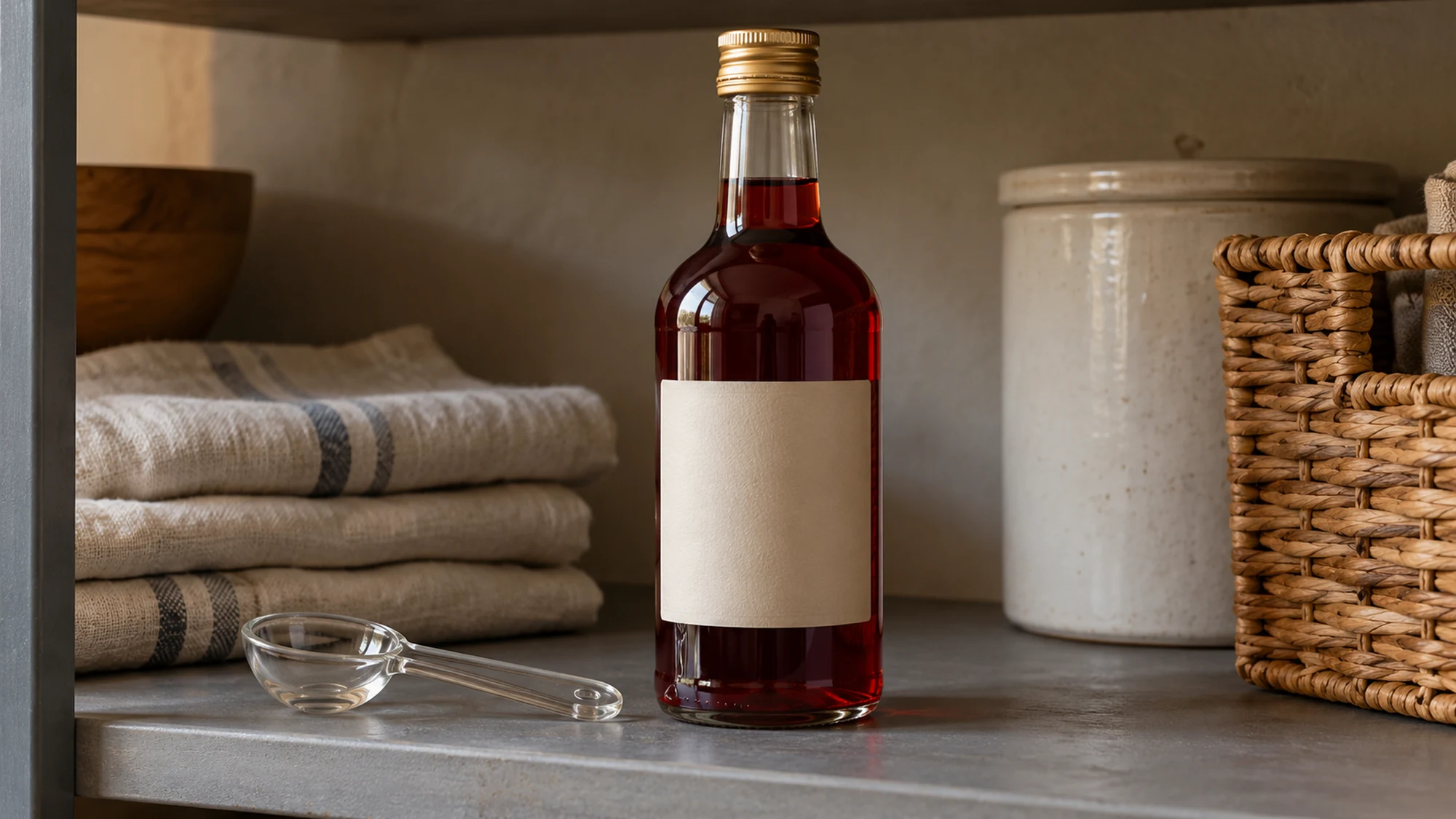
Iowa State University Extension recommends a tightly closed bottle in a cool, dark cupboard away from heat. Commercial vinegar keeps for a long time, although color and flavor can change. Follow the product’s directions, keep water and food out, and distinguish an ordinary vinegar bottle from a prepared dressing containing perishable ingredients.
Home canning is a different task. The National Center for Home Food Preservation says to use tested ingredient proportions and avoid vinegar of unknown acidity. Its general guidance recommends white distilled or cider vinegar labeled 5% acidity. Do not assume any bottle of wine vinegar is an approved swap.
- Check the acidity printed on the bottle when a tested preservation recipe calls for it.
- Do not dilute vinegar or alter the water-to-vinegar proportion in a canning recipe.
- Do not use homemade vinegar of unknown strength for shelf-stable pickles.
- Refrigerate prepared dressings according to their recipe; plain vinegar’s storage rules do not cover added fresh ingredients.
Bottom Line
Use red wine vinegar as a flavor tool: add a little, taste it with the food and adjust thoughtfully. Store it closed and away from heat, choose substitutes with their flavor in mind, and keep preservation strictly tied to tested recipes. It can brighten an everyday meal without requiring an elaborate new one.
Chef Amanda Freitag demonstrates red wine vinaigrette. The video illustrates a culinary use of the ingredient, not a home-canning method.
Sources
- Oregon State University Extension: vinegar basics
- Pompeian: red wine vinegar uses
- Iowa State University Extension: vinegar storage
- National Center for Home Food Preservation: pickling guidance

Emily is Spoonvale’s recipe-writing persona, bringing a warm, practical voice to everyday cooking. Her focus is simple: approachable meals, comforting flavors, and clear instructions that help make time in the kitchen more enjoyable.