

A bowl of leftover egg whites can look like a baking project waiting to happen. Before you turn them into an omelet or a cloud of meringue, it helps to know what they actually contribute.
Egg albumin nutrition usually means egg-white nutrition: one large raw white, about 33 grams, supplies roughly 17 calories and 3.6 grams of protein with very little fat. The white is useful, but it is not nutritionally identical to a whole egg.
I’d treat those numbers as a starting point, not a reason to declare the yolk the enemy. The best choice depends on what you are cooking and what the rest of the meal provides.
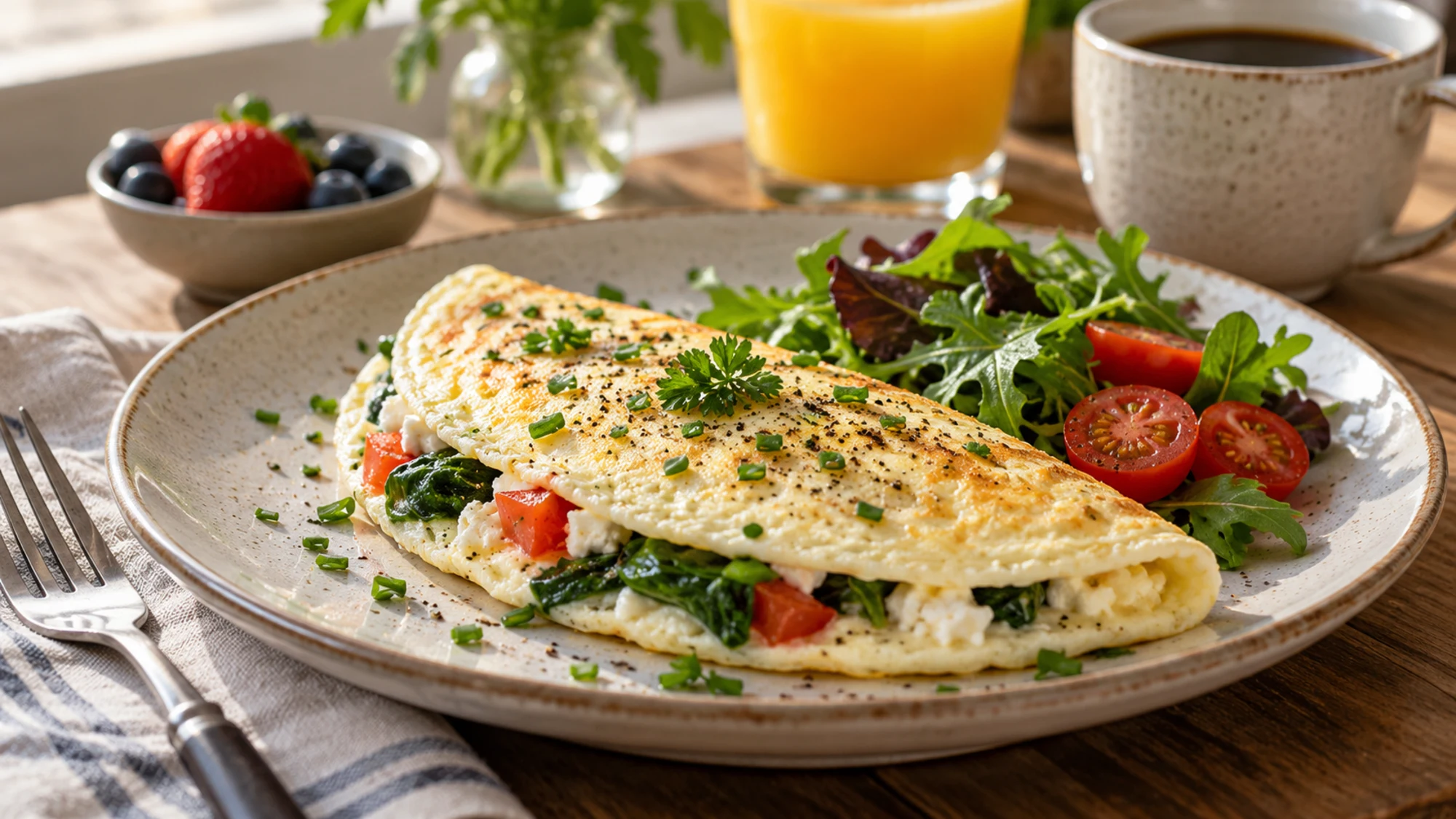
Egg albumin nutrition starts with a naming distinction
The clear part of an egg is called albumen. Ovalbumin is one of its proteins, not the entire food; the National Library of Medicine distinguishes ovalbumin from egg white. In food-product descriptions, you may also see dried egg albumen used for dried whites.
Do not confuse this with serum albumin. That is a protein made by the liver and measured in blood, as MedlinePlus explains. A low blood albumin result is a medical finding to discuss with your clinician, not a diagnosis that can be corrected simply by eating extra egg whites.
- For cooking, check whether the product is fresh, liquid, frozen or dried egg white.
- For a blood-test question, use your clinician’s interpretation rather than a food label.
- For a packaged product, follow its own serving size, ingredients and storage directions.
What one large white contributes
The figures below describe a raw ingredient reference, not advice to eat raw eggs. The USDA protein table lists about 3.6 grams per large white; the American Egg Board’s composition information gives about 17 calories. Egg size and product formulation affect the amount you actually use.
Whites contain very little fat, while yolks contribute fat and other nutrients. Our guide to protein in an egg puts the white back in the context of the whole egg. Butter, cheese, milk or sugar added during cooking change the finished dish, sometimes considerably.
| Choice | What to understand | Useful label check |
|---|---|---|
| One large fresh white | About 17 calories and 3.6 g protein | Reference serving is approximately 33 g |
| Carton liquid whites | Convenient measured portions | Serving size, ingredients and opening instructions |
| Dried egg white | Concentrated product requiring recipe-specific use | Reconstitution directions and grams per serving |
| Whole egg | Includes the white and nutrient-containing yolk | Compare equal portions, not unlike serving sizes |
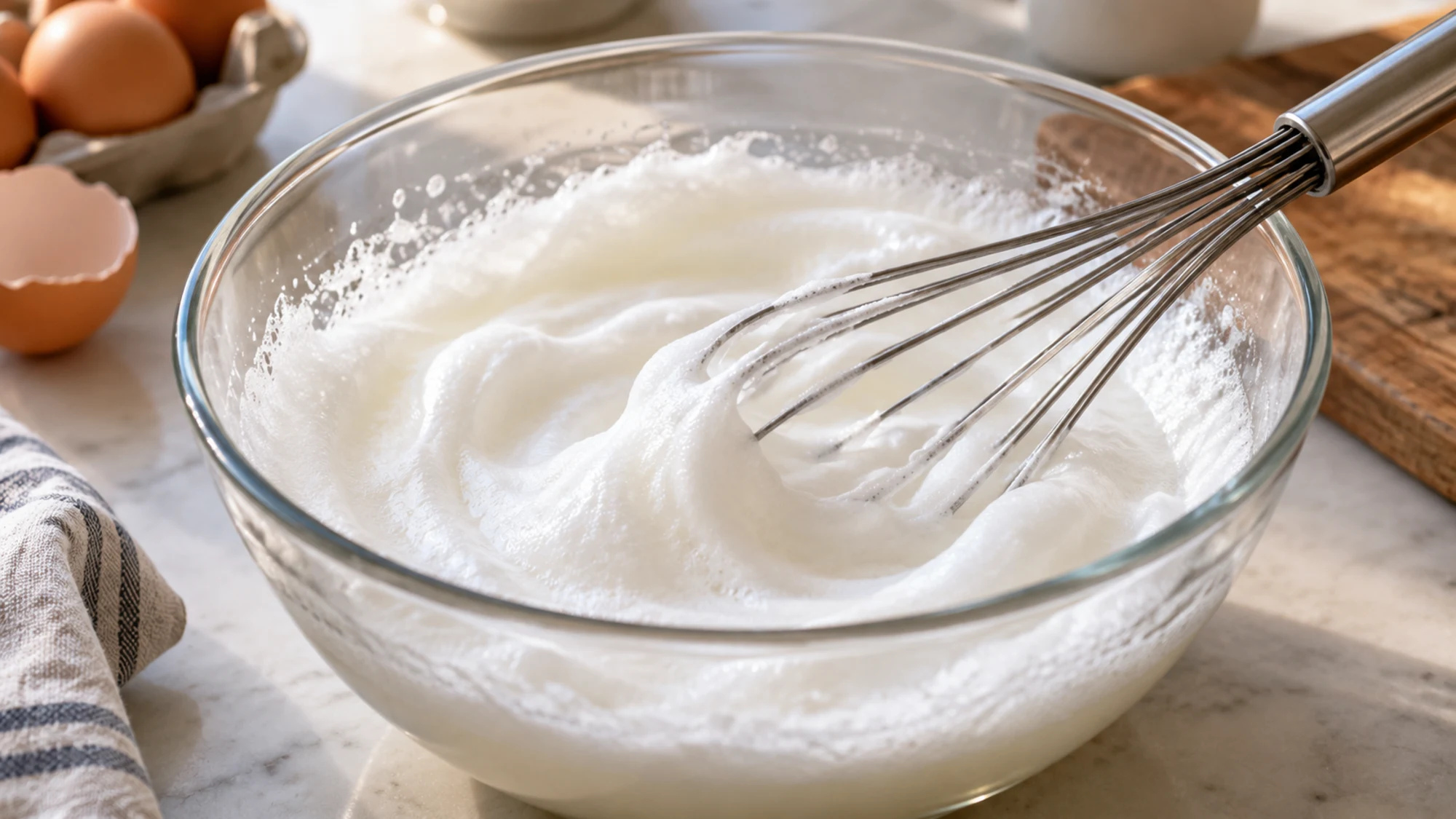
Use the white for the job it does well
Egg whites can supply structure and incorporate air. Whisking turns them into a foam used in meringues and airy baking; cooking also turns their fluid texture firm. Neither property means every carton or powder will behave exactly like freshly separated whites in every recipe.
I prefer a small, clear job for leftover whites rather than squeezing them into a dish that does not need them. A cooked scramble with vegetables is straightforward; a delicate bake deserves the specific egg product and measurements its recipe calls for. Keep whites separated from yolk when a clean foam is the goal.
- Use a clean, dry, grease-free bowl and whisk for whipping.
- Follow the recipe’s requested peak stage instead of assuming stiffer is always better.
- Check that a carton product is suitable for the baking technique you plan.
- Keep protein comparisons tied to the amount eaten, not the size of the container.
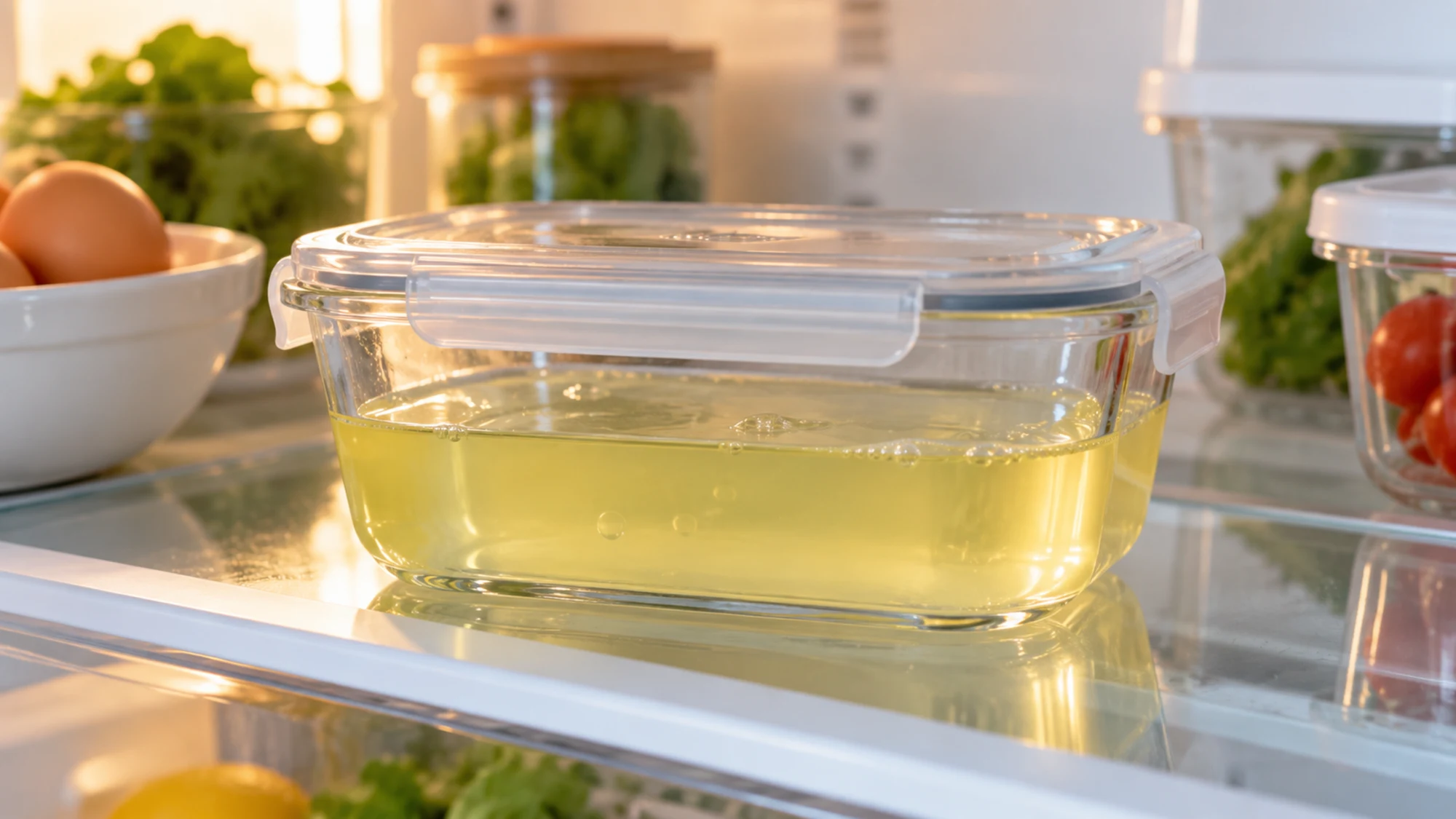
Cooking and storage are part of the decision
Raw shell-egg whites are not a shortcut I would choose for a shake. The FDA recommends cooking eggs until the whites and yolks are firm and egg dishes to 160°F. For preparations served raw or undercooked, use pasteurized eggs or egg products rather than assuming a clean shell makes them safe.
Refrigerate promptly at 40°F or below. The USDA storage chart gives separated raw whites two to four days refrigerated and up to 12 months frozen for quality. Carton products have their own instructions, particularly after opening; do not replace those with a general shell-egg timetable.
- Label stored whites with the separation or opening date.
- Keep cooked egg dishes out of refrigeration no longer than two hours, or one hour above 90°F.
- Choose pasteurized products when the preparation will not receive a safe cooking step.
- Avoid eggs and egg products if you have an egg allergy, following your individual medical advice.
Bottom Line
Egg whites offer useful protein and kitchen versatility, not a complete nutritional replacement for every part of an egg. Match the fresh or packaged product to the recipe, account for added ingredients and keep safe cooking and cold storage in the plan. Blood albumin questions belong with a clinician, not an extra scoop of egg-white powder.
Great British Chefs demonstrates whisking egg whites. This is a technique guide, not evidence for a nutrition or health claim.
Sources
- USDA: protein content of foods
- National Library of Medicine: ovalbumin
- MedlinePlus: albumin blood test
- American Egg Board: egg nutrition
- FDA: egg safety
- USDA: shell eggs and storage

Emily is Spoonvale’s recipe-writing persona, bringing a warm, practical voice to everyday cooking. Her focus is simple: approachable meals, comforting flavors, and clear instructions that help make time in the kitchen more enjoyable.