
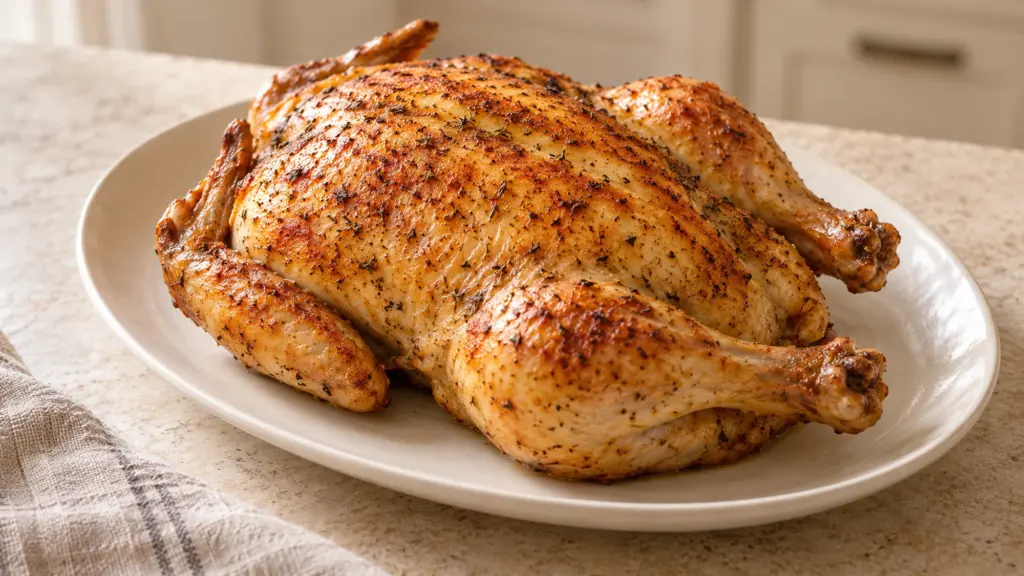
A whole chicken can look like a weekend project before you have even opened the package. In practice, this version asks for a short seasoning step, a roasting rack, and a thermometer. Olive oil carries a simple rub of garlic, paprika, thyme, and black pepper over the skin, while the cavity stays empty and the oven does the steady work.
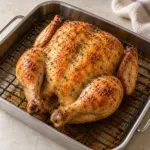
Roast this unstuffed whole chicken at 350°F/175°C and use temperature, not skin color, to decide when it is done. The thickest breast and innermost thigh and wing should each reach at least 165°F/74°C before it leaves the oven.
I would put a reliable thermometer ahead of any elaborate marinade for this dinner. It answers the most important question directly, particularly when one bird is wider or heavier than another. Allow roughly two hours including preparation and resting, with some flexibility for the oven and chicken.
What to Serve With a Whole Chicken
The herb rub is intentionally versatile. Choose something soft or starchy to catch the juices, then add a vegetable with a contrasting texture. You do not need three oven trays competing for space beside the chicken.
- Keep it simple with mashed potatoes and steamed green beans. Both can be prepared on the stovetop while the chicken roasts.
- Make a lighter-feeling plate with a crunchy cabbage salad and a small baked potato. Dress the salad separately so it stays crisp.
- Serve rice and roasted carrots when you want a dinner that also packs neatly for lunch. Cook the vegetables separately rather than assuming their timing matches the bird.
For another vegetable option, try these roasted green beans with lemon and mustard.
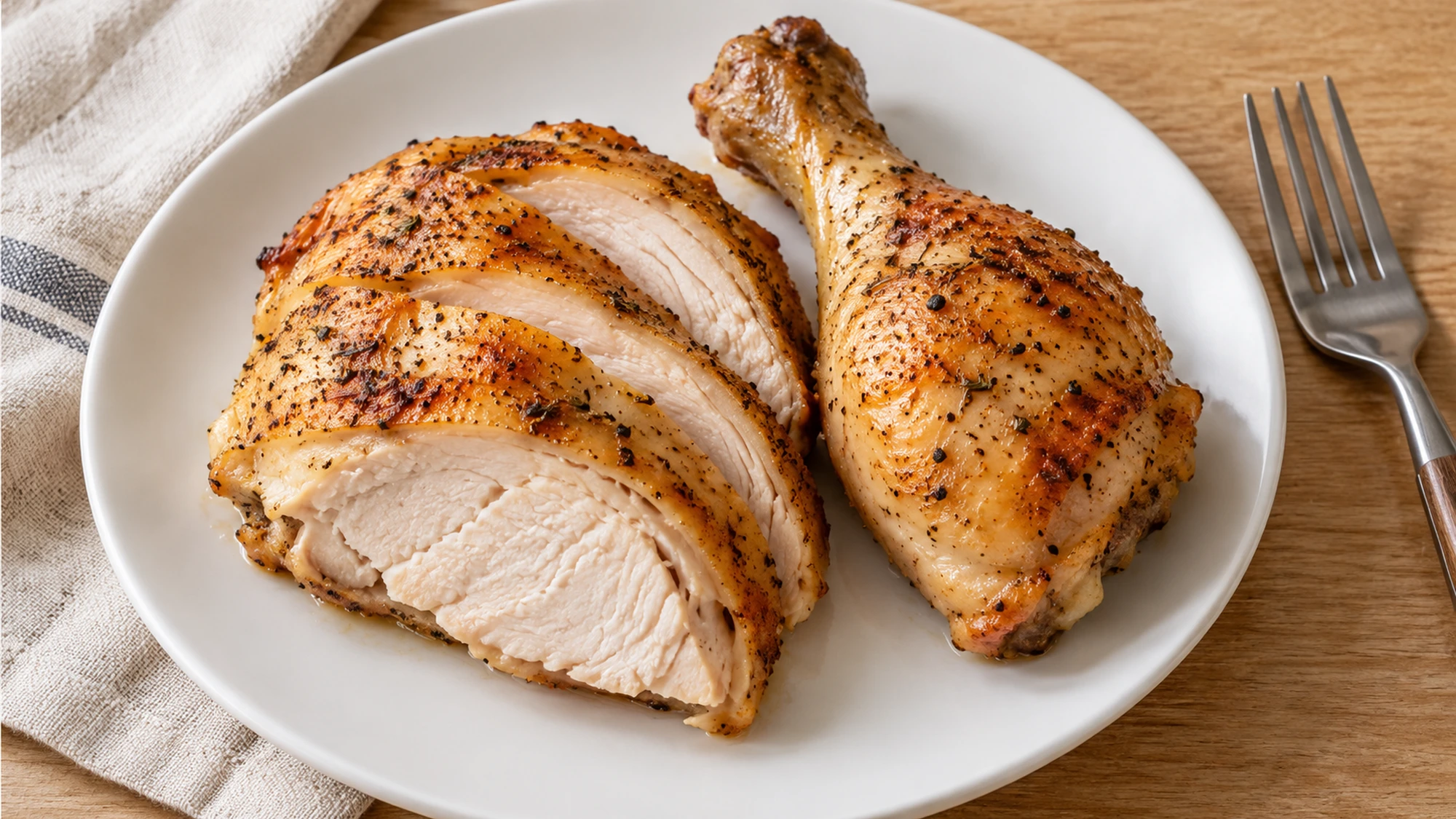
Rest the chicken for 15 minutes before carving. Remove the legs through the joints, lift the breast meat from the breastbone, and slice it across the grain.
Let the chicken be the main event and choose sides that make the cooking schedule easier, not more crowded.
Seasoning Variations Without Changing the Method
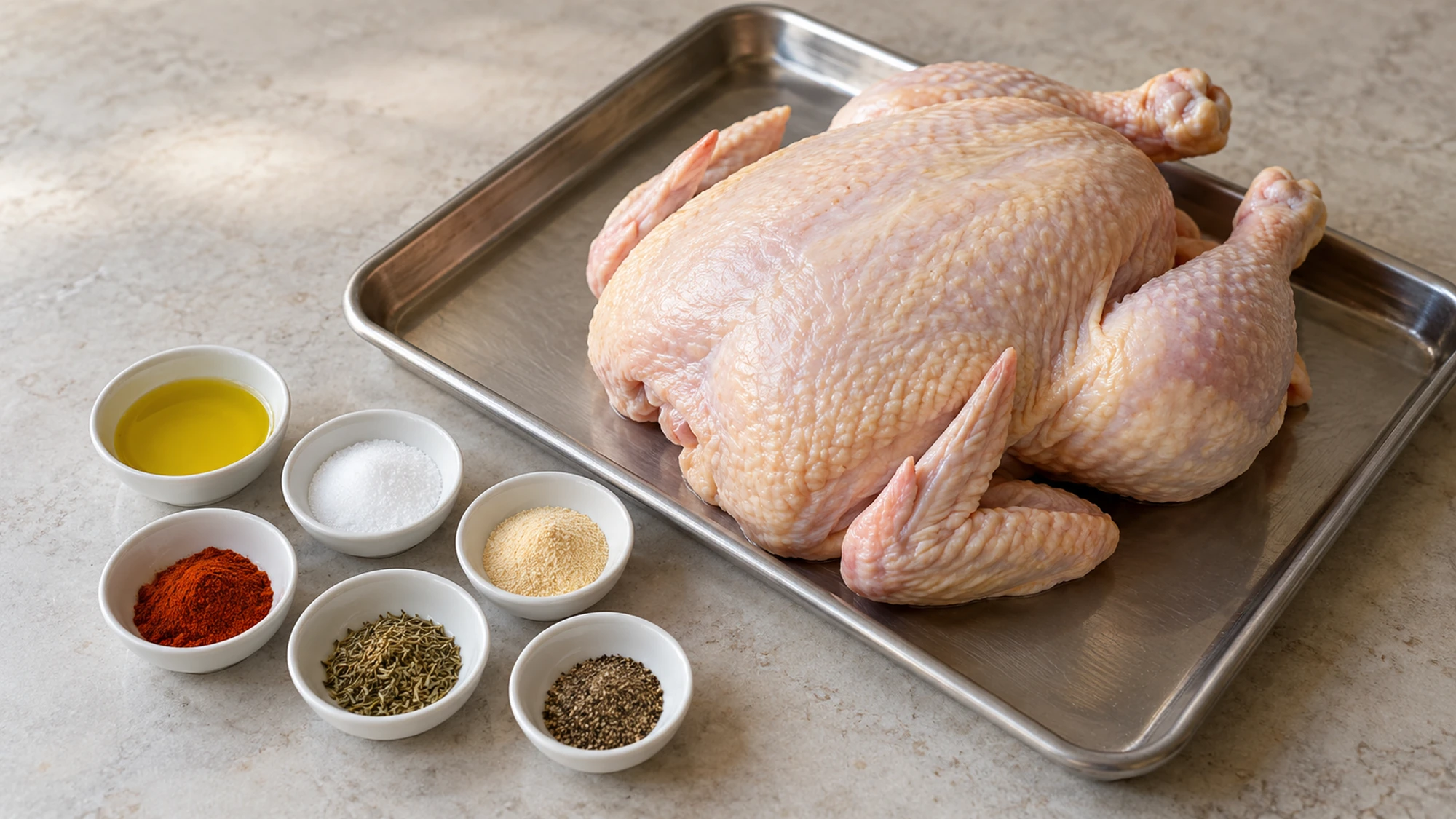
Paprika adds warm color and a mild pepper flavor; it is not meant to make this chicken hot. Garlic powder spreads evenly in the oil without leaving large garlic pieces on the surface. Dried thyme keeps the herb note straightforward and makes the rub easy to measure.
Use these swaps when you want a different direction:
| Change | Measured swap | Flavor difference |
|---|---|---|
| Smokier seasoning | Replace 1 teaspoon regular paprika with 1 teaspoon smoked paprika | More pronounced smoke flavor |
| Different herb | Replace 1 teaspoon dried thyme with 1 teaspoon dried oregano | A more assertive herbal note |
| Less pepper | Reduce black pepper from 1/2 teaspoon to 1/4 teaspoon | Milder finish |
I prefer changing one seasoning at a time; it makes the result easier to adjust without turning a small rub into a dozen-jar project. Keep salt separate from seasoning blends so you can see how much is being added. A chicken labeled as enhanced with a salt solution may need less added salt than the plain chicken specified here.
Keep the same thermometer checks after any spice change. Seasoning affects flavor and appearance, not the safe finishing temperature.
Health Benefits and Safe Storage
Chicken provides protein, but the nutrition of a whole roast depends on which pieces and how much skin you eat. The recipe estimate uses cooked, boneless meat and skin, not the raw bird’s weight. The cooked-yield reference puts that edible portion at about 44% for whole chicken without neck and giblets. Six servings are therefore portions of carved meat, not six equal bone-in pieces.
If you remove the skin, the recipe’s skin-on nutrition estimate will no longer describe your portion closely.
- Do not wash raw chicken. Splashes can spread bacteria to nearby food, equipment, and surfaces. Wash hands and clean the work area after handling it.
- Start with a fully thawed bird. Follow safe chicken handling and thermometer placement, keeping the probe away from bone.
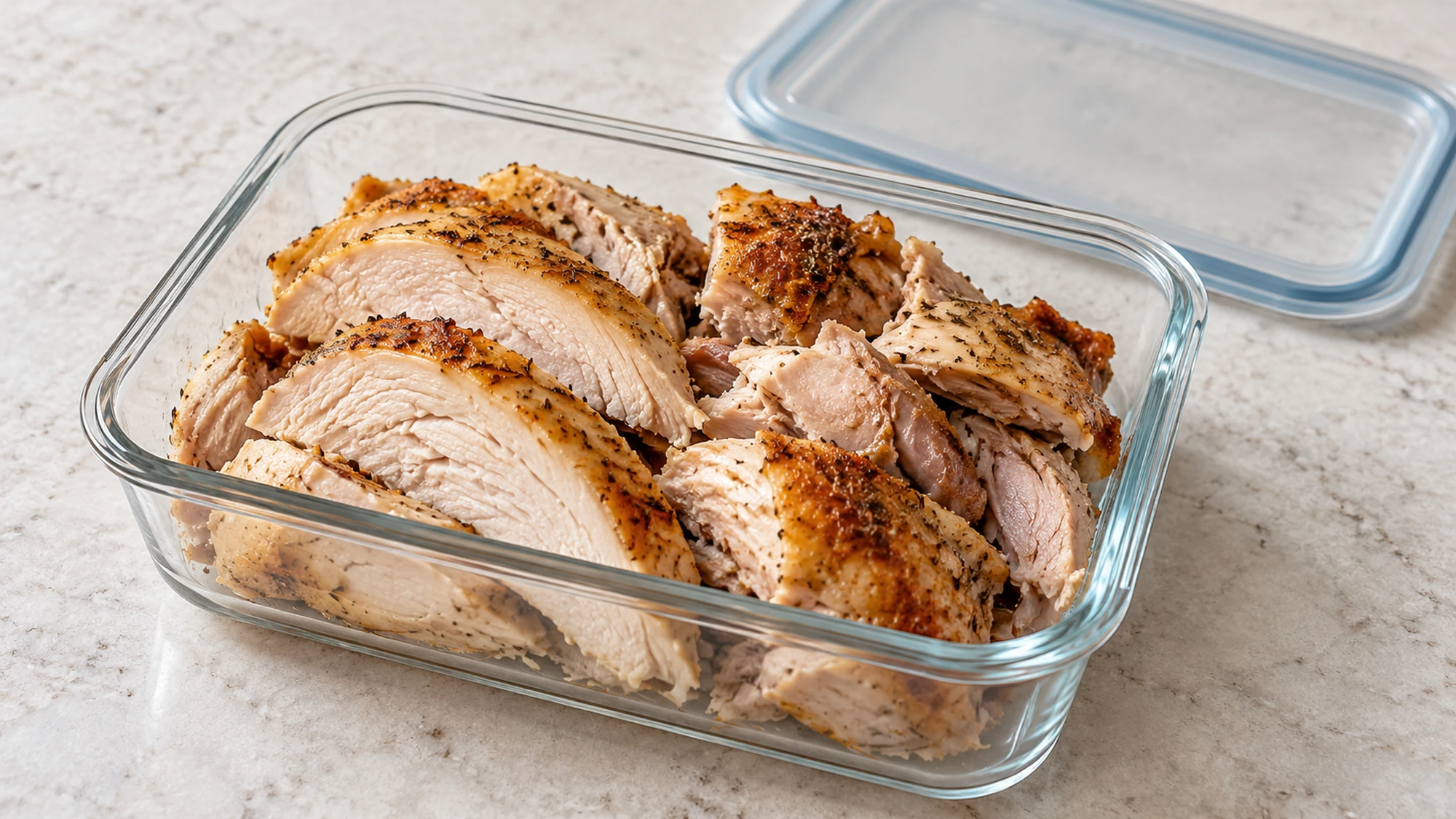
- Carve leftovers into smaller portions and refrigerate in shallow containers within two hours, or one hour above 90°F/32°C. Use within three to four days at 40°F/4°C or below, or freeze for up to four months for best quality.
- When reheating, bring leftovers to 165°F/74°C, following leftover cooling and reheating guidance.
A thermometer and prompt refrigeration matter more than whether the finished meat looks perfectly white.
Bottom Line
An unstuffed whole chicken is a manageable roast when the plan stays clear: a measured rub, room for heat to circulate, and temperature checks in the right places. Keep the sides uncomplicated, allow a short rest, and portion leftovers promptly. You get a useful main dish without needing an elaborate filling or a separate sauce.
Whole Chicken Recipe

Ingredients
- 1 whole chicken 4 lb / 1.8 kg, fully thawed, neck and giblets removed; unstuffed; use a plain bird without added salt solution
- 1 tbsp olive oil 14 g
- 1 tsp fine salt 6 g; not the same volume as coarse kosher salt
- 1 tsp garlic powder 3 g
- 1 tsp paprika 2 g
- 1 tsp dried thyme 1 g
- 1/2 tsp ground black pepper 1 g
Equipment
- Oven
- Roasting pan with an oven-safe rack
- Small bowl
- Measuring spoons
- Kitchen scale for gram measurements
- Paper towels
- Instant-read food thermometer
- Oven mitts
- Clean carving board
- Sharp carving knife
- Tongs or carving fork
- Aluminum foil if needed to shield browning skin
- Shallow containers for leftovers
Instructions
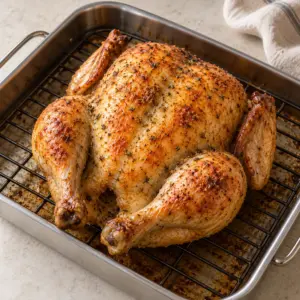
- Heat the oven to 350°F/175°C. Set an oven-safe rack in a roasting pan. Remove any neck or giblet packet from the fully thawed chicken. Do not wash the chicken. Pat the skin dry with paper towels, discard the towels, and wash your hands after handling raw poultry.
- Mix the olive oil, fine salt, garlic powder, paprika, thyme, and pepper in a small bowl. Rub over the outside of the chicken, including the legs and wings. Leave the cavity empty. Set the bird breast-side up on the rack and tuck the wing tips underneath if they stay in place. Wash hands and clean surfaces that touched raw chicken.
- Roast uncovered, beginning temperature checks around 75 minutes. A 4 lb bird commonly needs about 75–90 minutes at this temperature, but use the thermometer rather than the clock. Check the thickest breast and the innermost thigh and wing, avoiding bone; all must reach at least 165°F/74°C. Check both sides. If the skin browns too quickly before the meat is done, loosely shield that area with foil and continue roasting.
- Transfer the cooked chicken to a clean carving board and rest for 15 minutes. Carve into legs, thighs, wings, and breast slices. Serve portions of the carved meat rather than assuming every bone-in piece is the same size.
- Divide leftover chicken into smaller portions and refrigerate in shallow containers within 2 hours of cooking, or within 1 hour above 90°F/32°C. Keep at 40°F/4°C or below and use within 3–4 days, or freeze for up to 4 months for best quality. Reheat leftovers to 165°F/74°C.
Nutrition
Video
Notes
Tried this recipe?
Let us know how it turned out!Emily is Spoonvale’s recipe-writing persona, bringing a warm, practical voice to everyday cooking. Her focus is simple: approachable meals, comforting flavors, and clear instructions that help make time in the kitchen more enjoyable.