
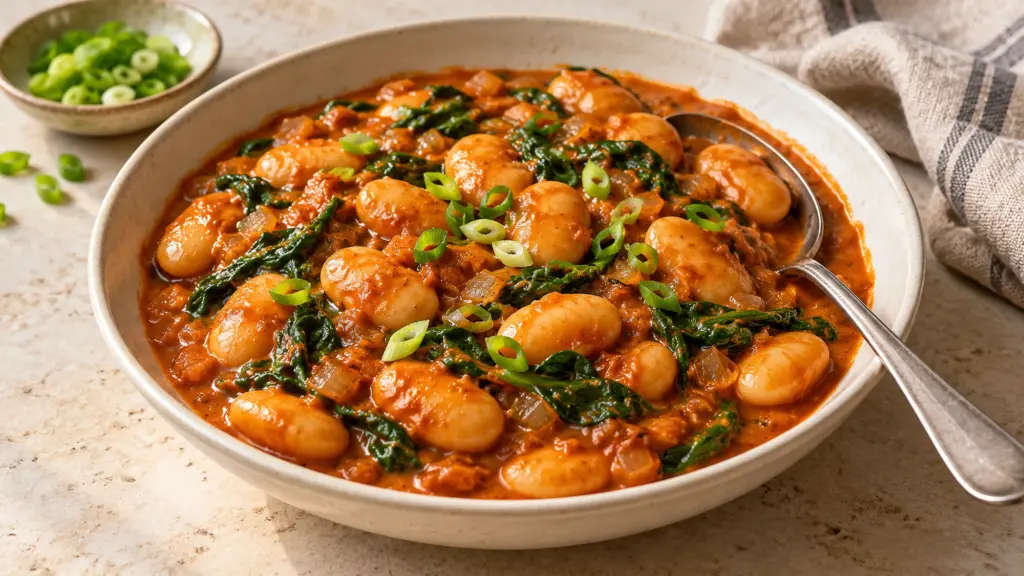
A spoonful of red chili paste can give a can of beans a very different dinner plan. These gochujang butter beans pair broad, tender beans with garlic, tomato paste and coconut milk, then fold in spinach at the end. The sauce is smooth and gently thick, with enough movement to spoon over rice or scoop with bread.

Soften the onion first, stir the gochujang into a little liquid, and simmer the beans gently. The goal is a flavorful sauce around whole beans, with spinach added just long enough to wilt.
Gochujang is a Korean fermented red chili paste with savory depth, sweetness and heat. This recipe is a pantry adaptation using that ingredient, with coconut milk bringing its own mild sweetness. Check that your tub contains thick paste rather than a thin ready-made dipping sauce; the concentration affects how the finished bowl tastes.
I’d choose large canned butter beans for their broad shape and soft centers. Drain and rinse them before they reach the skillet, then use a wooden spoon to fold rather than beat them through the sauce. A few broken beans will thicken it, but you do not need to mash the whole pan.
Keep a splash of water nearby while the beans simmer. Pan width and stove heat change how quickly the liquid reduces, so judge by the sauce: it should coat a spoon and settle back around the beans.
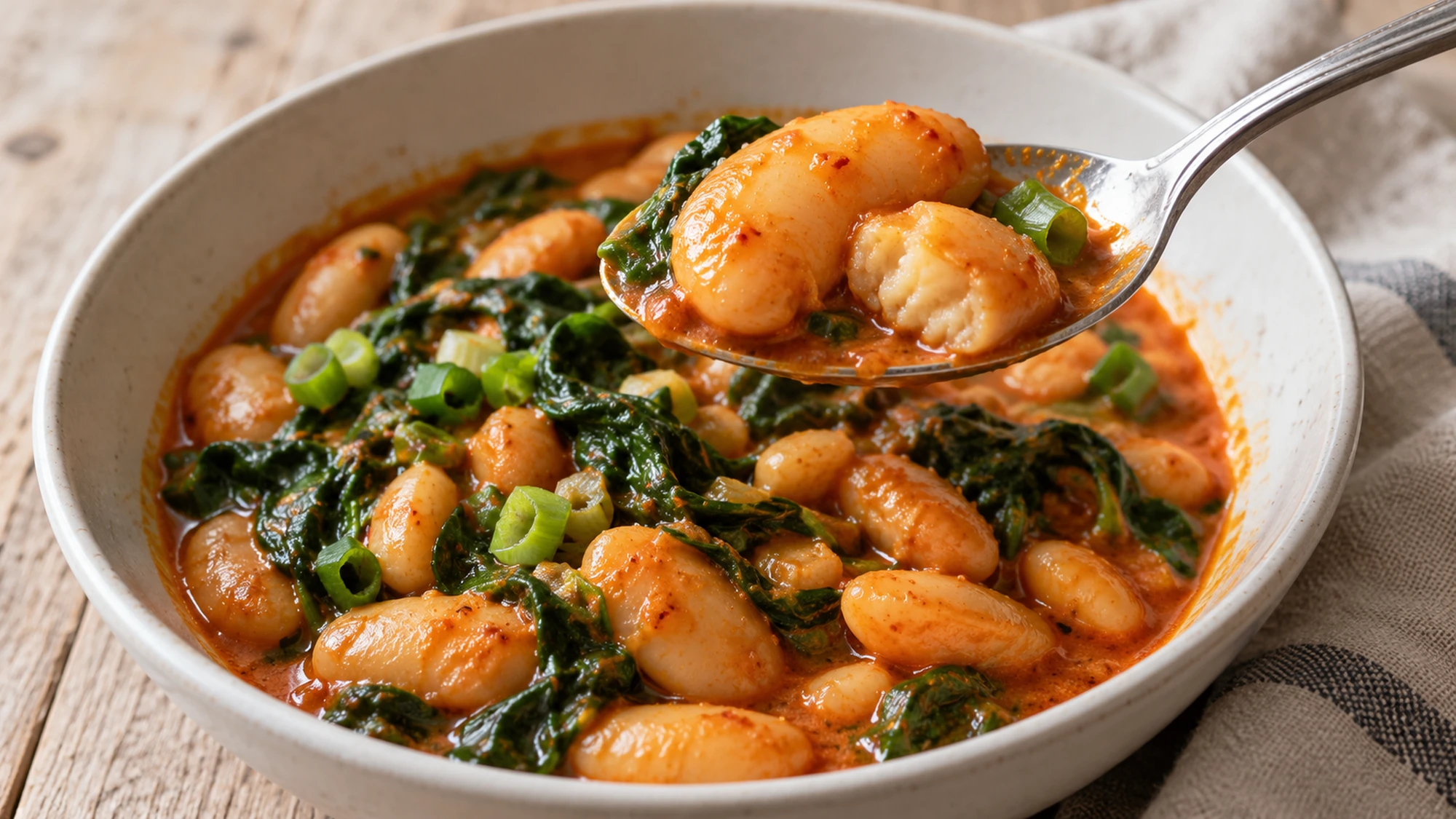
Serving Suggestions for Gochujang Butter Beans
A shallow bowl gives the beans room to spread, and a little sliced scallion adds freshness without another sauce. My preference is to keep the side simple; the gochujang already supplies plenty of flavor. Divide the skillet into four portions, then add bread or rice according to appetite.
- For a fuller plate: spoon over warm rice or serve beside a baked potato, with their amounts chosen separately from the bean recipe.
- For contrast: offer cucumber slices, shredded cabbage or lightly steamed broccoli. Keep any dressing mild so it does not compete with the sauce.
- For tomorrow: refrigerate in shallow covered containers within two hours, or one hour above 90°F (32°C). Use within three to four days and reheat to 165°F (74°C), following USDA leftover guidance. Add a little water as needed during reheating.
Let the beans carry the seasoning, add a plain starch if you want one, and bring something cool or crisp alongside.
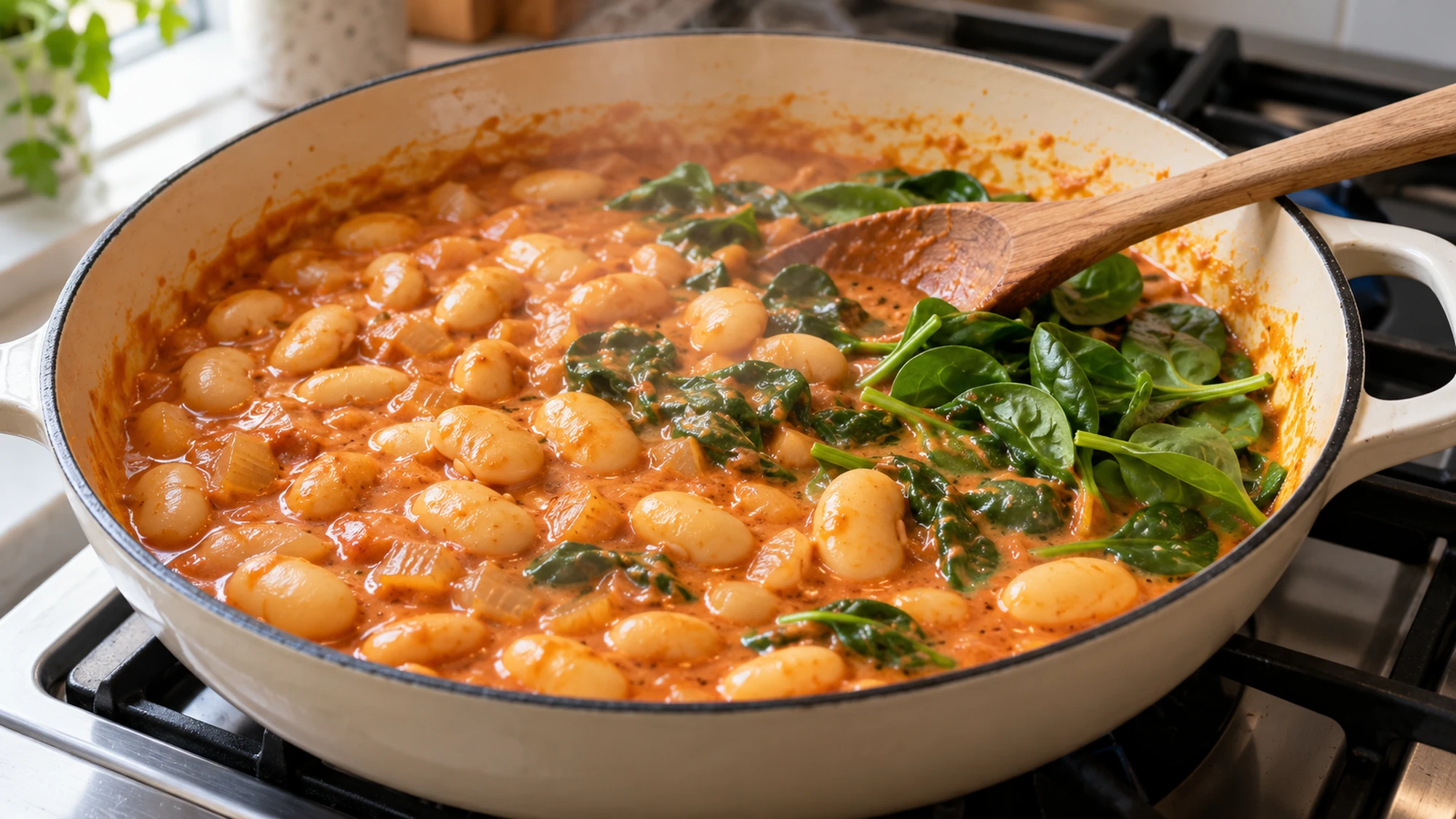
Variations for Gochujang Butter Beans
Two tablespoons of gochujang provide the starting point here, but brands differ. If you are uncertain about the heat, begin with less. Taste after the paste has dispersed through the coconut milk. Extra sweetness cannot remove chili heat, and this sauce already has sweetness from the paste and onion.
| Preference | Adjustment |
|---|---|
| Gentler heat | Start with 1 tablespoon gochujang, then add more after tasting the sauce. |
| Different beans | Use the same drained weight of canned cannellini beans; fold carefully. |
| No coconut flavor | Replace the coconut milk with ½ cup heavy cream plus ¼ cup water; the dish will contain milk. |
For another simple dinner built around a boldly flavored sauce, try Spoonvale’s baked feta pasta. With these beans, resist adding several salty condiments at once; the gochujang may provide all the seasoning you need.
Make one adjustment at a time, and taste the complete sauce before changing its heat or saltiness.
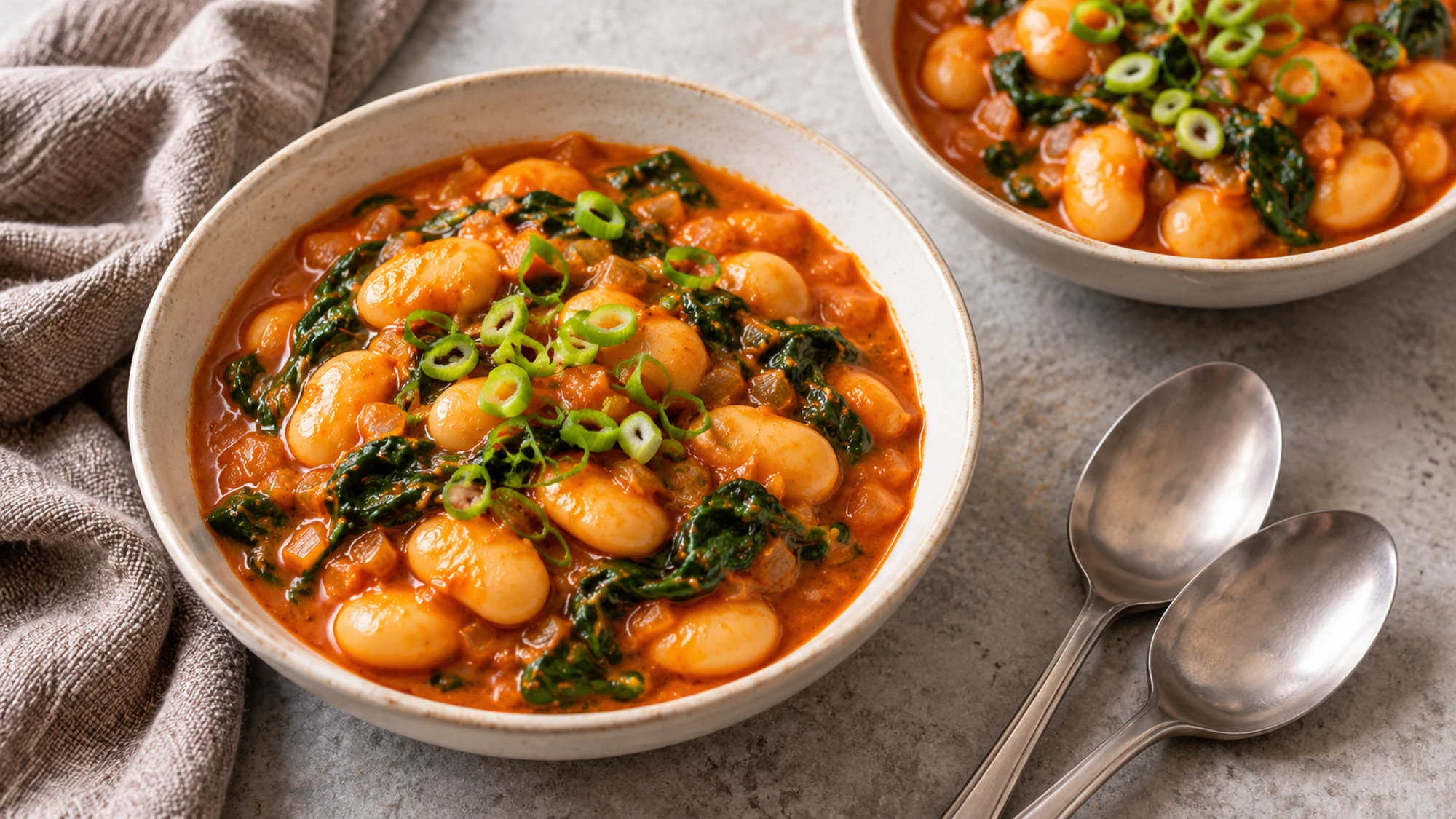
Health Benefits of Gochujang Butter Beans
Butter beans contribute fiber and plant protein. For a concrete comparison, Napolina lists the nutrients in drained butter beans; your own can’s label is the best match for what you cook. Spinach adds another vegetable, while coconut milk adds richness and saturated fat. Serving size and sides remain part of the picture.
Fermentation describes how gochujang is made; it is not a reason to promise probiotic benefits from a cooked sauce. Check ingredient labels for soy, wheat and other allergens, especially when choosing paste for someone with dietary restrictions. This recipe uses no dairy unless you select the cream variation.
Enjoy the beans for their useful fiber and protein, compare the labels, and keep health claims separate from the sauce’s flavor.
Bottom Line
Gochujang butter beans bring a pantry staple into a savory, warming bowl with a short spell at the stove. Give the onion its softening time, mix the paste into the liquid and protect the beans with a gentle simmer. Fold in the spinach at the end, finish with rice vinegar and scallion, then serve while the sauce is still spoonable.
Start with measured paste, keep the simmer gentle, and let the creamy beans stay whole.
Gochujang Butter Beans Recipe


Ingredients
- 2 15.5-oz cans butter beans drained and rinsed; about 500 g drained total
- 1 tbsp olive oil 15 ml
- 1 small yellow onion about 150 g peeled, finely diced
- 3 garlic cloves about 9 g, minced
- 2 tbsp gochujang paste about 40 g; begin with 1 tbsp for gentler heat
- 1 tbsp tomato paste 16 g
- 0.75 cup unsweetened full-fat coconut milk 180 ml; stir the contents of the can smooth before measuring
- 0.5 cup water 120 ml, plus 1–2 tbsp only if needed to loosen
- 3 oz baby spinach 85 g, rinsed unless labeled ready-to-eat
- 1 tsp unseasoned rice vinegar 5 ml
- 1 scallion about 15 g, thinly sliced
Equipment
- Colander and bowl for rinsing and draining beans
- can opener if needed for your cans
- Chef’s knife and cutting board
- 10-inch (25-cm) high-sided skillet
- Wooden spoon
- Measuring cup and spoons
- kitchen scale for the optional gram measures
Instructions
- Drain and rinse the butter beans, then let them drain in a colander. Finely dice the peeled onion and mince the garlic. Thinly slice the scallion and set it aside for the finish.
- Heat the olive oil in a 10-inch (25-cm) high-sided skillet over medium heat. Add the onion and cook for 5–6 minutes, stirring often, until soft and translucent. Reduce the heat if it begins browning before it softens.
- Add the garlic and stir for 30 seconds. Add the gochujang and tomato paste and stir for another 30 seconds. Pour in the measured water and stir until the pastes disperse into it.
- Stir in the smooth coconut milk, then gently fold in the drained butter beans. Bring just to a simmer and reduce the heat to medium-low. Simmer uncovered for 8–10 minutes, stirring carefully, until hot throughout and the sauce lightly coats a spoon.
- Fold in the spinach a handful at a time and cook for 1–2 minutes, until wilted. If the sauce has become too thick, add 1–2 tablespoons water to loosen it.
- Remove from the heat and stir in the rice vinegar. Divide into 4 portions and scatter the measured scallion over them. Taste before adding any additional seasoning; the gochujang and canned beans may already provide enough salt.
Nutrition
Notes
Tried this recipe?
Let us know how it turned out!Emily is Spoonvale’s recipe-writing persona, bringing a warm, practical voice to everyday cooking. Her focus is simple: approachable meals, comforting flavors, and clear instructions that help make time in the kitchen more enjoyable.