

The kettle clicks off, dinner is cleared away, and a floral cup sounds more appealing than another coffee. Chamomile fits that quiet moment nicely, but the promises on a tea box can make an ordinary drink sound like a treatment.
Chamomile tea benefits are best understood as a caffeine-free drink and a comforting routine. Research on sleep and anxiety is limited, and results from concentrated extracts do not prove that a cup of tea treats either condition.
I’d choose chamomile for its gentle, apple-like floral character, not because a label promises perfect sleep. Here’s how to separate a pleasant kitchen habit from a health claim that needs stronger evidence.

Chamomile tea benefits: what can you reasonably expect?
Plain chamomile is an herbal infusion rather than tea made from the tea plant. It offers a warm, flavorful alternative when you want to avoid caffeine. Check blends carefully: a product containing black or green tea is a different drink, even if chamomile appears prominently on the front.
That distinction matters more than a long list of supposed benefits. The National Center for Complementary and Integrative Health says there is not enough reliable evidence to establish chamomile’s clinical usefulness for many promoted conditions. A comforting drink is worthwhile without being a medicine.
| Question | Practical answer |
|---|---|
| A caffeine-free evening drink? | Yes, when the blend contains only caffeine-free ingredients. |
| A proven insomnia treatment? | No. Evidence is too limited to make that promise. |
| The same as a chamomile extract? | No. Products and concentrations differ. |
| Automatically safe because it is herbal? | No. Allergies and medicine interactions still matter. |

What the sleep studies actually tell us
One randomized trial published in 2016 studied 80 Taiwanese women with poor sleep after childbirth. Participants assigned chamomile tea drank it for two weeks. Some questionnaire outcomes improved initially, but the groups had similar results at the later four-week assessment. That small, specific study cannot establish lasting benefits for everyone or prove safety during breastfeeding.
An earlier placebo-controlled pilot trial of chamomile extract enrolled 34 adults with chronic insomnia. Its main sleep measures did not show a significant advantage over placebo. It studied an extract, not brewed tea, so neither a positive nor a negative result would translate neatly into instructions for your mug.
I prefer the modest interpretation: enjoy the ritual if you like it, while treating persistent sleep trouble as its own issue. A reliable bedtime routine deserves more attention than making the tea increasingly strong.
Choose and brew a cup you actually enjoy
Start with a packaged product clearly intended for drinking and follow its brewing directions. Loose flowers and tea bags vary in size and strength, so there is no universal kitchen dose that doubles as a proven medical dose. Use fresh drinking water, a clean cup, and an infuser that keeps plant fragments out of the finished drink.
Chamomile’s mild flavor can become lost under a generous squeeze of lemon or spoonful of honey. I’d taste it plain first, then add only what improves the cup for you. Sweeteners are optional, not a requirement for the herb to work.
- Read the full ingredient list, especially on bedtime blends containing several herbs.
- Let the drink cool to a comfortable sipping temperature rather than drinking it scalding hot.
- For loose flowers, use the package’s amount and steeping time instead of guessing a stronger concentration.
- Store the dry tea closed, away from moisture and strong kitchen odors.
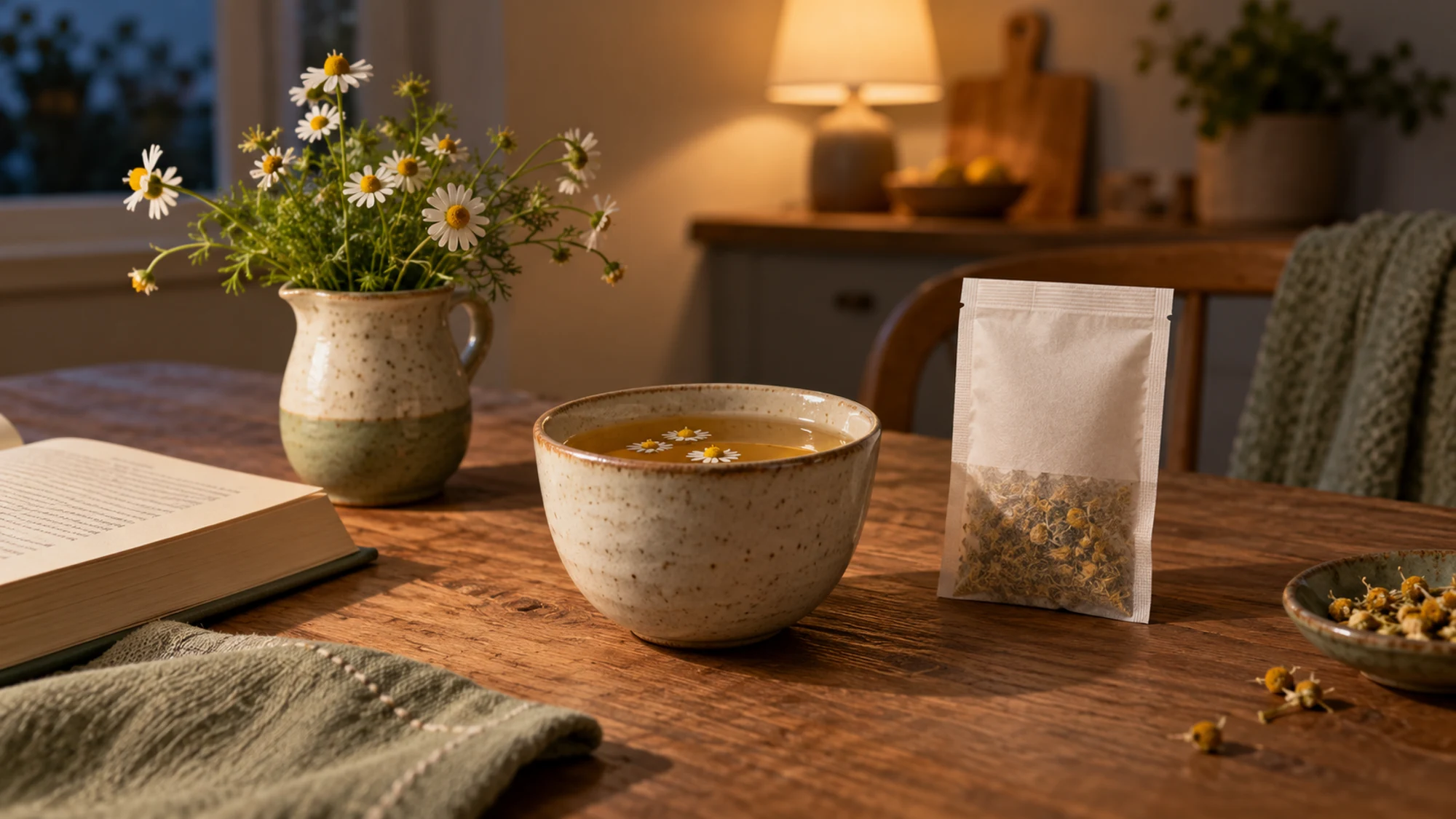
When to ask before drinking chamomile
Chamomile can trigger allergic reactions, particularly in people allergic to related plants such as ragweed. It may also interact with medicines, including warfarin and potentially sedatives. If you take medication, have a relevant allergy, are pregnant, or are breastfeeding, ask a clinician or pharmacist before making it a regular habit. Do not replace prescribed treatment with tea.
If trouble falling or staying asleep keeps returning, discuss it with a healthcare professional. Mayo Clinic’s insomnia guidance describes treatments such as cognitive behavioral therapy for insomnia; simply adding another bedtime product does not address every cause. For a practical beverage comparison, our matcha guide explains a very different, caffeinated choice.
Bottom Line
Choose chamomile because you enjoy a gentle, caffeine-free cup, not because it guarantees sleep or treats anxiety. Read the blend, brew to its instructions, and check allergies or medicine concerns first. The most useful benefit may be making room for a quiet pause without asking the tea to do a doctor’s job.
Mayo Clinic’s short video explains everyday sleep habits. It offers context for an evening routine, not evidence that chamomile treats insomnia.
Sources
- NCCIH: Chamomile
- Chang and Chen: chamomile tea trial
- Zick and colleagues: chamomile extract pilot trial
- Mayo Clinic: insomnia diagnosis and treatment

Emily is Spoonvale’s recipe-writing persona, bringing a warm, practical voice to everyday cooking. Her focus is simple: approachable meals, comforting flavors, and clear instructions that help make time in the kitchen more enjoyable.