
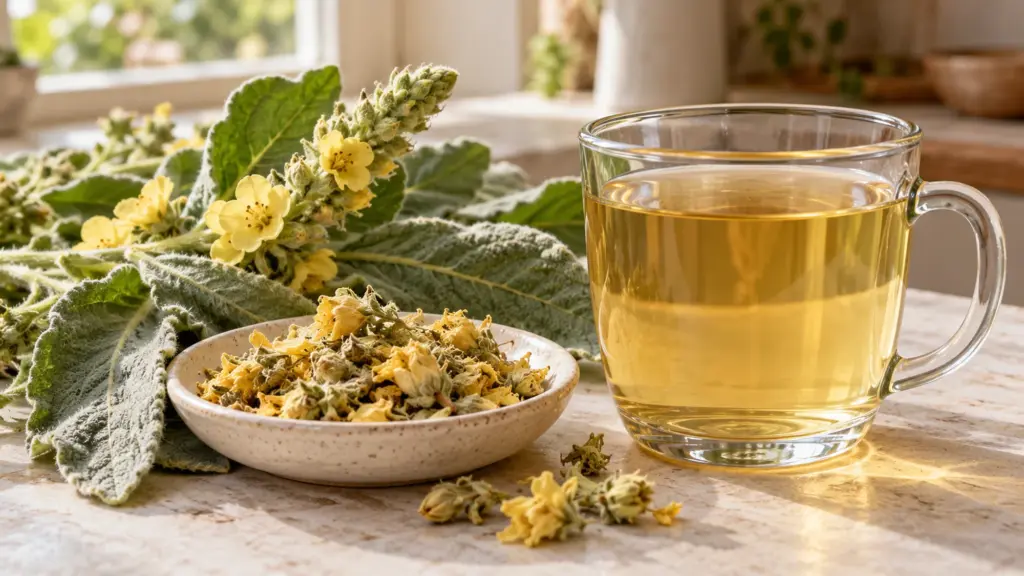
A bag of fuzzy-looking herbs and yellow flowers can seem like a simple addition to the tea cupboard. Then you read a promise about clearing your lungs, and suddenly an afternoon drink is being asked to do a much bigger job.
Mullein tea is an herbal infusion, but strong human evidence for medical benefits is lacking. European guidance recognizes traditional use of certain mullein flower preparations for sore throat with a dry cough and cold, not proof that retail tea detoxes lungs or treats lung disease.
I’d start with the ingredient list rather than the biggest promise on the package. The plant part, product quality and reason you want to drink it all matter more than an impressive-looking list of benefits.
What is in mullein tea?
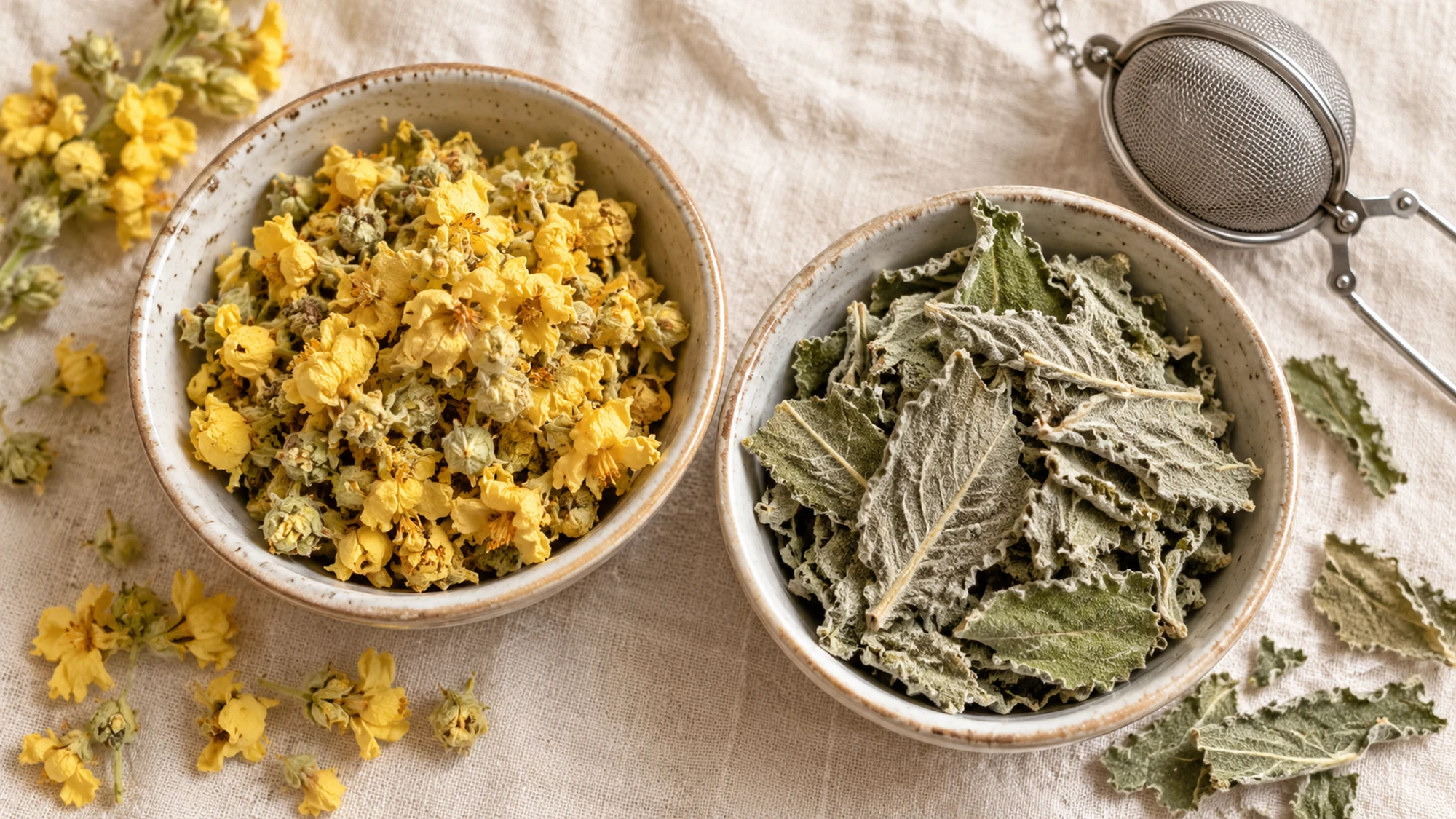
Mullein commonly refers to plants in the Verbascum genus. Retail teas may contain leaves, flowers, or mixtures with other herbs. The European Medicines Agency assessment concerns flowers from specified Verbascum species. It is not a blanket approval of every product carrying the mullein name.
This is the useful first distinction: a flower preparation, a leaf tea and a concentrated extract are not interchangeable. A result involving one plant part or preparation should not become a promise about another. I prefer a clearly identified, single-ingredient product over a blend whose contents are difficult to untangle.
| On the package | What to check |
|---|---|
| Mullein flower | The botanical name and intended preparation |
| Mullein leaf | Do not assume flower-monograph findings apply |
| Herbal blend | Every added herb and any relevant precautions |
| Extract or drops | Different concentration and directions; not ordinary tea |
| Lung detox promise | A marketing claim, not evidence of a proven benefit |
Traditional use is not the same as clinical proof
EMA explains that the flower preparation’s recognized use rests on a long history, with insufficient clinical-trial evidence. Its 2025 assessment addendum considered newer references and found none relevant enough to change the monograph. Long-standing use and a large modern treatment trial answer different questions.
Laboratory findings about plant compounds also cannot establish that a brewed cup prevents infection, repairs smoking damage or treats asthma. Nor does feeling more comfortable after a warm drink identify which ingredient made the difference. Mullein tea should not replace prescribed inhalers, antibiotics or a medical assessment when those are needed.
- Look for human studies on the same product, not just claims about an isolated compound.
- Check what was measured: a laboratory result is not a demonstrated benefit in people.
- Be cautious when a seller turns a traditional use into a guaranteed treatment.
- Treat testimonials as personal accounts, not a reliable way to establish safety or effectiveness.
Choosing and preparing a cup carefully
Choose a packaged product intended for oral use, with an identifiable manufacturer and clear ingredients and directions. Follow those directions rather than borrowing a dose from a different tea or concentrated supplement. A familiar plant photograph is not enough to identify something collected outdoors, and roadside plants are not a sensible shortcut to the tea aisle.
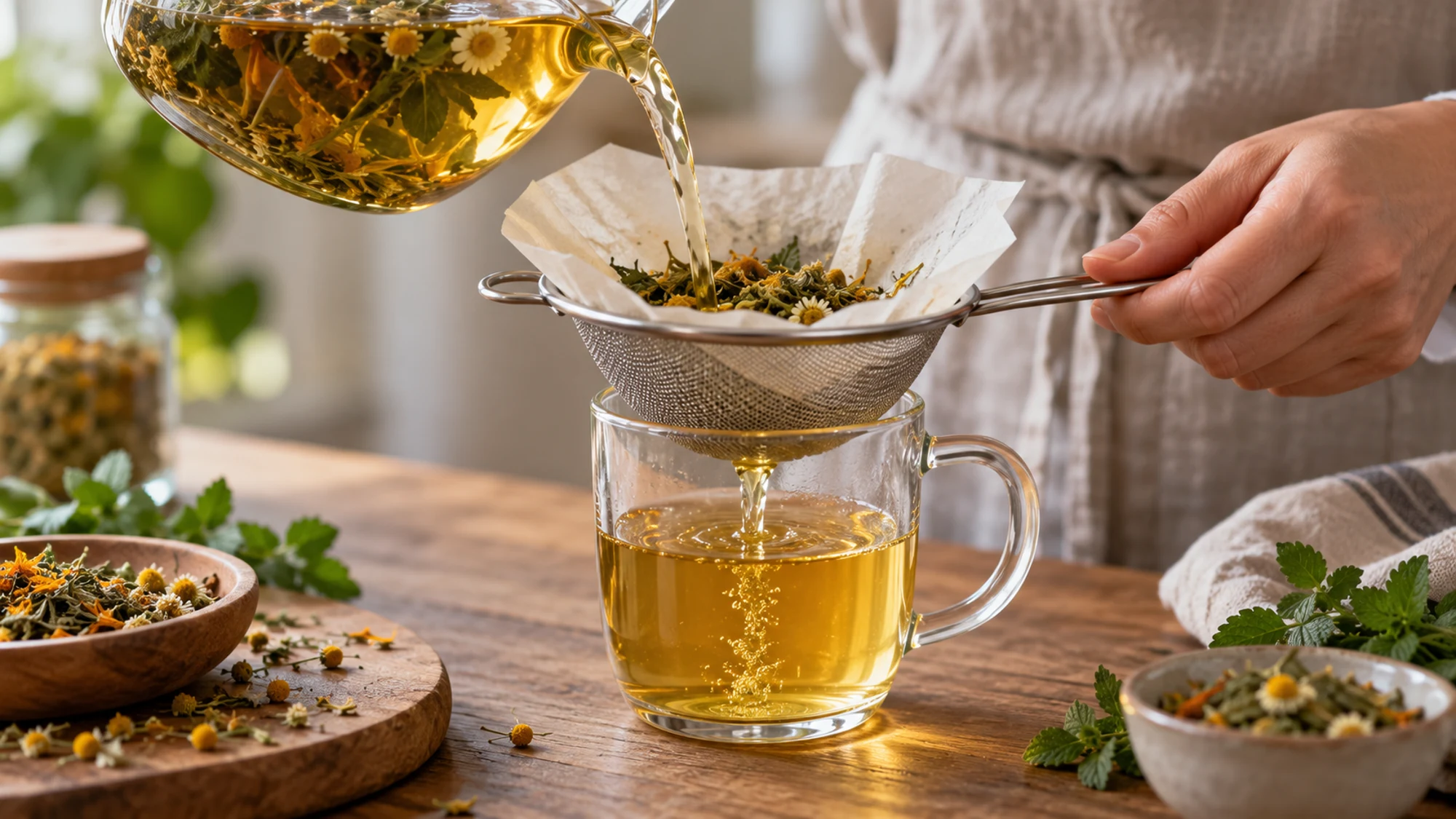
Keep plant fragments out of the cup by using a suitable tea filter; for loose material, a paper-lined strainer can help make a clearer infusion. Use clean equipment and fresh drinking water, and let the tea cool before sipping. I’d keep preparation simple rather than adding several unfamiliar herbs at once. If you are comparing herbal drinks with caffeinated tea, the matcha caffeine guide explains why the ingredients matter more than the word “tea.”
- Check the full label before purchase, including other ingredients and warnings.
- Keep the package so you can show it to a pharmacist if a question comes up.
- Do not turn an oral tea into an inhaled or smoked product.
- Store the dry product closed and away from moisture; discard visibly spoiled material.
Who should be especially cautious?
The EMA flower monograph does not recommend use during pregnancy or breastfeeding because safety has not been established. It also does not recommend the assessed preparation for children under 12. Avoid a product if you are allergic to its ingredients, and ask a clinician or pharmacist about your medicines and health conditions before regular use.
For the assessed flower medicines, EMA advises professional help when symptoms worsen or last longer than a week, and for fever, shortness of breath or purulent sputum. Do not wait a week if breathing is difficult or symptoms are severe. A warm cup can wait; breathing problems need attention.
- Bring the actual ingredient list, not just the herb’s name, to a medication discussion.
- The NCCIH supplement guide explains why retail products may differ from studied preparations.
- The FDA’s supplement overview helps distinguish supplement claims from premarket proof of effectiveness.
Bottom Line
Approach mullein tea as an herbal product with limited clinical evidence, not a lung cleanse. Check the plant part and ingredients, follow the actual package directions, and take symptom or medication questions to a professional. Clear labeling and modest expectations are more useful than a dramatic promise.
The FDA’s overview explains supplement benefits, risks and regulation. It provides useful context for evaluating herbal product claims, not evidence that mullein works.
Sources
- EMA: mullein flower assessment
- EMA: flower monograph and precautions
- EMA: 2025 assessment addendum
- NCCIH: dietary and herbal supplements
- FDA: dietary supplements

Emily is Spoonvale’s recipe-writing persona, bringing a warm, practical voice to everyday cooking. Her focus is simple: approachable meals, comforting flavors, and clear instructions that help make time in the kitchen more enjoyable.