
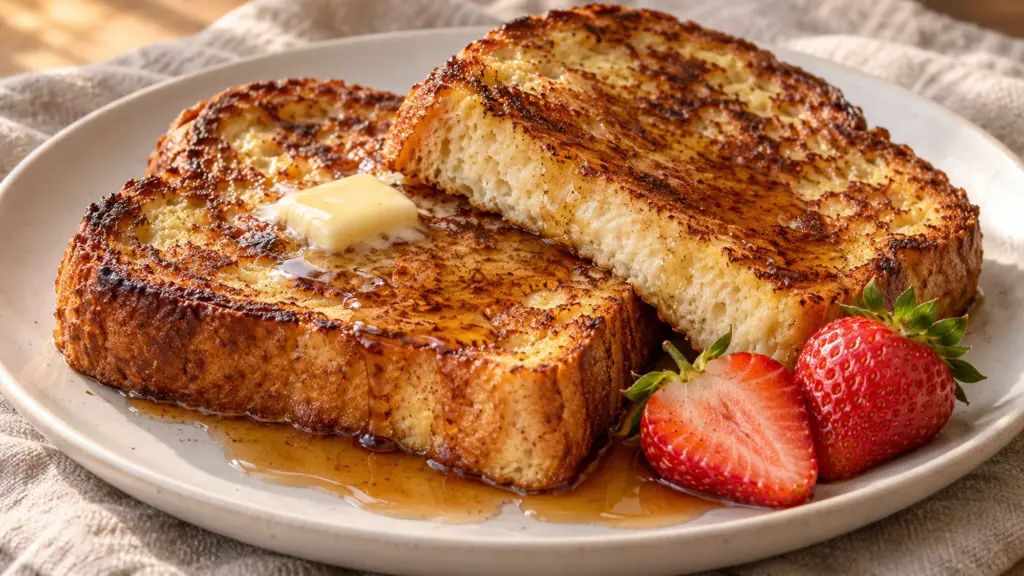
Bread that is a little too firm for a sandwich has a good second act at breakfast. A batch of french toast turns those slices into something with browned edges, a soft middle, and the quiet warmth of vanilla and cinnamon. The useful trick is giving the custard time to cook through without letting the butter scorch.
For golden French toast, start with sturdy, slightly dry bread, dip it briefly in a well-whisked egg-and-milk custard, and cook over moderate heat. Let the center set before serving; a dark surface alone does not tell you that the middle is ready.
I’d choose a substantial slice over a lofty stack. Bread around three-quarters of an inch thick gives the custard somewhere to go, but still fits an ordinary skillet. This recipe makes eight slices for four servings, with enough cinnamon to smell inviting rather than cover up the bread.
Serving French Toast While the Edges Are Golden
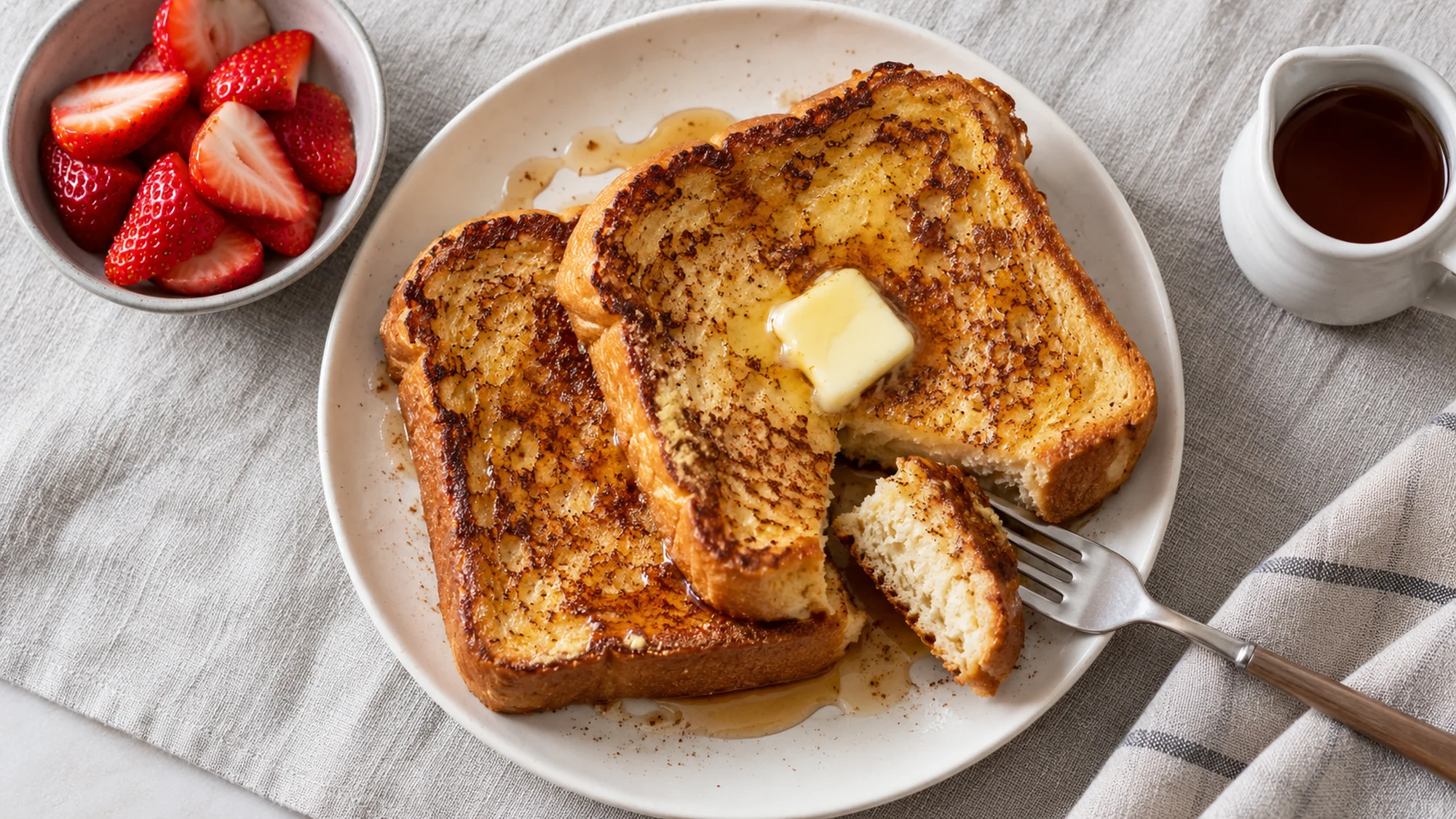
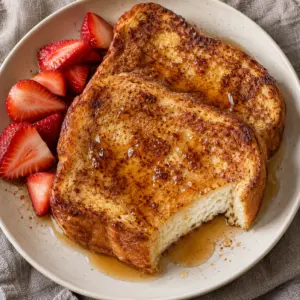
Put the toppings on the table before the first batch leaves the skillet. French toast is most appealing while its edges are still firm, and a long pause under a puddle of syrup softens that contrast. Fresh strawberries bring brightness; a small pour of maple syrup brings sweetness without burying the browned surface.
For a shared breakfast, offer two slices per person and let everyone add their own extras. I prefer syrup on the side because it leaves more choice about sweetness and keeps the last bite from becoming a sponge. A plain yogurt alongside is another useful option when you want something cool and tangy.
- Add sliced strawberries or another soft fruit just before eating; wash the fruit before cutting.
- Keep syrup portions small at first. You can add more at the table.
- Serve smaller portions alongside plain yogurt when you want a breakfast with several different textures.
Serve the toast promptly, keep the toppings separate, and let the browned bread remain the main event.
French Toast Variations and What Changes
Different loaves absorb custard at different speeds. Start with a brief dip, then adjust to the bread in front of you instead of treating soaking time as a dare. A fresh, very soft sandwich slice can fall apart before a dry, sturdy slice has absorbed enough liquid.
| Bread or flavor | What changes | Useful adjustment |
|---|---|---|
| Sturdy white bread | Mild flavor and a soft center | Dip briefly; lift carefully. |
| Brioche or challah | Richer bread and faster browning | Watch the butter and lower heat if needed. |
| Whole-grain bread | Nuttier flavor and firmer texture | Check the label; soaking depends on dryness. |
| A little orange zest | Citrus aroma in the custard | Add finely grated zest; keep the milk quantity. |
Spoonvale’s homemade baguette offers another way to use leftover bread: cut it on a diagonal for wider slices, then check the centers carefully because the open crumb and crust change how it soaks. Keep the pan at moderate heat whichever loaf you choose.
Change the bread or flavoring with a clear purpose, and keep the same goal: a browned exterior surrounding a fully cooked center.
Health Benefits and Breakfast Balance
Eggs and milk contribute protein, while bread supplies carbohydrate. That describes the ingredients, rather than making French toast a treatment or a promise about how anyone should eat. A whole-grain loaf changes the flavor and may provide more fiber; compare the bread labels rather than assuming that color tells the whole story.
Butter, sweetened bread, and toppings all affect the finished meal. The card’s nutrition estimate excludes optional strawberries and syrup and assumes the measured custard and butter are eaten. Brands, slice weights, and leftover custard can change those numbers. For allergies, this version contains wheat, eggs, and milk; changing the milk does not remove the other allergens.
- Cook the custard-soaked center to 160°F (71°C); a crisp crust is not a temperature check.
- Refrigerate leftovers promptly and use within 3–4 days. Reheat to 165°F (74°C), checking the center.
Choose the bread and toppings that suit your breakfast, and use portion information as context rather than a health label.
Bottom Line
French toast does not need a crowded topping list or a complicated batter. It needs bread with enough structure, a smooth custard, and a skillet that gives the middle time to catch up with the crust. If the outside browns too quickly, lower the heat before adding the next batch.
Keep the center fully cooked, serve the slices while their edges are golden, and add the sweetness you actually want. Those few decisions do more for the plate than a taller stack ever could.
French Toast Recipe

Ingredients
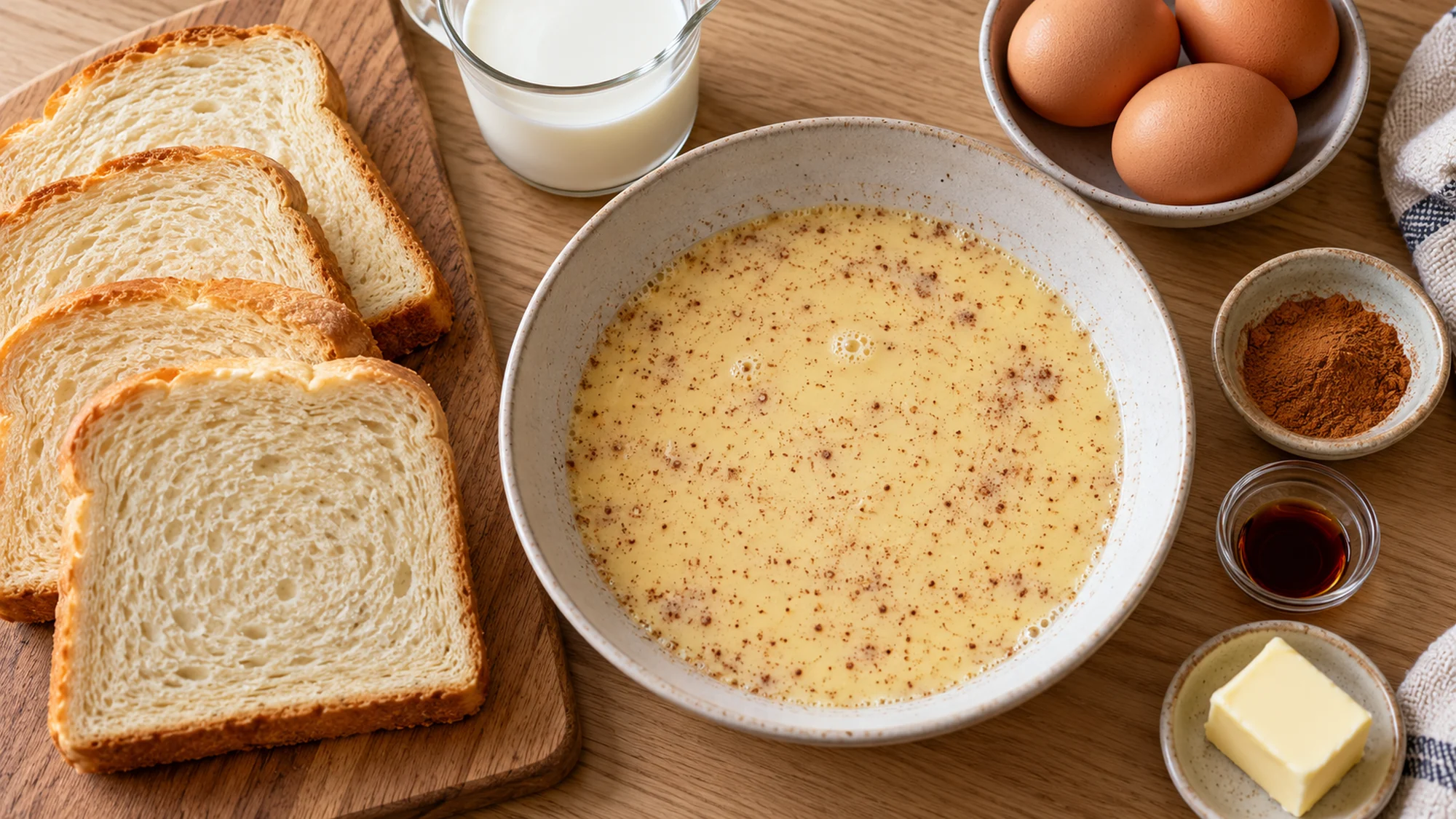
- 8 slices sturdy white bread about 3/4 inch thick, 320 g total, slightly dry
- 4 large eggs 200 g without shells
- 0.75 cup whole milk 180 ml
- 1 tbsp granulated sugar 12.5 g
- 1 tsp vanilla extract
- 0.5 tsp ground cinnamon
- 0.25 tsp fine salt
- 2 tbsp unsalted butter 28 g, divided for the skillet
- 1 cup sliced strawberries optional
- 0.25 cup maple syrup optional, divided among servings
Equipment
- 1 12-inch nonstick skillet
- 1 Shallow mixing bowl
- 1 Whisk
- 1 Broad spatula
- Measuring cups and spoons
- 1 Food thermometer
Instructions
- In a shallow bowl, whisk the eggs, sugar, cinnamon and salt until smooth. Whisk in the milk and vanilla until no streaks of egg remain.
- Warm a 12-inch nonstick skillet over medium heat. Add about one-quarter of the butter and swirl to coat. Adjust the heat so the butter foams gently without darkening.
- Dip 2 bread slices in the custard for about 10 seconds per side, or just until moistened without collapsing; very dry bread may need longer. Let the excess drip into the bowl, then place the slices in the skillet without crowding.
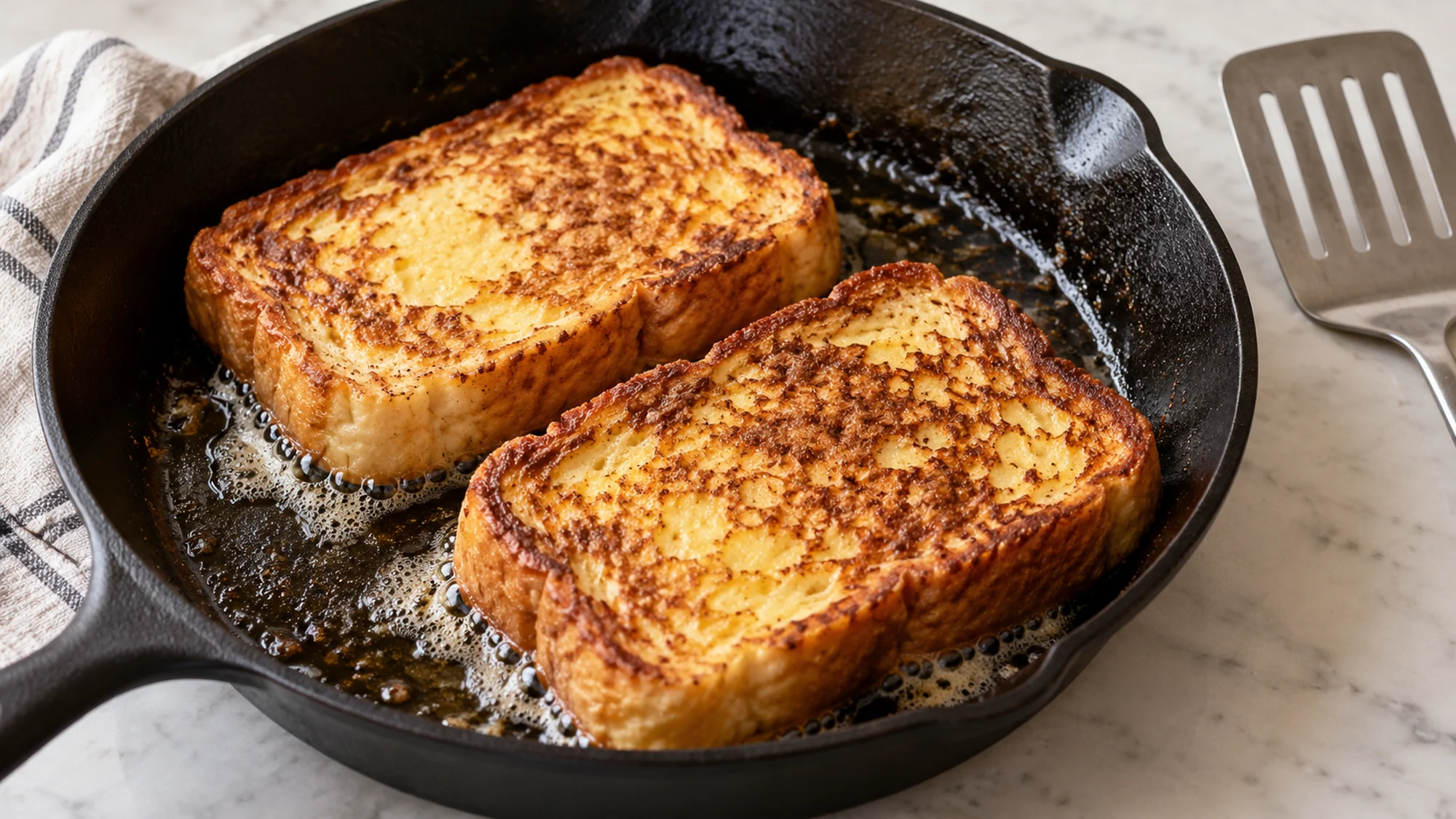
- Cook for about 3 minutes per side, until evenly golden and the center is set. Reduce the heat if the bread browns before the middle cooks. The center should reach 160°F (71°C) on a food thermometer; give thick slices additional gentle cooking if needed.
- Repeat with the remaining bread, custard and butter, wiping out any dark butter between batches. Serve each portion of 2 slices promptly, with optional strawberries and maple syrup.
Nutrition
Video
Notes
Tried this recipe?
Let us know how it turned out!Emily is Spoonvale’s recipe-writing persona, bringing a warm, practical voice to everyday cooking. Her focus is simple: approachable meals, comforting flavors, and clear instructions that help make time in the kitchen more enjoyable.